




WorkSafe Victoria have dropped their second prosecution involving the death of an Aboriginal woman in two months after it has been revealed no criminal charges will be laid over the death of Gunditjmara, Dja Dja Wurrung, Wiradjuri, and Yorta Yorta woman Veronica Nelson, who died in custody in 2020.
Having been admitted to the Dame Phyllis Frost Centre (DPFC) on New Year's Eve in 2019, Ms Nelson died days later in a "vomit ridden" prison cell from a rare gastrointestinal condition – known as Wilkie's syndrome - along with malnutrition and opiate withdrawal.
She had represented herself in court after she was accused of shoplifting but was denied bail and taken to DPFC.
A resulting inquest led to a coroner attacking the bail laws in the state, labelling them a "complete, unmitigated disaster".
On Thursday it was revealed that WorkSafe Victoria, the state's workplace safety watchdog, has declared there was "insufficient evidence" to prosecute the Department of Justice and Community Safety (DJCS), as well as prison healthcare provider Correct Care Australasia (CCA), involved in the death of Ms Nelson.
"WorkSafe acknowledges the ongoing pain and trauma Ms Nelson's tragic loss has caused her family, friends and community," a WorkSafe spokesperson said.
"After carefully considering an extensive amount of evidence, including material from the coronial inquest, WorkSafe has determined not to not take further action on this matter at this time."
It is understood WorkSafe believed whilst people had made errors in Ms Nelson's death, there was not enough evidence of poor company procedures to warrant pursuing a prosecution.
This, despite Coroner Simon McGregor noting in his findings: "The systems in place at DPFC to manage the healthcare of prisoners at the time of Veronica's reception were significantly flawed. The inquest identified substantial gaps in policies and procedures which are supposed to safeguard the health and wellbeing of prisoners."
He named ten further dangers present at DPFC before noting "When one considers the scope of these risks, the prospect of a woman dying alone and unattended in a cell at DPFC becomes less remote".
"I am deeply concerned that these risks were not identified or addressed by DJCS prior to Veronica's passing, as part of either Justice Health's monitoring of the contract with CCA and the JHFQ [Justice Health Quality Framework], or through its oversight of CV and custodial healthcare," he said.
"Likewise, these risks should have been identified and reported by CCA to Justice Health long before Veronica's passing, as was required by its contractual arrangements."
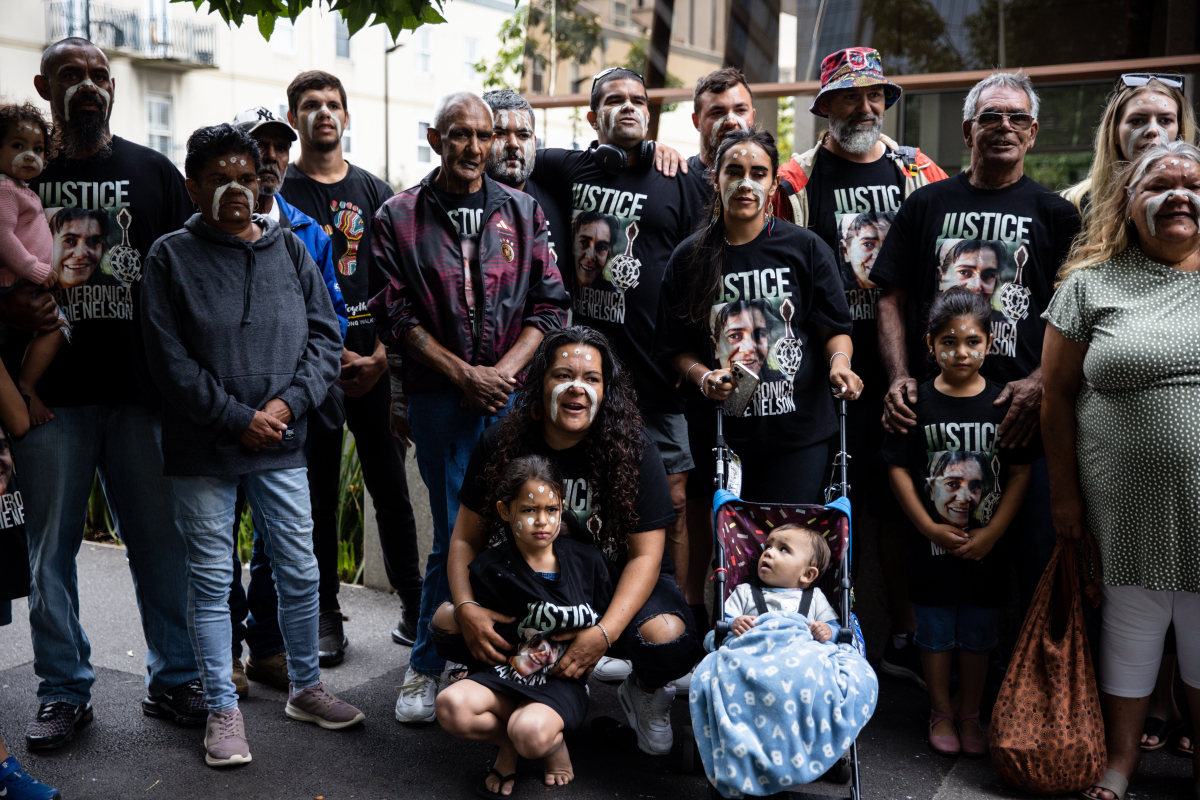
In the lead up to her death, Ms Nelson pled with guards 49 times to help her, with Coroner McGregor describing the conditions in which she spent her final days as "harrowing".
He said the sounds of Ms Nelson's pleading calls for help echoed around the courtroom and prompted him to ponder how the people who heard them and had the power to help her did not rush to her aid, send her to hospital or simply open the door to her cell to check on her.
"Veronica was loved and respected by those that knew her, yet Veronica, while alone in her cell at the Dame Phyllis Frost Centre, passed away after begging for assistance for several of the last hours of her life," Coroner McGregor said at the time.
"She was found the next morning on the floor of a cell in a prison built on the lands of the Wurundjeri and Bunurong people. That Veronica was separate from her family, community, culture and country at the time of her passing is a devastating and demoralising circumstance."
Ms Nelson's family have campaigned to have the bail laws in Victoria changed and called Poccum's law (after Veronica's nickname as a child).
They were eventually altered this year, but not to the extent the family had urged.
Ms Nelson's mother, Aunty Donna Nelson, told the ABC the development was "disgusting".
"My heart breaks," she said. "I can't express to you the pain of seeing the people responsible for my daughter's death walk away unpunished.
"What good is the coronial process, the pain and heartache that we have to go through, if they just let these people walk?"
Aunty Donna's lawyer Ali Besiroglu told the ABC "if there was ever a case with overwhelming and unquestionable evidence of gross negligence and risk to health and safety, this was it".
"She deserved much more than a justice system designed to let her perpetrators walk free with impunity," he said.
The decision not to prosecute is the second time WorkSafe has done so in relation to the death of an Indigenous woman in two months.
Last month, they withdrew a charge against Monash Health over the death of Palawa woman Ashleigh-Sue Chatters.
Ms Chatters was 22 when she took her own life at Dandenong hospital on 25 February, 2022, four days after being admitted to the facilities' psychiatric unit after contacting the police.
No one has ever been found guilty for an Aboriginal death in custody in Australia.



