


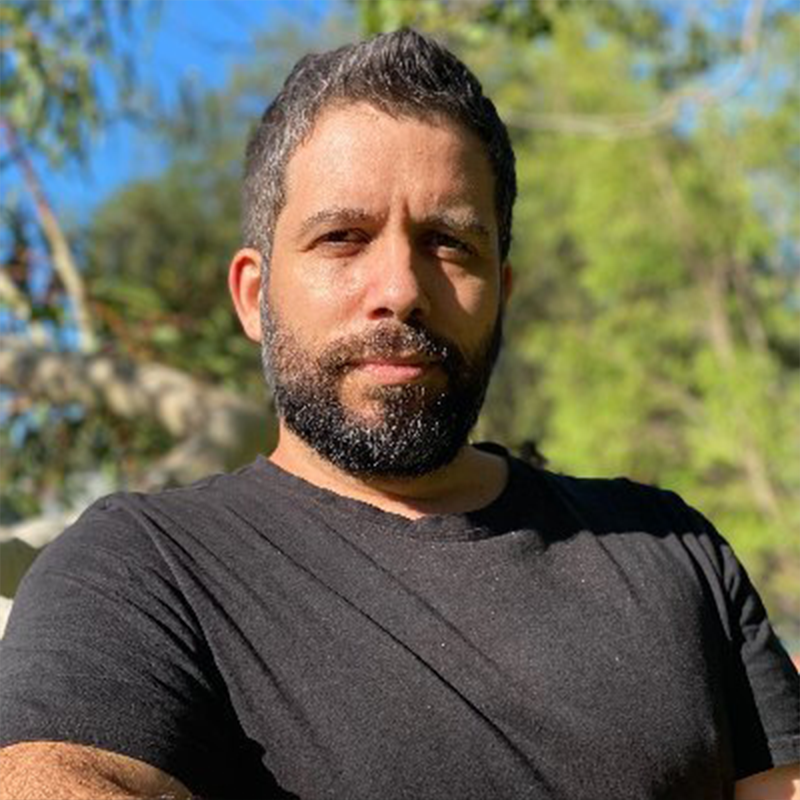

One of Australia's greatest Indigenous leaders, Dr Djambawa Marawili AM HC, together with North East Arnhem Land Clan leaders, has led a series of historic repatriation ceremonies of Ancestors to the Dhaḷwaŋu, Maḏarrpa, Djapu, Dhuḏi-Djapu, Maŋgalili and Marrakulu Clans at Gäṉgaṉ and Bäniyala.
Dr Marawili said this was a momentous day for Yolŋu people.
In Yolŋu Matha language: "Dhuwaya ŋalumugu yuwalk important roŋiny'mama ŋalumun'gu ŋalapal'mina."
"It is really important to bring our Ancestors back to their own Country," Dr Marawili said.
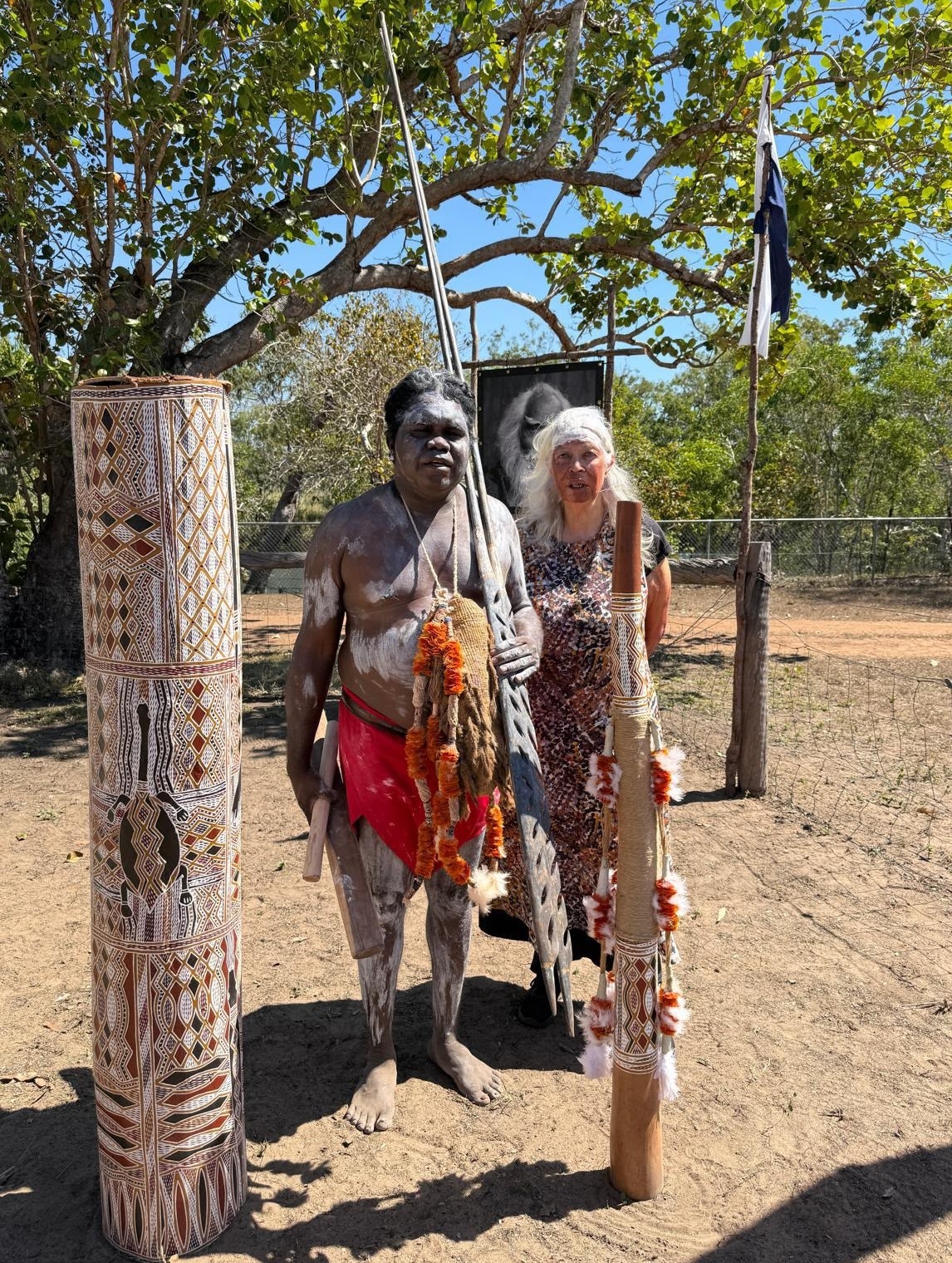
"They have the patterns and designs of the land painted on them, those patterns belong here, in my backyard. The Ancestors, as well as the sacred objects; the dilly bags, the armbands, the objects held elsewhere, need to return.
''We need to show our young ones, so they know some of our ancestral heritage was taken away and stored on other people's Country. We need to show the future generations our culture has remained, and we can bring our Ancestors back through the same song cycles and ceremonies of our forefathers."
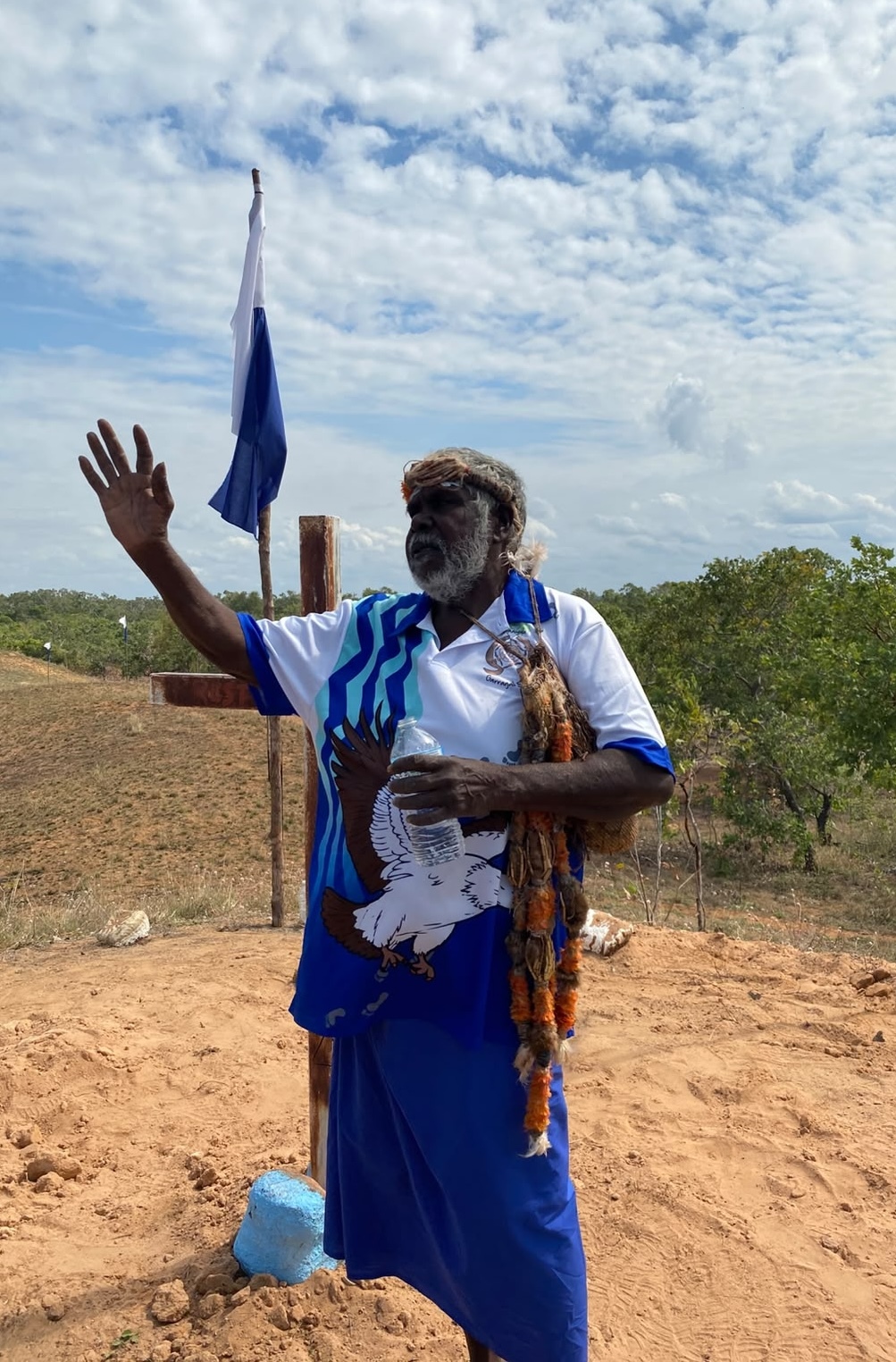
Dr Marawili noted that "for generations we have been and continue to paint our patterns, perform our ceremonies, sing our songlines".
"This shows we are still totally connected through land and sea and patterns with those who we rest back in their own soil, on their own Country."
In Yolŋu Matha language: "Dhuwa'ya dhawu'gurra lakama marŋgi gathan marr yurru yuḏha yothu ŋuthän mariŋgi nha waya'galaŋu waŋa'wu dhawu'wu."
"This will remain and remind generations of our connection to the homelands," Dr Marawili said.
In 2018, the University of Melbourne transferred Ancestors, formerly in its collections, into the care of the Victorian Aboriginal Heritage Council (VAHC). In recent years, the University's dedicated Repatriation Team has worked with Dr Marawili and other appropriate Clan leaders, Cultural Authorities and the VAHC to coordinate the return of Ancestors.
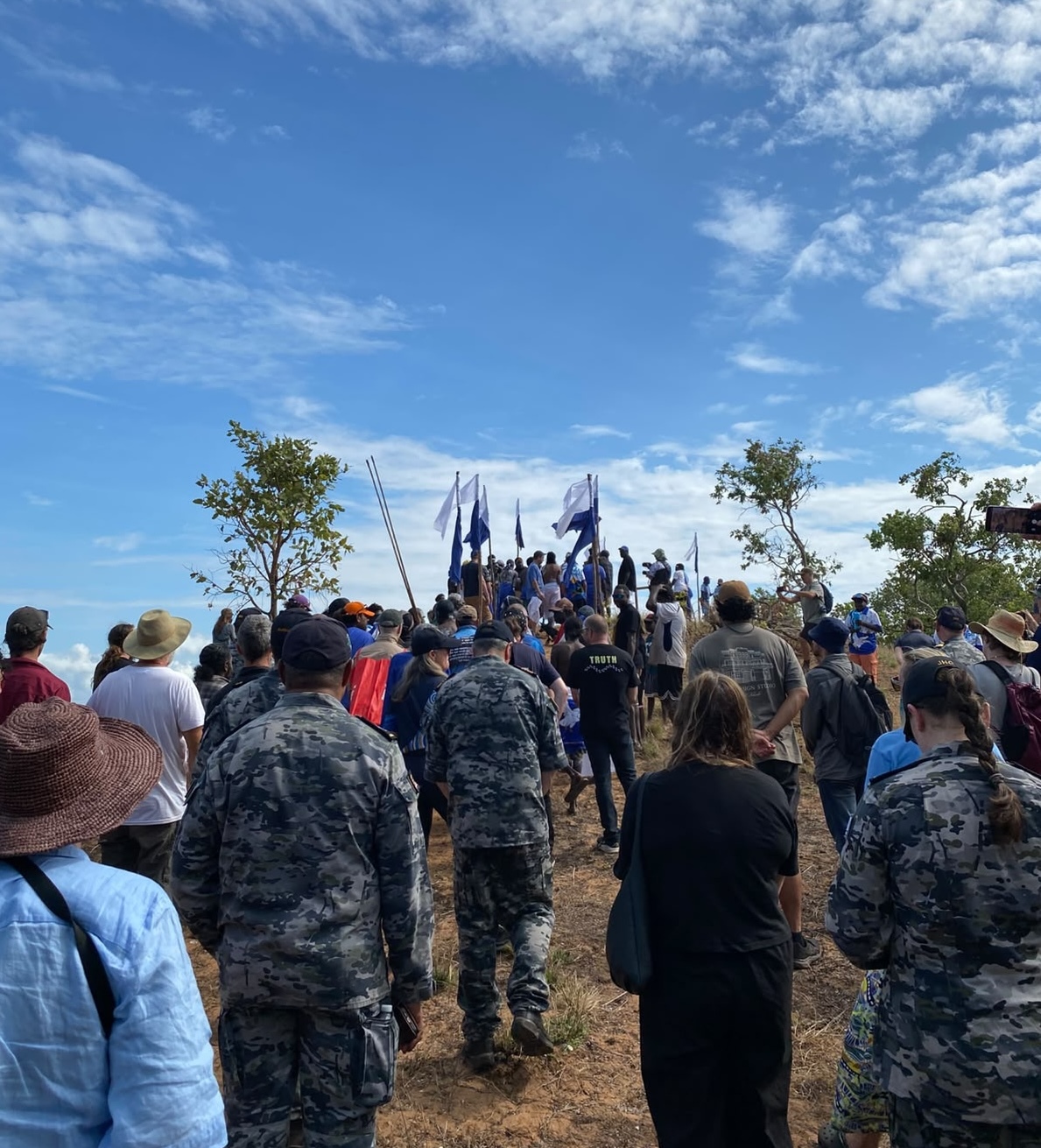
This week across multiple days of ceremony and song, fourteen Ancestors were returned, with the first repatriation taking place at Gäṉgaṉ, then yesterday at Blue Mud Bay, Bäniyala, coinciding with the 18th anniversary of Sea Rights celebrations.
The University of Melbourne's Deputy Vice-Chancellor (Indigenous), Professor Barry Judd, was at the historic ceremony.
"On behalf of the University of Melbourne, we are deeply honoured to be here, acknowledging the wrongs of the past, to strengthen and heal for a better future, while fulfilling our obligations and ethical responsibilities," Professor Judd said.
"The University has worked under the direction of the Cultural Authorities to support the repatriation of the Ancestors. We do this in close collaboration with the Victorian Aboriginal Heritage Council."
Associate Provost, Melbourne Laureate Professor Marcia Langton AO, acknowledged the Clans and applauded Dr Marawili's leadership in advocating for the repatriation for his Ancestors over many years.
"Dr Djambawa Marawili has worked tirelessly to advocate for his people and to see the return of his Ancestors to his homeland in North East Arnhem Land," Professor Langton said.
"The importance of returning Ancestors and secret or sacred objects to Clans and homelands cannot be underestimated. They should not have been taken in the first place and have been held for too long in the so-called care of institutions, too far away from their families and Clans.
"The repatriation of the Ancestors is the result of the leadership from Dr Marawili and other Clan leaders, support from the University of Melbourne team and the Victorian Aboriginal Heritage Council. Each step is at the request and guidance of Clans and Cultural Authorities."
%20Professor%20Barry%20Judd%20(right),%20Dr%20Djambawa%20Marawili%20(second%20right)%20at%20the%20Repatriation%20Ceremony.%20Picture%20Caitlin%20McAtomney.jpeg)
Professor Langton said the work is "increasingly urgent" due to the age and health of Senior Knowledge Holders and Authorities with cultural ties to the collections from regions such as Arnhem Land, "where robust cultural governance endures in accordance with traditional Clan structures".
"Our institution has held a vast array of Ancestral remains and secret or sacred objects for decades. In recent times, we have ensured these anthropological collections were appropriately cared for and allowed for community access, which has been an important part of this whole process," Professor Langton said.
The University of Melbourne's Interim Vice-Chancellor, Professor Glyn Davis AC, said this was a historic day.
"The return of Ancestors to Country is a profound responsibility for universities and collecting institutions in Australia and worldwide," Professor Davis said.
"Universities are now confronting the legacies of collecting practices centuries ago. We will work with communities for as long as necessary so Ancestors and cultural heritage material can be returned to the places, families and custodians where they belong.
"The University acknowledges the leadership of Dr Djambawa Marawili and the Dhaḷwaŋu, Maḏarrpa, Djapu, Dhuḏi-Djapu, Maŋgalili and Marrakulu Clans, and we are honoured and humbled to support the return of their Ancestors."
The Ancestors were part of the University's Donald Thomson Collection, which reflects the social and cultural life of Aboriginal people from Cape York, Arnhem Land and the Central and Gibson Deserts, and includes material from Papua, Solomon Islands and West Papua.
Collected by Professor Donald Thomson OBE (1901-70), the Collection holds deep significance for the diverse peoples and communities represented and for the continuation of culture and belonging.
The University of Melbourne acknowledges Professor Thomson and his family and notes his important legacy and efforts in documenting Indigenous cultures for which he had the utmost respect.
"The Donald Thomson Collection is of immense significance to Aboriginal peoples, and its value to researchers in Australia and internationally concerned with understanding human diversity cannot be underestimated," Professor Langton said.
Professor Judd said repatriations are an important part of the University's Indigenous Strategy, Murmuk Djerring, 2023-2027.
"The University of Melbourne has a history of collecting Aboriginal Ancestors and cultural heritage material reaching back to at least the 1870s," Professor Judd said.
"Truth-telling and dialogue are a core institutional priority, and our work aims to ensure that First Peoples' histories, voices and lived experiences are centred in the University's teaching, research and leadership. This is an important step in cultural healing, and we are committed to repatriating all Ancestors and secret and sacred objects back to the communities of origin."
The University's Repatriation Program supports the return of Ancestors and secret or sacred objects to over 90 remote communities through a community-led, culturally respectful approach. Over the last three years, the University has supported a number of communities to have their Ancestors returned to Country as part of a long-term program.



