




Important Larrakia cultural artefacts at Binybara / Lee Point in Darwin have been secured following a confidential settlement between a Larrakia Elder and Defence Housing Australia (DHA), with Elders now aiming to secure greater cultural protection for the area.
Larrakia Elder Tibby Quall, of the Danggalaba Kulumbirigin clan, had been engaged in a long-standing dispute over the heritage decision-making process after the Northern Territory Heritage Council allowed DHA to remove cultural artefacts from Binybara for its proposed housing development.
The Northern Territory Civil and Administrative Tribunal ruled in Mr Quall's favour last year, and after a 20-month process, the two parties signed a confidential agreement.
Mr Quall said it has given Larrakia "responsibilities and protection of our heritage, which will be maintained forever on the land".
"It was really great that we achieved something by going through the process," he said.
"It [Binybara] is one of our most sacred areas, part of our laws and customs that we hold."
Ally McAlpine from Environmental Justice Australia said the outcome was significant.
"Traditional Owners are rights holders with cultural authority. They should be at the heart of decisions about their Country and heritage, not treated as an afterthought once major decisions have already been made," she said.
"Our client should never have had to take legal action simply to have his knowledge and concerns properly heard. But his persistence has helped secure the future of important Larrakia cultural heritage at Binybara."
Mr Quall and fellow Larrakia Elder Lorraine Williams have now begun a campaign to secure greater protection for Binybara.
They have nominated the area for National Heritage listing under federal law and are calling for immediate protection while its cultural and historical significance is being evaluated.
"It's about preservation of our culture and heritage on the land, which will go on forever," Mr Quall said. "It shows we have our culture and heritage there in the land."
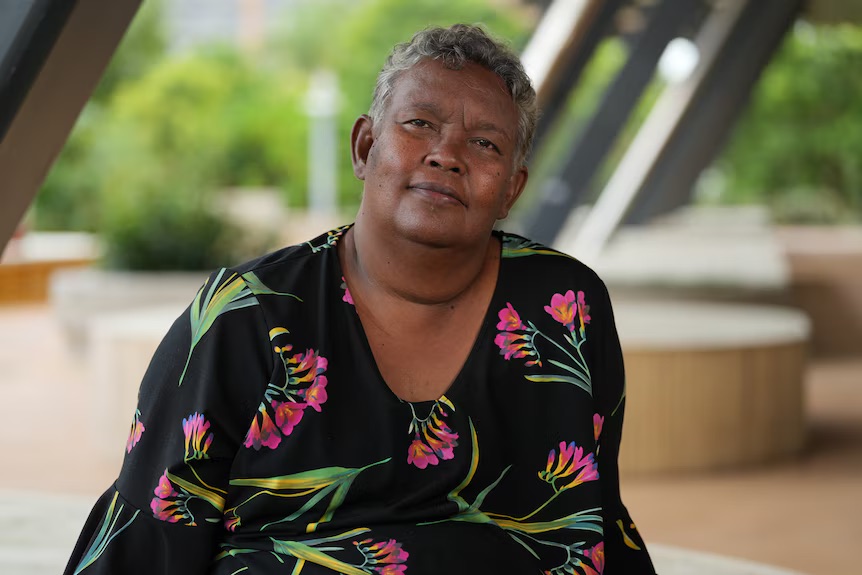
The nomination aims to have Binybara recognised holistically, highlighting the connections between Larrakia people, their land, cultural objects, the natural environment, Dreamings and ceremonies.
"Our sacred places are our sacred places," Ms Williams said. "Larrakia women need to protect our sacred places. The land is sacred and should not be destroyed.
"Why do they need every bit of land? This is one of the last places for our bush tucker in this area. Not just for us, but the food source for the animals too."
She said developers don't think about the "consequences" of developing the land.
"It's going to change everything," Ms Williams said. "How will the birds know where to go? Where to find their food source? Where to nest?"
Ms McAlpine said you can't "separate cultural heritage from the Country to which it belongs".
"This new application widens the lens," she said. "It asks decision-makers to consider Binybara as a living cultural biolandscape — its places, objects, stories, knowledge and connections — rather than looking at individual artefacts in isolation."
The controversial development, recently revised by DHA to reduce the scale of development and increase conservation spaces, is proposed on Country with deep cultural and ecological significance. The area forms part of the Kenbi Dreaming track and provides habitat for the endangered Gouldian finch.
DHA says it has secured 500 hectares of land near Litchfield National Park to provide habitat for the Gouldian finch and support conservation efforts.
NT Labor has called for a moratorium on the development, arguing that it will not make a significant difference to the Territory's homelessness problem.
In March, opposition leader Selena Uibo told National Indigenous Times they had "come to the position that we support the community's calls for a moratorium on the current DHA housing project until the NT Planning Commission completes a comprehensive Area Plan for the whole of Lee Point that properly considers the views of the community and Traditional Owners".
She said that whilst Labor "supports development," it works best when it has "community confidence and planning certainty".
"This way, we can avoid another decade of dispute, legal challenge and political fighting while the site remains stuck in limbo."



