




When Ambre Higgins welcomed her daughter Kymani into the world in August 2025, it was 11 weeks earlier than expected.
Weighing just 1.2 kilograms, Kymani would spend her first eight weeks in neonatal intensive care, while Ms Higgins and her husband faced the challenge of supporting their vulnerable newborn alongside raising their three young sons.
Ahead of World Prematurity Day on 15 November, Ms Higgins, a proud Gurindji woman living on Larrakia Country, is sharing her family's experience to raise awareness of the often unseen impacts of preterm birth.
Ms Higgins' pregnancy took an unexpected turn at 26 weeks when she was diagnosed with preeclampsia, a serious pregnancy complication characterised by high blood pressure that can put both mother and baby at risk.
It was a frighteningly familiar experience for Ambre, who had also developed preeclampsia during her second pregnancy, resulting in her son being born prematurely at 34 weeks.
Over the following three weeks, she was admitted to hospital more than six times as doctors worked to control her blood pressure.
"Most times I was discharged, I only managed a day or two at home before my blood pressure became dangerously high again and I was readmitted," Ms Higgins said.
At the time, she was working full-time while caring for her three sons, aged four, seven and nine.
Ms Higgins recalled feeling overwhelmed by the uncertainty and, at times, struggling to have her concerns heard.
"There were occasions when I was discharged with incorrect medication dosages or unclear instructions, and I sometimes felt unheard when raising concerns about my health," she said.
At just 29 weeks, Kymani was born.
What followed was an eight-week journey through the Neonatal Intensive Care Unit (NICU), where Kymani experienced respiratory difficulties and required breathing support.
"Seeing her so tiny and covered in tubes was heartbreaking. I felt like I had failed her, even though I knew the situation was beyond my control," Ms Higgins said.
For Ambre and her husband, the following weeks became an exhausting balancing act between hospital and home.
Living 30 minutes from the hospital, and with Ambre unable to drive for six weeks, the couple took turns visiting Kymani, ensuring one parent was by her side across a 12 hour period each day, sometimes staying until 1am.
Meanwhile, life continued for their three boys, with school, sport and everyday family responsibilities demanding their attention.
"For me, one of the hardest parts was feeling constantly torn between being a mother to my baby in the NICU and being there for my three boys at home," Ms Higgins said.
"Nothing prepares you for leaving the hospital without your baby when you expected to be taking them home with you."
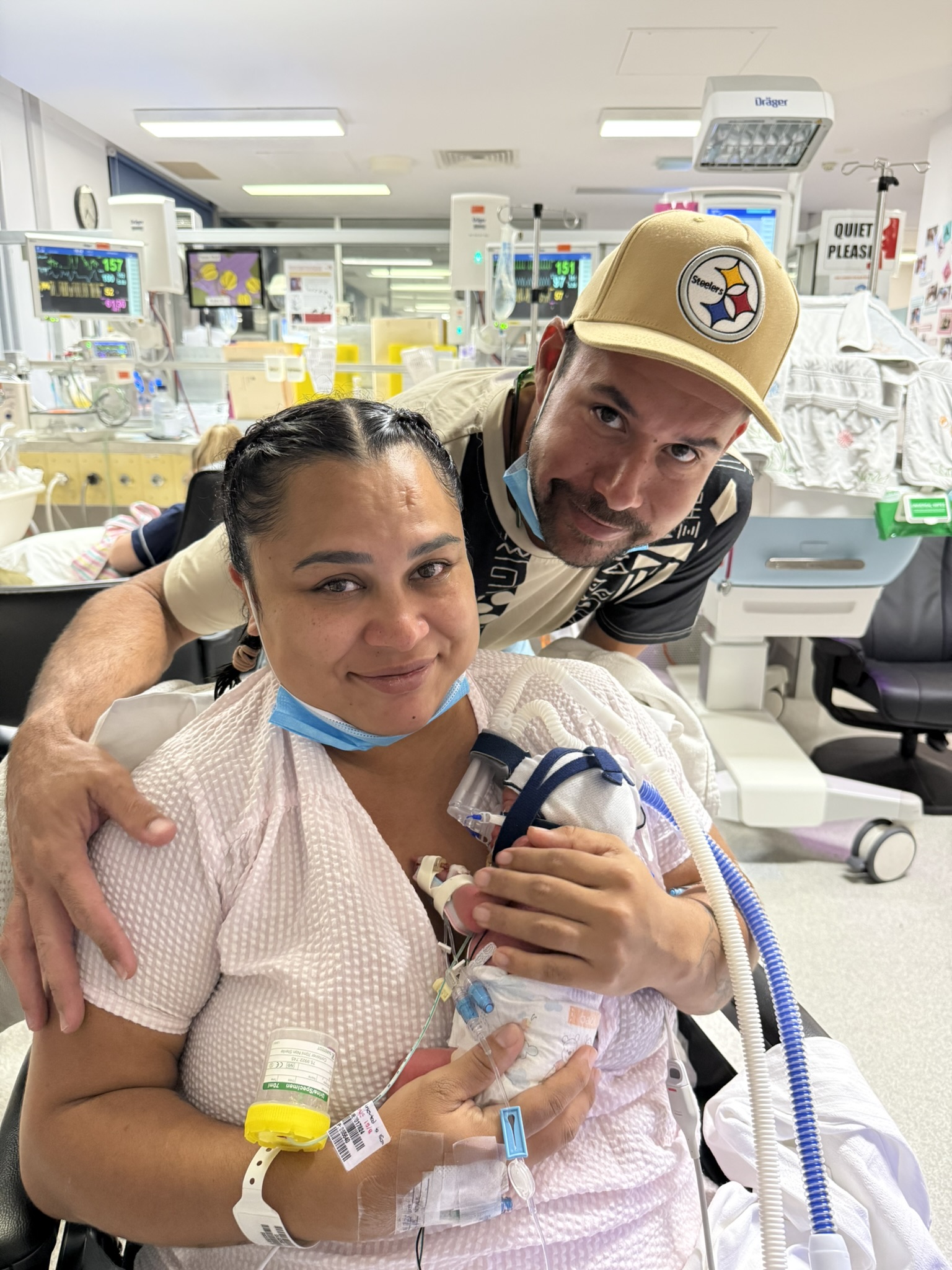
Beyond the fear and uncertainty, Ms Higgins described a sense of grief for the pregnancy, birth and newborn experience she had imagined.
"People congratulate you on your baby, but your baby isn't with you. Instead, they're in an incubator surrounded by tubes and machines."
Ms Higgins noted feelings of guilt can be overwhelming, even when parents know their baby's early arrival was beyond their control.
As Australia prepares to mark World Prematurity Day, her story highlights the importance of preventing preterm birth and supporting families through what can be a very challenging experience.
The Every Week Counts National Preterm and Early Term Birth Prevention Program is working with maternity services across Australia to implement evidence-based strategies that reduce preventable early births and improve outcomes for women and babies.
Top End Clinical Lead for the Every Week Counts program, Dr Kiarna Brown said strengthening partnerships with Aboriginal and Torres Strait Islander communities remained a key priority as the national program entered its third round.
"Reducing preterm birth among Aboriginal and Torres Strait Islander women requires more than clinical interventions alone. It means working alongside communities, listening to women and families, and ensuring their voices and cultural knowledge help shape the care they receive," she said.
"Through Every Week Counts, we're committed to strengthening these partnerships and supporting maternity services to deliver more equitable, culturally safe care that gives every baby the best possible start to life."
For Ms Higgins, sharing her experience is an opportunity to help others understand that the impacts of preterm birth extend far beyond the hospital.
"I wish people understood that the impact of preterm birth extends far beyond the birth itself. While everyone focuses on the baby, there is an enormous emotional, physical and logistical toll on the entire family," she said.
"Preterm birth affects the whole family, and its impacts continue long after the hospital stay ends."



