

A seawall completed at Saolo Village in Fiji is helping protect homes, drinking water and land after coastal erosion brought the sea closer to the community.
The 100-metre boulder wall protects the frontage of the village in Bua, on Vanua Levu, where wave action had steadily eroded the shoreline.
The village's main water source was also at risk, threatening a resource used by its approximately 190 residents.
Construction began in June 2026 and finished in August at an estimated cost of $60,000, with Fiji's Ministry of Agriculture, Waterways and Sugar Industry delivering the project through its Waterways Division.
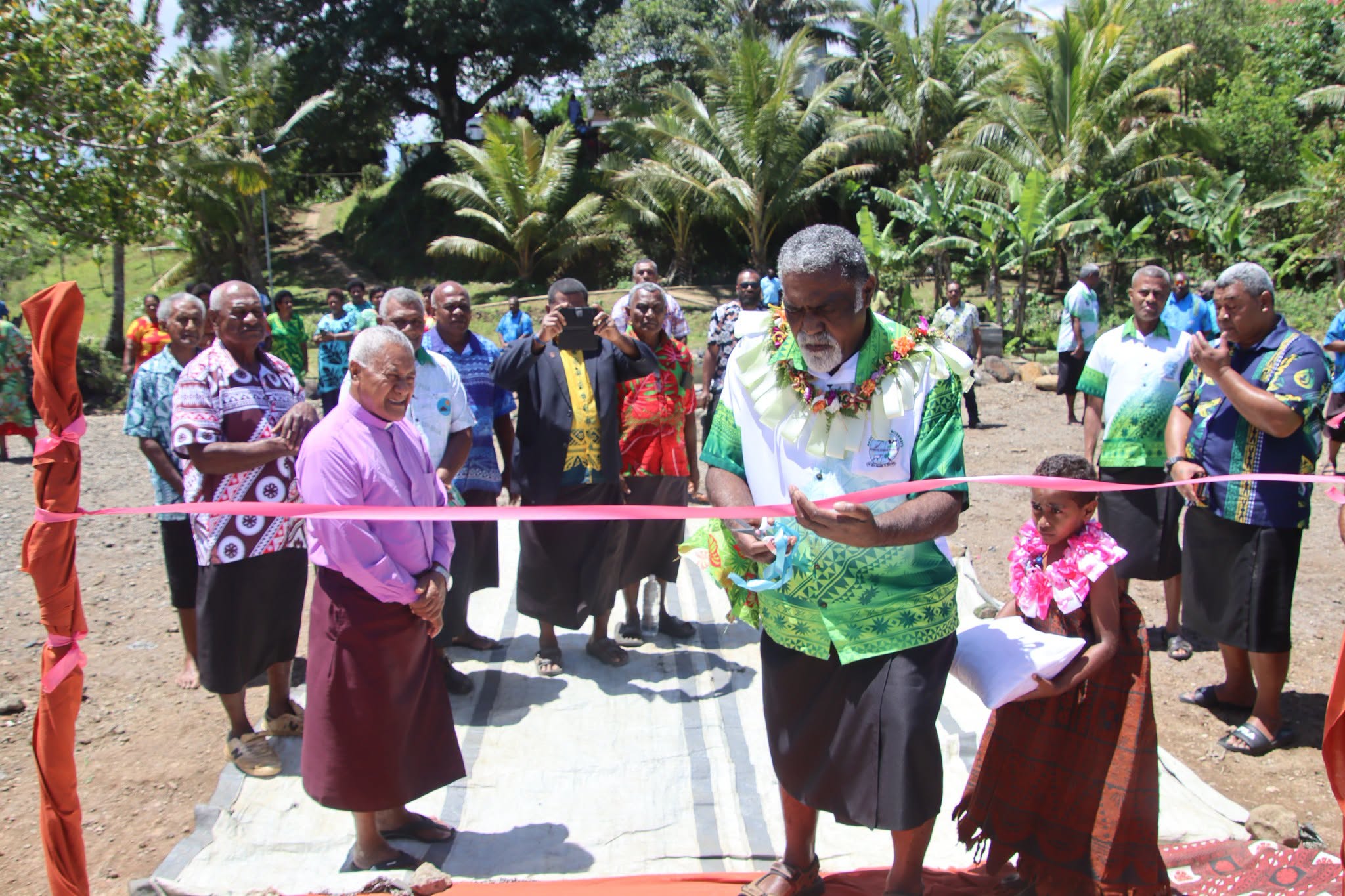
Minister for Agriculture, Waterways and Sugar Industry Tomasi Tunabuna commissioned the completed structure and outlined its purpose.
"Today, we are not simply commissioning a 100-metre seawall. We are commissioning a structure that will help protect the homes, land and water source of approximately 190 people who call Saolo Village home," Mr Tunabuna said.
"The shoreline had been steadily eroding, bringing the sea closer to the village and placing important community assets at risk."
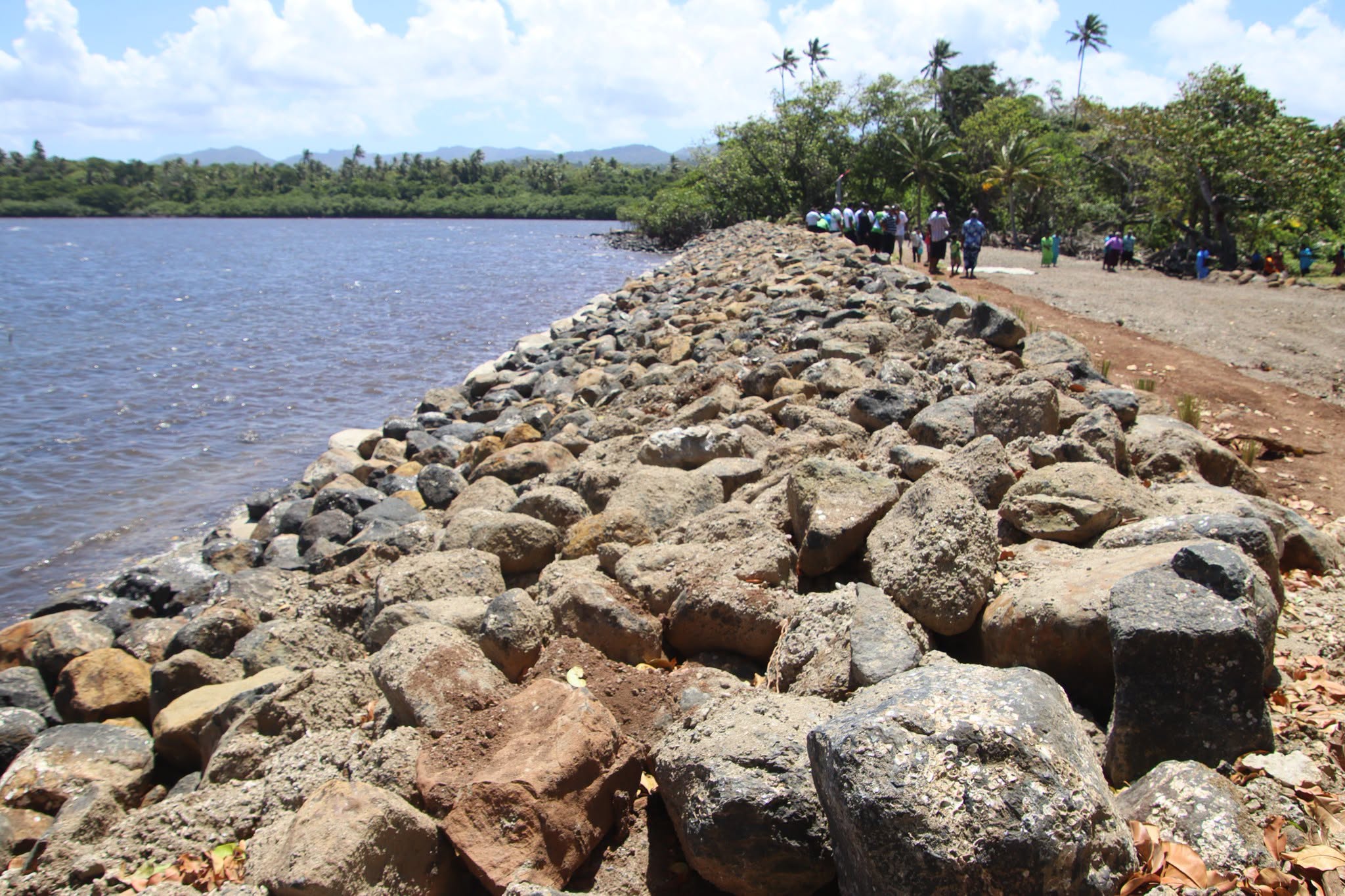
The works included placing soil behind the boulder wall to reclaim approximately 20 metres of land along the affected area.
Both ends of the structure were anchored into hills on either side of the village frontage, connecting the barrier to stable ground.
Filter cloth was installed behind the boulders to retain the fill and prevent fine soil from washing through gaps in the wall.
Residents contributed the boulders and soil fill, while the ministry supplied technical expertise, machinery and construction support.
Mr Tunabuna recognised the community's role in delivering the works.
"This project also demonstrates what can be achieved when Government and communities work together," he said.
"The Ministry, through the Waterways Division, provided the technical expertise, machinery, operators and construction support, while the community contributed the boulders and soil fill needed for the works."
Community consent was obtained before construction began, and the Waterways Division supervised and monitored the project through to completion.
Its responsibilities included site investigations, surveys, design drawings, equipment transport and the provision of operators, drivers, fuel and filter cloth.
Director for Waterways Marau Vuli outlined the assessments behind the design.
"Our technical team carried out the site investigation, topographical and cross-section surveys before preparing the design and drawings for the boulder revetment," Mr Vuli said.
"The structure has been anchored into stable ground at both ends, providing a continuous line of protection along the vulnerable section of shoreline.
"Filter cloth was also installed to help retain the soil fill behind the boulders."
The completed works strengthen the village shoreline against wave action and further erosion, while restoring land between the sea and community assets.
Mr Tunabuna acknowledged residents' contributions and the technical team's completion of the works within the planned timeframe.
Saolo's focus on protecting homes, water and land has parallels with coastal protection projects elsewhere in the Pacific and Torres Strait.
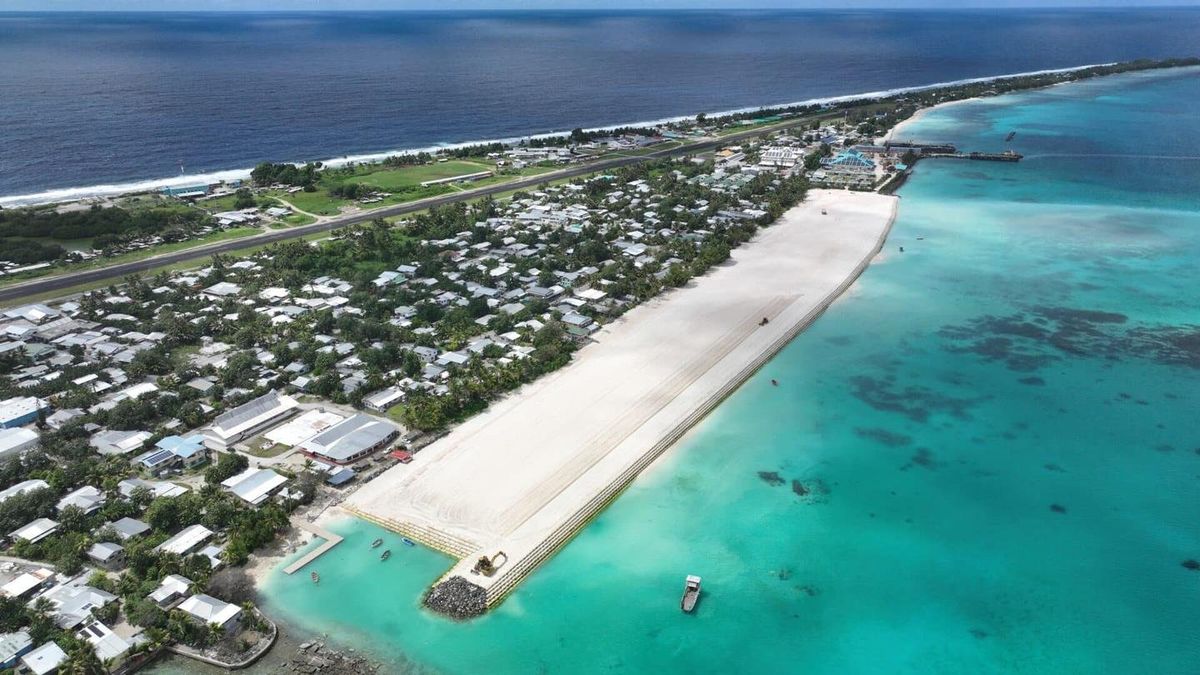
Tuvalu communities demand a future on their own lands. (Image: UNDP)
The seawall shares a purpose with coastal protection projects seen in Tuvalu and the Torres Strait, where protecting land and infrastructure is helping communities remain in their island homes.
In Tuvalu, the Tuvalu Coastal Adaptation Project has created elevated land on Funafuti to help communities remain on their islands as sea levels rise.
The project had created 15.3 hectares of elevated land, including eight hectares completed in 2025 and designed to remain above projected sea levels beyond 2100.
In the Torres Strait, a $5 million seawall opened on Poruma (Coconut Island) in 2024 to help protect the low-lying community from erosion and coastal flooding.
The one-kilometre structure supported up to nine local full-time jobs during construction, combining coastal protection with employment for island residents