




The Country Liberal Party (CLP) has completed its first year in government in the Northern Territory, presiding over one of the sharpest rises in incarceration in the Territory's history and near universal criticism from Indigenous, legal and human rights groups.
A year after their landslide election victory — which reduced Labor to a handful of regional and rural seats — the CLP has made sweeping changes to law and order policy, however experts and Aboriginal leaders warn the approach is driving up imprisonment, worsening prison conditions, and deepening mistrust between government and Aboriginal communities.
The CLP has shown little willingness to shift course, dismissing critics as "offender apologists" and insisting its mandate is to make Territorians safer.
"We came into government with a clear mandate to make the Territory safer, stronger and more secure – and that's exactly what we've done," Chief Minister Lia Finocchiaro said.
"The first year was about action, certainty and security. We've backed our police, held offenders to account, supported victims, and provided Territorians with confidence in the future of our economy and lifestyle."
Ms Finocchiaro argued the Territory has recorded 605 fewer victims of crime in the first half of 2025 — a 4.7 per cent decrease "compared with Labor".
View this post on Instagram
Regardless of the government's claims, incarceration rates have soared. The Territory now has the second-highest imprisonment rate in the world — behind only El Salvador — with more than one per cent of the population behind bars. Aboriginal people make up nearly 90 per cent of those in custody.
Since January, more than 3,300 people have been refused bail under "Declan's Law," the government has said, a 44 per cent increase on Labor's final year, alongside a 40 per cent rise in remand numbers.
Conditions inside prisons and youth detention centres have drawn national concern, with reports of 20 women being held in one cell in Alice Springs and forced to drink from a toilet, and of an 11-year-old detained in an adult facility in Palmerston.
Earlier this month, the family of late NT Supreme Court Justice James Muirhead urged federal intervention, describing the government's policies as "regressive actions".
The letter said the measures were "ineffective" in preventing crime and demonstrably harmful.
"They punish the vulnerable, fuel cycles of trauma and recidivism, and ignore decades of research into what actually works to build safer communities," the family wrote.
Federal Indigenous Australians Minister Malarndirri McCarthy has also raised the alarm, saying she made it "very clear the concerns I have in regards to First Nations youths in watch houses and the reintroduction of spithoods".
"The Northern Territory has the worst outcomes when it comes to Closing the Gap. I have listened to the concerns of the First Nations sector, legal organisations and human rights groups," she said earlier this month.
Broken relationships with Aboriginal leaders
Relations between the CLP and Aboriginal organisations have also collapsed during its first year.
"Unfortunately, the CLP always gets in on law and order. But us Aboriginal people are the most incarcerated people in the Northern Territory," Central Land Council (CLC) Deputy Chair Barbara Shaw said last month.
"It is so disgusting that this government is not listening to our Elders, to take our children back out on to Country and be with families."
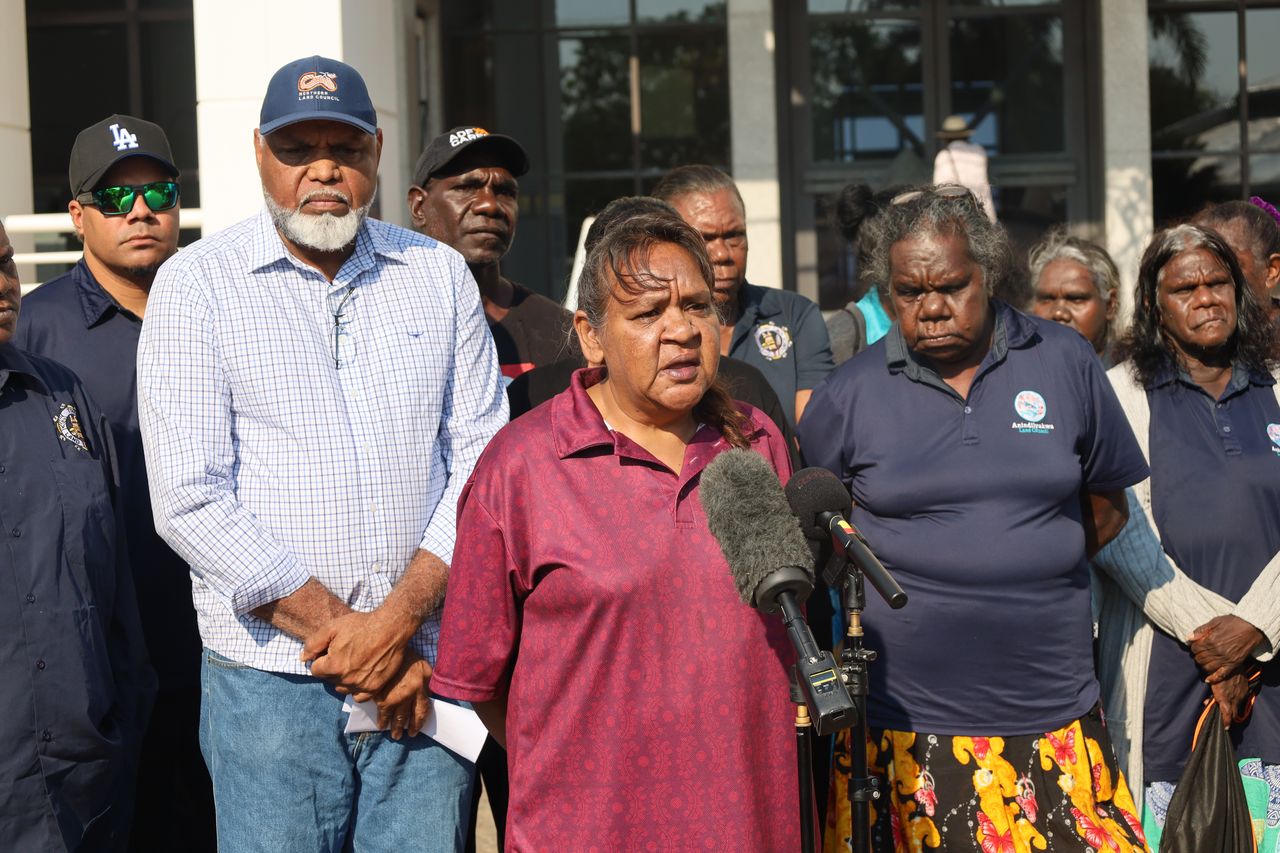
The four powerful Aboriginal land councils have opposed the government's broader legislative agenda, including the controversial Territory Coordinator Bill, which they described as "ill-conceived and rushed".
"Between us we own more than half of the Territory's land and 85 per cent of the coastline," Tiwi Land Council Chair Leslie Tungatalum said.
"Any government that ignores and harms our fast-growing population may win an election or two, but it has no future."
In a statement last week, the CLC noted: "Aboriginal people make up over 30 per cent of the Northern Territory and we have been here since time immemorial. We are the Territory.
"By ignoring our voices and rights, the CLP government is turning its back on our communities and making an already dire situation worse."
The government's willingness to experiment with new law-and-order ideas has also provoked backlash. Its proposal to allow Territorians to purchase OC spray from gun stores was widely opposed — even by NT News readers who are often vocal supporters of the CLP.
View this post on Instagram
Aboriginal Medical Services Alliance NT chief executive Dr John Paterson summed up how many viewed a law and order crackdown in the midst of a human rights crisis.
"The Territory has nearly 6,000 people on the public housing waitlist. One in five Aboriginal people here are experiencing homelessness. We have 13 times the national rate of people sleeping rough," Dr Paterson said.
"This crisis is driven by overcrowded housing, family and domestic violence, incarceration, and chronic underinvestment in social services. The same government that is pushing more people onto the street is now arming the public with a harmful weapon. It defies all logic."
The CLP insists its policies are about restoring safety. However critics — from Aboriginal leaders to legal experts — argue its first year has entrenched trauma, fuelled overcrowding in prisons, and sidelined Aboriginal voices in decision-making.
Independent Senator Lidia Thorpe summed up the growing frustration, noting: "We don't need more reviews, reports or inquiries — we need action."
"Governments already know the solutions because our people have been telling them for decades. What's missing is the political will to act," she said.
As the government heads into its second year, pressure is mounting from Canberra, Aboriginal leaders, and community groups for change.
Whether the CLP can maintain its hardline approach in the face of worsening incarceration rates and deteriorating prison conditions remains to be seen. The first year has cemented its "tough on crime" reputation — but also deepened divides that may define the rest of its term.



