




The Northern Territory's four Land Councils have issued a united call for the NT Government to engage with them directly, accusing the Territory's leaders of failing to consult meaningfully and treat them as equal partners.
In a joint appearance on Thursday, leaders from the Northern Land Council (NLC), Central Land Council (CLC), Tiwi Land Council (TLC), and Anindilyakwa Land Council (ALC) sharply criticised the NT Government's approach to Indigenous affairs, labelling its engagement "pathetic" and urging the federal government to intervene.
None of the policies introduced by the CLP are working, the leaders said.
"We encourage the Northern Territory Government to speak with us," said NLC Chair Matthew Ryan. "Face to face. Be serious about economic development opportunities."
CLC Deputy Chair Barbara Shaw accused the government of focusing solely on punitive measures.
"Unfortunately, the CLP always gets in on law and order. But us Aboriginal people are the most incarcerated people in the Northern Territory," she said.
"It is so disgusting that this government is not listening to our Elders, to take our children back out on to Country and be with families."
The Territory government has faced mounting criticism over its law-and-order agenda, particularly controversial changes including stricter bail laws and lowering the age of criminal responsibility from 12 to 10. Legal, human rights, and Indigenous groups have condemned the moves.
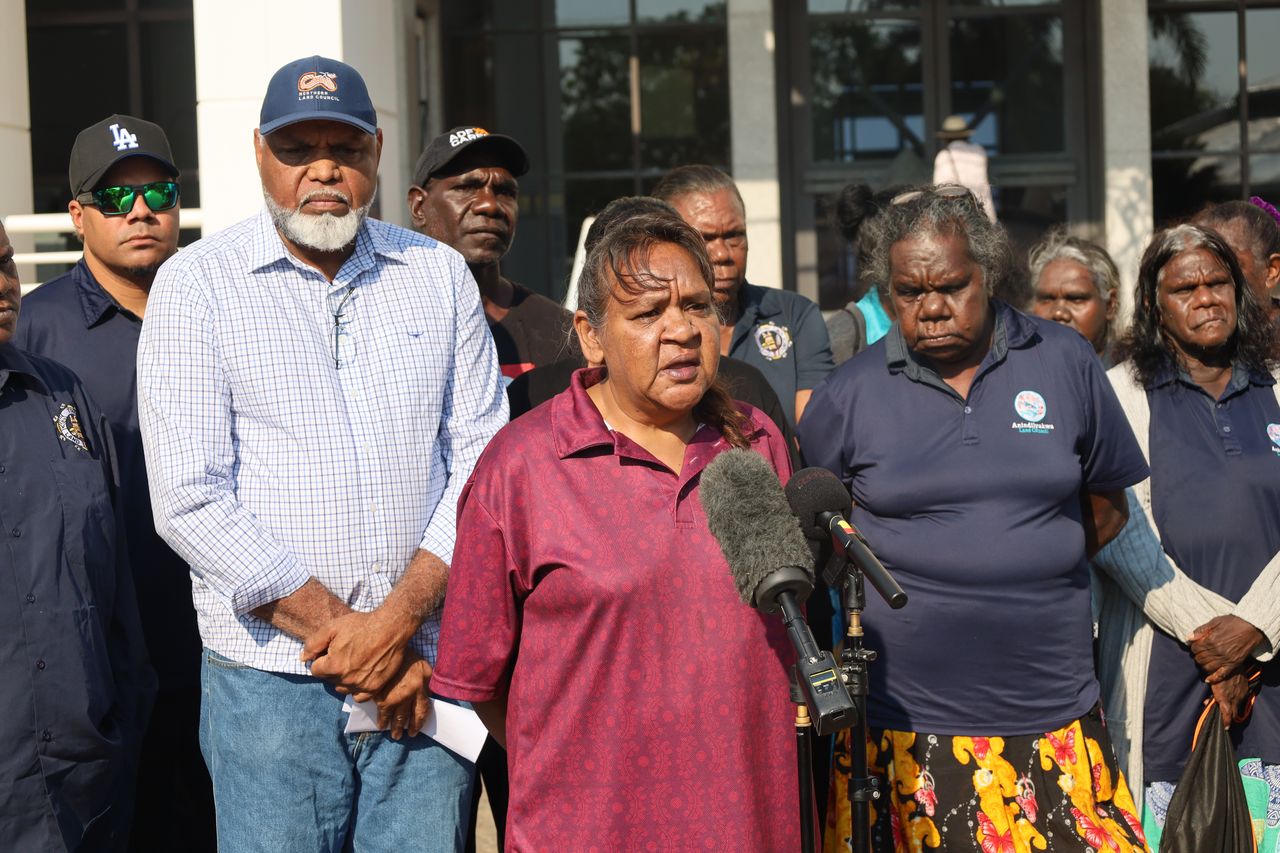
ALC Chair Cherelle Wurrawilya said Land Councils would not accept being sidelined.
"Everyone will suffer if governments keep punishing and neglecting our people, but we will all gain when governments work with us," she said in a statement. "Just look at the big drop in crime we achieved on Groote Island since we took control of delivering justice."
Recent data shows that since the introduction of the NT's first Community Court and Community Justice Group on Groote Eylandt, crime has fallen significantly. There were 130 offences recorded in the past year, down from 1,041 in 2019 — a drop of nearly 88 per cent. Youth offences dropped from 267 in 2019 to just 28 in the past 12 months.
Land Council leaders also responded to the findings of the coronial inquest into the police shooting of Kumanjayi Walker, which exposed widespread institutional racism within the NT Police Force.
Mr Ryan said the Land Councils want to co-design the terms of reference for an independent inquiry into systemic racism in policing, in partnership with other Aboriginal organisations.
"We want a working group of relevant agencies to develop and implement better procedures to address complaints by Aboriginal people about police racism and use of force — a group that consults with the land councils and affected families and communities," he said.
He stressed the urgency of engagement with acting Police Commissioner Martin Dole but admitted progress had been minimal.
"At the moment, we haven't seen any movement," Mr Ryan said. "As a collective, we can work together, [and make] a better policing model."
The Land Councils have criticised recent NT development legislation, including the controversial Territory Coordinator Bill, which passed despite strong opposition from Aboriginal leaders and legal experts. Indigenous groups have also expressed concern that changes to the Sacred Sites Act and the Water Amendment Bill place business interests above the protection of cultural heritage and water rights.
"Between us we own more than half of the Territory's land and 85 per cent of the coastline," said TLC Chair Leslie Tungatalum said in a statement. "Any government that ignores and harms our fast-growing population may win an election or two, but it has no future."
Earlier this year, the Land Councils described the NT Government's legislative agenda as "ill-conceived and rushed", warning it was pushing the Territory toward "an anti-democratic regime pursuing development at any cost."
The councils reaffirmed their commitment to defending Aboriginal water rights.
"We want the federal government to strengthen the National Water Agreement, extend the water trigger in federal environment laws to all thirsty industry proposals and keep funding remote community drinking water projects," CLC Chair Warren Williams said.



