




A new evaluation of the West Daly Peace Project has highlighted the strength of Aboriginal-led approaches to resolving conflict, with local knowledge, relationships and cultural authority identified as critical to building safer communities.
The Charles Darwin University Ground Up evaluation examined the project across the West Daly region, including Wadeye, Palumpa and Peppimenarti, documenting how Aboriginal peacemakers are drawing on existing community knowledge and relationships to respond to conflict before it escalates.
The project, funded by the National Indigenous Australians Agency and delivered through the Aboriginal Justice Unit, was designed around a simple but significant shift — supporting Aboriginal people as first responders when conflict emerges in their own communities.
Rather than relying solely on formal justice responses, the initiative has invested in local people, responsive mediation and training and supporting Aboriginal peacemakers to facilitate conversations and help restore relationships.
In speaking with Elders, CDU researchers found nurturing peace in communities was not simply about reducing incidents of conflict.
The evaluation surfaced the broader value of Aboriginal peacemaking — including the relationships, cultural knowledge and community networks that underpin successful conflict — as well as the specific role government departments and services play in creating or alleviating community tensions.
Researchers worked collaboratively with Aboriginal Justice Centre staff and local networks of authority to document both contemporary and longstanding practices of peacemaking.
At all stages, local voices and local expertise were central to the research.
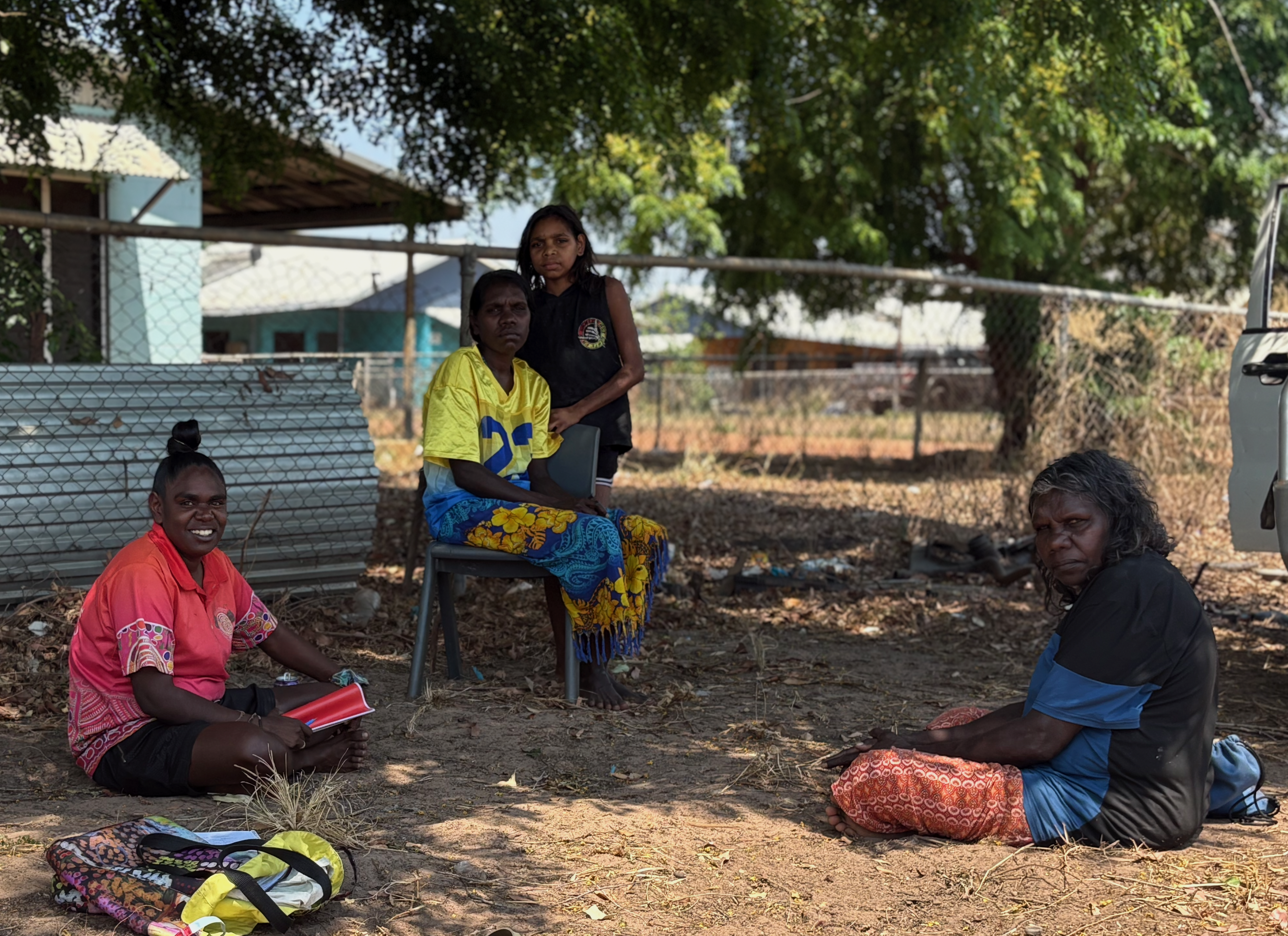
Among those involved was Murrinh-Patha Kura woman Melanie Cook from Palumpa, who worked as a community researcher and interpreter as part of the evaluation.
She was joined by community-based researchers Latisha Marranytya, Janine Cooper, Troy Mardigan and Annunciata Nunuk Wilson, bringing local knowledge, language, relationships and lived understanding to the research.
The five researchers also received Charles Darwin University Community-Based Researcher credentials in recognition of their work on the project, acknowledging the expertise and research capability they contributed throughout the evaluation.
Ms Cook said the research provided an opportunity to hear directly from people in the communities and ensure their perspectives were captured.
She participated in conversations with senior women in Nganmarriyanga and supported participants speaking in both Murrinh-Patha and English.
The involvement of Aboriginal community-based researchers reflects the broader Ground Up philosophy of the project — that research about communities should be undertaken with communities, recognising the knowledge and expertise already held by local people.
Their involvement also meant the evaluation was shaped by people who understand the relationships, histories, languages and cultural responsibilities that sit behind conflict and peacemaking in the West Daly region.
The evaluation found Aboriginal peacemaking is deeply connected to relationships, cultural authority and an understanding of the local context.
That knowledge can be difficult to replicate through conventional justice systems, particularly when conflicts involve extended families, longstanding relationships and complex community dynamics.
The project has therefore focused on building the capability of Aboriginal peacemakers, including through conflict resolution workshops and training.
West Daly Regional Council has previously reported conflict resolution training for Community Safety Patrol officers through the project, equipping local workers with strategies to de-escalate aggressive behaviour and prevent physical harm.
The broader goal is to create a regional approach to conflict management that strengthens community safety while reducing unnecessary contact with the justice system.
For CDU researchers, the project also provides an opportunity to challenge narrow definitions of what success looks like in Aboriginal justice.
A focus on reducing conflict is one approach, but the evaluation argues that the conditions for just and sustainable peace lie elsewhere — in strengthening kin relations, supporting local leadership, building skills and making existing community practices more visible.
The research comes as governments continue to look for alternatives to justice responses in remote Aboriginal communities.
The Northern Territory Government has identified the West Daly Peace Project alongside other Aboriginal Justice Centre initiatives as an alternative dispute-resolution program designed to resolve disputes outside the formal justice system.
The project represents a growing recognition that community safety can be strengthened by investing in the people who already understand the relationships, histories and cultural responsibilities within their communities.
For West Daly, that means peacebuilding is not necessarily something that needs to be brought into the community - it can come from within it.
And the evaluation suggests when Aboriginal knowledge, authority and leadership are placed at the centre of conflict resolution, the result can be more than simply stopping a dispute.
It can create the foundations for stronger relationships and safer communities.



