




Balangarra man Ronnie Morgan grew up hearing stories about his great uncle Gumbul, who died trying to protect others during the Oombulgurri/Forrest River massacre in West Australia's north.
"He was one of the tribal leaders there, and also lost his life in that massacre, trying to save the women and children," Mr Morgan told National Indigenous Times.
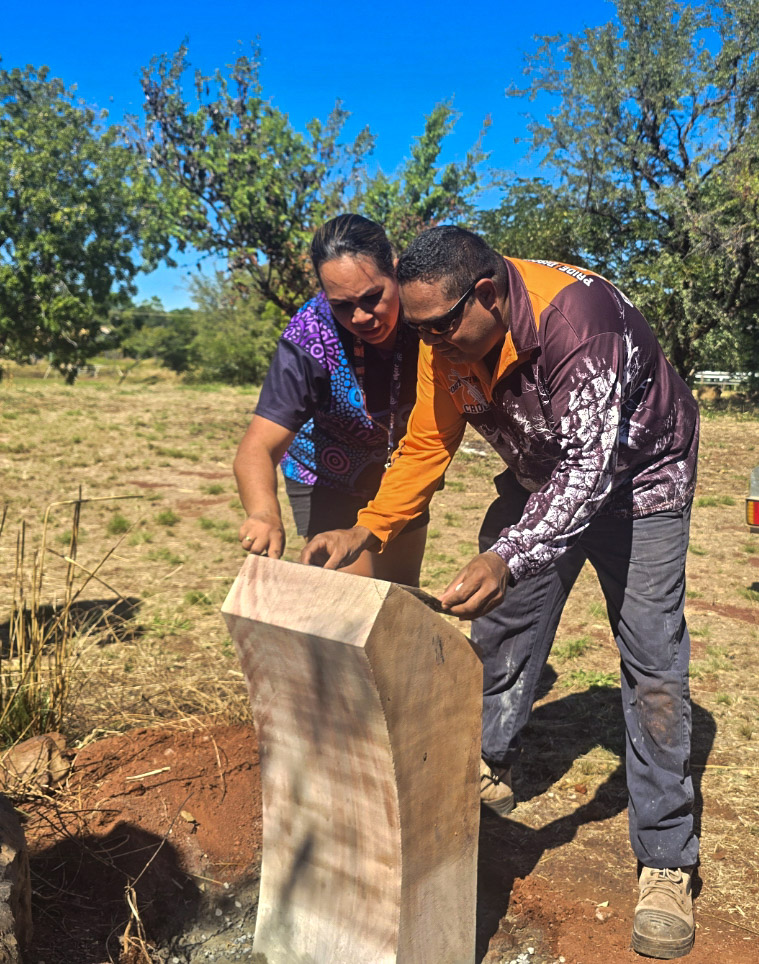
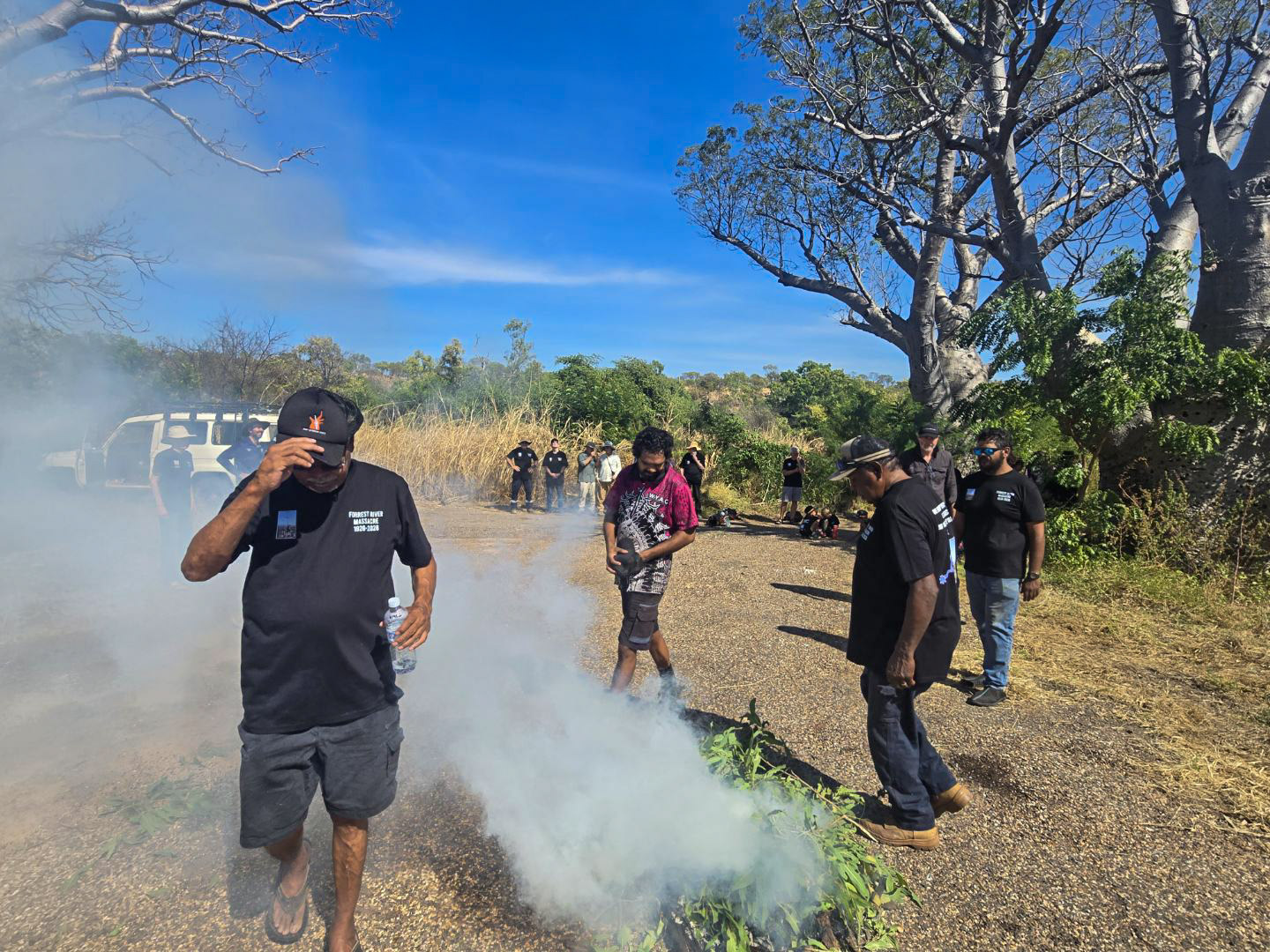
A hundred years after the killings, Mr Morgan stood alongside Balangarra families, Wyndham locals and WA Police at the site where the tragedy unfolded. A plaque was unveiled to honour those lost.
The Forrest River massacre remains part of one of WA's darkest chapters, known as the Killing Times. Frontier violence swept through the Kimberley from the 1890s into the 1920s, as settlers and pastoralists claimed Aboriginal land.
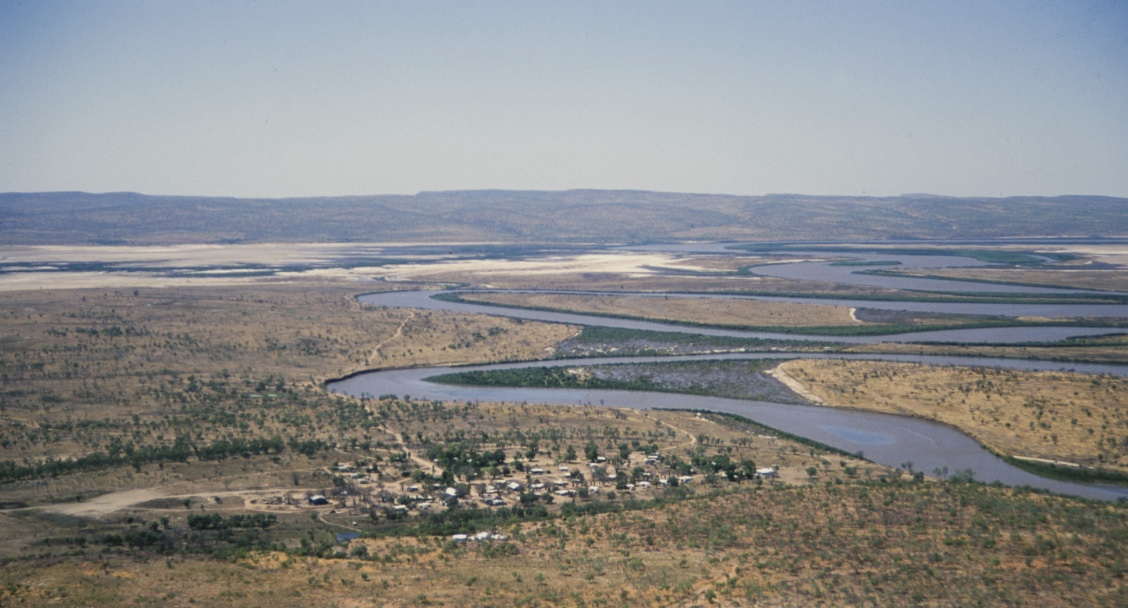
The 1926 massacre took place near the Forrest River Aboriginal Mission, known as Oombulgurri, in the East Kimberley region, 45 kilometres northwest by air from the town of Wyndham.
The massacre followed the spearing of pastoralist Frederick Hay. In response, police officers James St Jack and Denis Regan led an armed party in search of Lumbia, the Aboriginal man accused of the killing.
Over six weeks, the search party — joined by settlers and Indigenous assistants — killed between 11 and 50 Balangarra people. The bodies were burned.
Lumbia survived the massacre. He was later captured, tried for Hay's murder and sentenced to death. The sentence was later commuted to life in prison.
A 1927 royal commission found that at least 11 Aboriginal people had been murdered and recommended St. Jack and Regan face murder charges, however the charges were dismissed before trial.
Later historians identified Bernard O'Leary, a soldier-settler and special constable, as playing a significant role in the violence.
In a review of O'Leary of the Underworld, historian Jeremy Martens said former magistrate and author Kate Auty drew on a close examination of testimony given to the 1927 royal commission into the Forrest River massacre.
Ms Auty, who previously worked as a senior solicitor on the Royal Commission into Aboriginal Deaths in Custody and later helped establish Aboriginal sentencing courts, argued Bernard O'Leary was "instrumental in enforcing a culture of denial surrounding the massacre".
According to Martens, Ms Auty found O'Leary had fabricated evidence, lied by omission and feigned ignorance when questioned, allowing him to downplay his role in the killings and shift blame onto others.
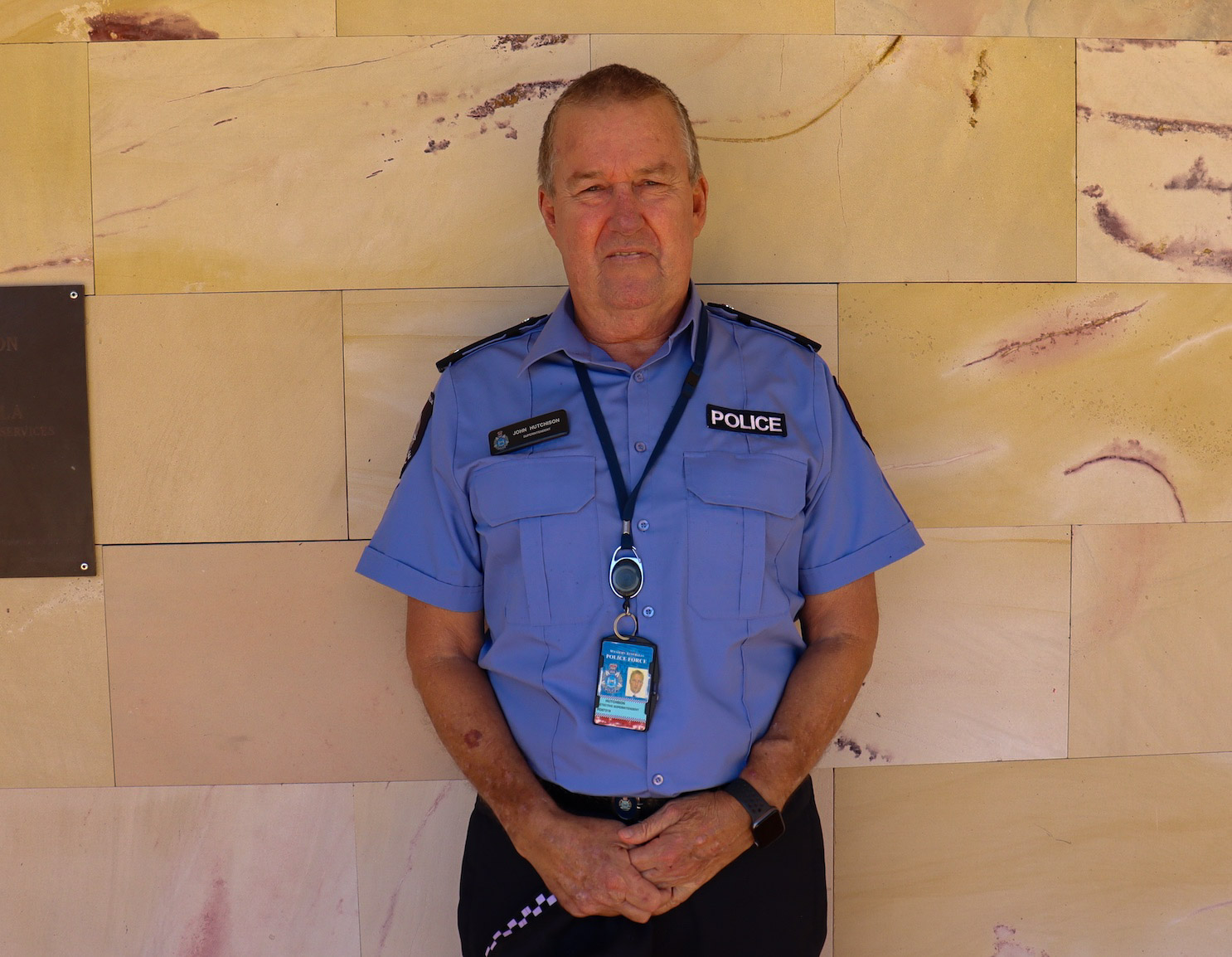
A century on, Mr Morgan said the presence of four police officers, including Kimberley Superintendent John Hutchison, at the site was a pivotal step towards reconciliation.
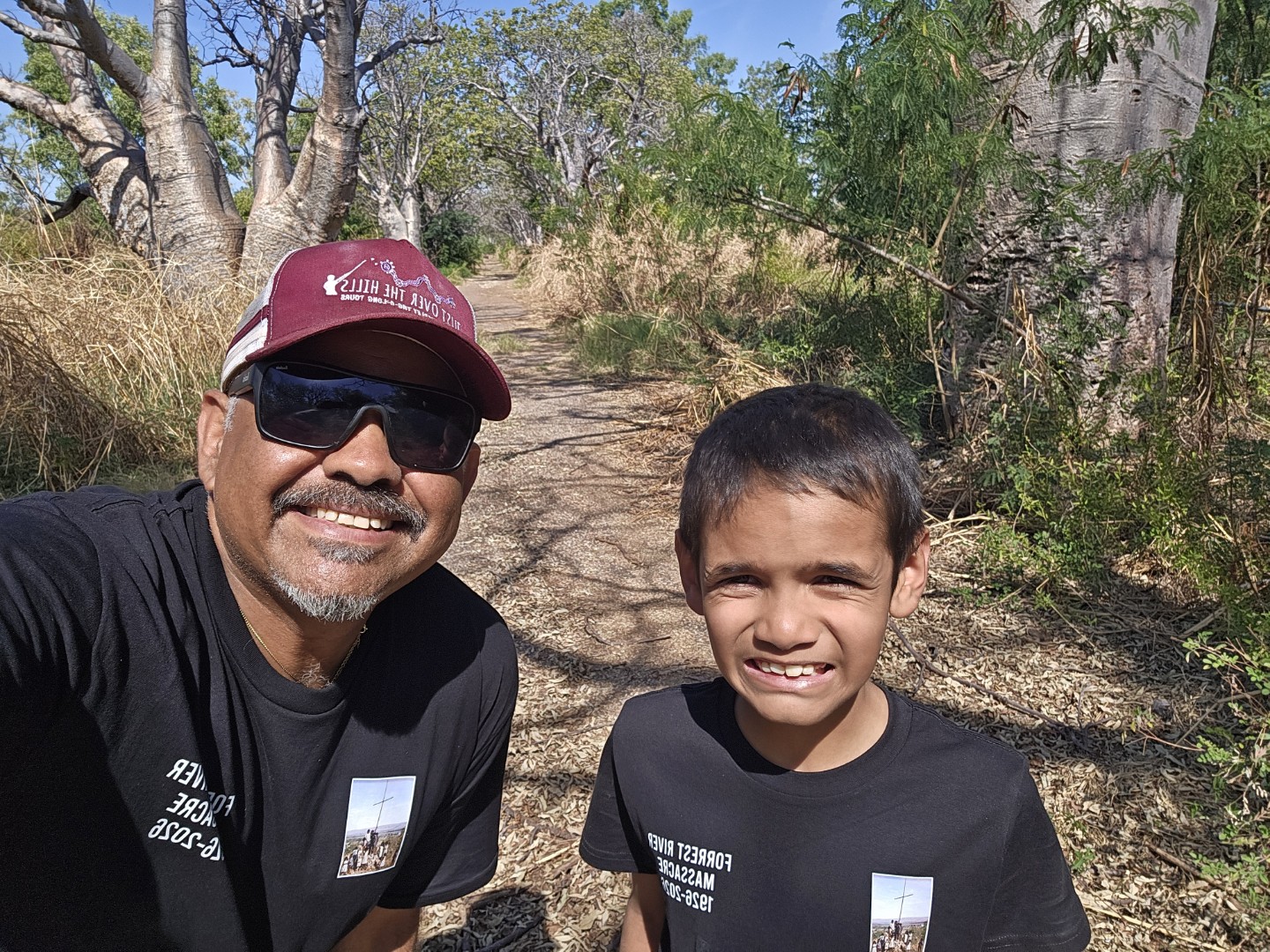
"We never want to return to this part of history again, so the best way to move forward is harmony and education. Sharing these stories that have been passed down through three generations," he said.
Supt. Hutchison described being invited to the memorial as a privilege.
"Police should acknowledge what happened," Supt Hutchison told National Indigenous Times.
"We are really keen to reconcile with Aboriginal people."
For Mr Morgan, another step remains on the path to reconciliation with his people's history of colonial violence.
He wants to see Oombulgurri reopened.
In 2011, the Barnett Liberal-National Government closed Oombulgurri, declaring the remote East Kimberley community unviable and relocating its last residents.
The closure came years before the same government signalled it might shut down more than 100 remote Aboriginal communities across Western Australia.
For fifteen years, Mr Morgan's resolve to return has not wavered.
"I've always wanted to get back out onto country, and get my people back out onto the community of Oombulgurri and reopen it," he said.



