



Indigenous leaders and tobacco control experts from across Oceania have gathered on the Gold Coast this week to develop an 'endgame' strategy for tobacco in the region.
The event is part of the Oceania Tobacco Control Conference, which began on Tuesday and runs until Friday at the Gold Coast Convention and Exhibition Centre.
The conference aims to create a roadmap to phase out tobacco sales and address the harms of tobacco and nicotine in Indigenous communities and the broader region.
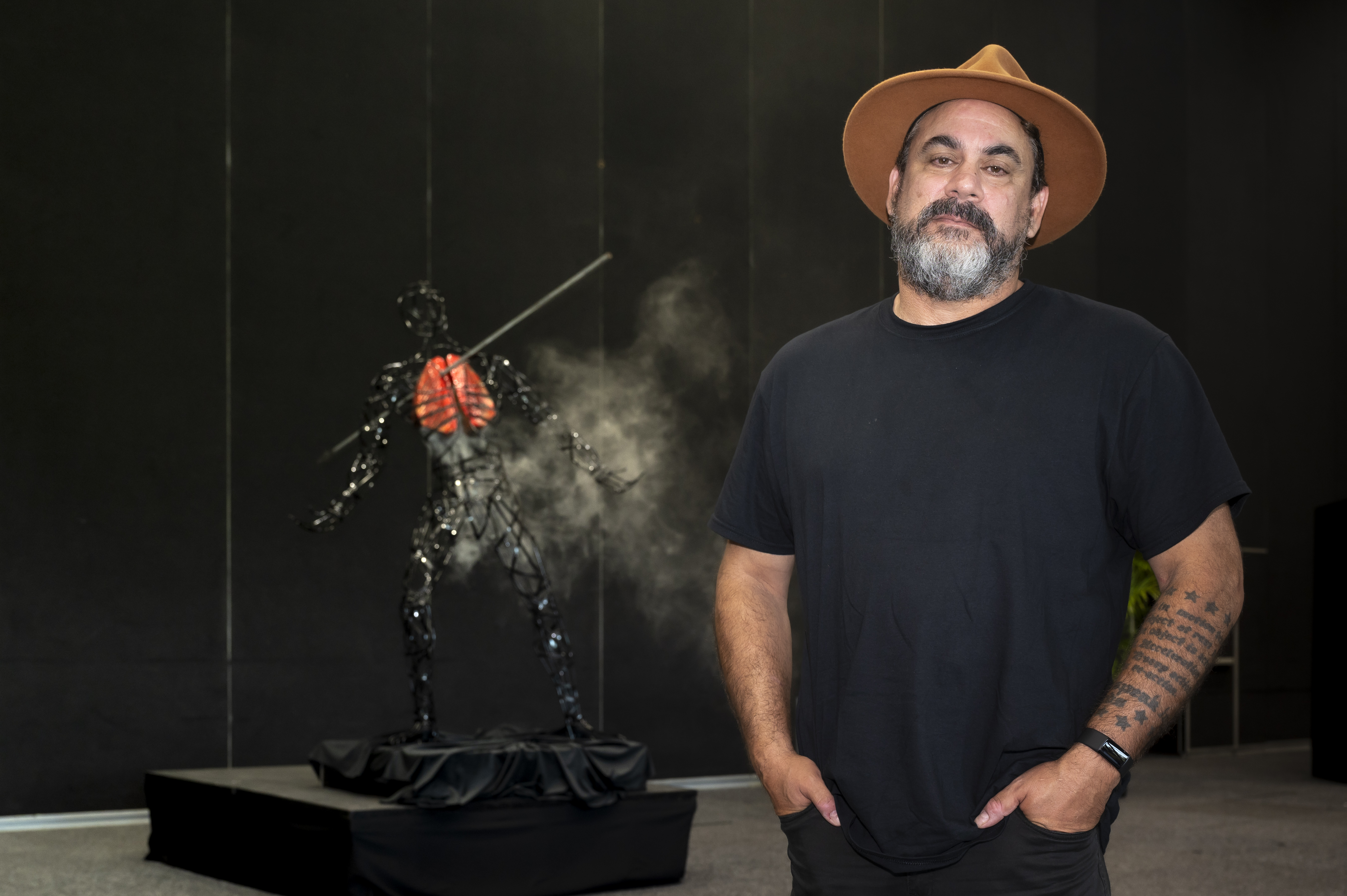
Yugumbeh man Shannon Best performed the welcome to country along with creating a live sculpture, which was unveiled at the event.
The sculpture "The Kilung Morunbal Jum" or "Death by Smoke," depicts a human skeleton with lungs which is actively smoking and features a spear through the lungs.
"When approached to do this piece, we really wanted to emphasise the impact that smoking has on Indigenous health in Australia," Mr Best said.
"With the spear in the lungs we wanted to showcase the damage that it does to the community."
In Australia, commercial tobacco use is responsible for more than half of deaths among First Peoples aged 45 and over and 37 per cent of all First Peoples deaths across all age groups.
Māori social justice advocate Shane Bradbrook stressed the need for actionable solutions rooted in local experiences and lessons from the recent repeal of New Zealand's Smokefree legislation.
"The tobacco industry has exploited us for long enough – it's time to shut them down once and for all," Mr Bradbrook said.
"We aren't just phasing out tobacco and nicotine sales – we're tearing down the industry that has profited from generations of Indigenous community deaths, pain, and suffering."
Tom Calma AO, former Senior Australian of the Year and National Coordinator Tackling Indigenous Smoking, highlighted the severe impact of the tobacco and nicotine industry on Indigenous peoples, their communities, and the environment.
"It's time to hold the tobacco industry accountable for the damage it has caused to our communities and our environment," Professor Calma said.
"This is our time to lead. This is our time to claim our future."



