



Hundreds of educators from across Australia have gathered in Magandjin (Brisbane) for the inaugural TIPIAC x Riley Callie Resources National First Nations Education Conference, with organisers hoping the event will lead to lasting change in schools and communities.
Held on August 14, the conference brought together educators from Tasmania, the Pilbara and communities across the country to share approaches to strengthening First Nations education.
The event was created and hosted by Dunghutti woman and Riley Callie Resources director, Debbie Hoger, and Gamilaraay woman and TIPIAC founder, Bronwyn Cochrane.
Ms Hoger told National Indigenous Times creating a First Nations-led space was central to the conference.
"As Aboriginal women and business owners, both working in education, our focus has always been on creating spaces where First Nations voices can be heard front and centre, in our classrooms, and in our curriculum," Ms Hoger said.
"For me, this event represents the power of community and of collaboration.
"It's been a celebration of Aboriginal and Torres Strait Islander knowledges, and wisdom, showcasing to educators how when we authentically engage with these knowledge systems, we can create inclusive and culturally responsive classrooms for our kids."
The program included a keynote speech from Warungnu/Jirrbal and Kuku Yalanji/Walangama man Maxwell Lenoy from the Australian Curriculum, Assessment and Reporting Authority and 16 workshops centred on First Nations knowledge, experiences and ways of knowing.
Educators were given practical ideas, resources and approaches they could take back into their schools and other educational settings.
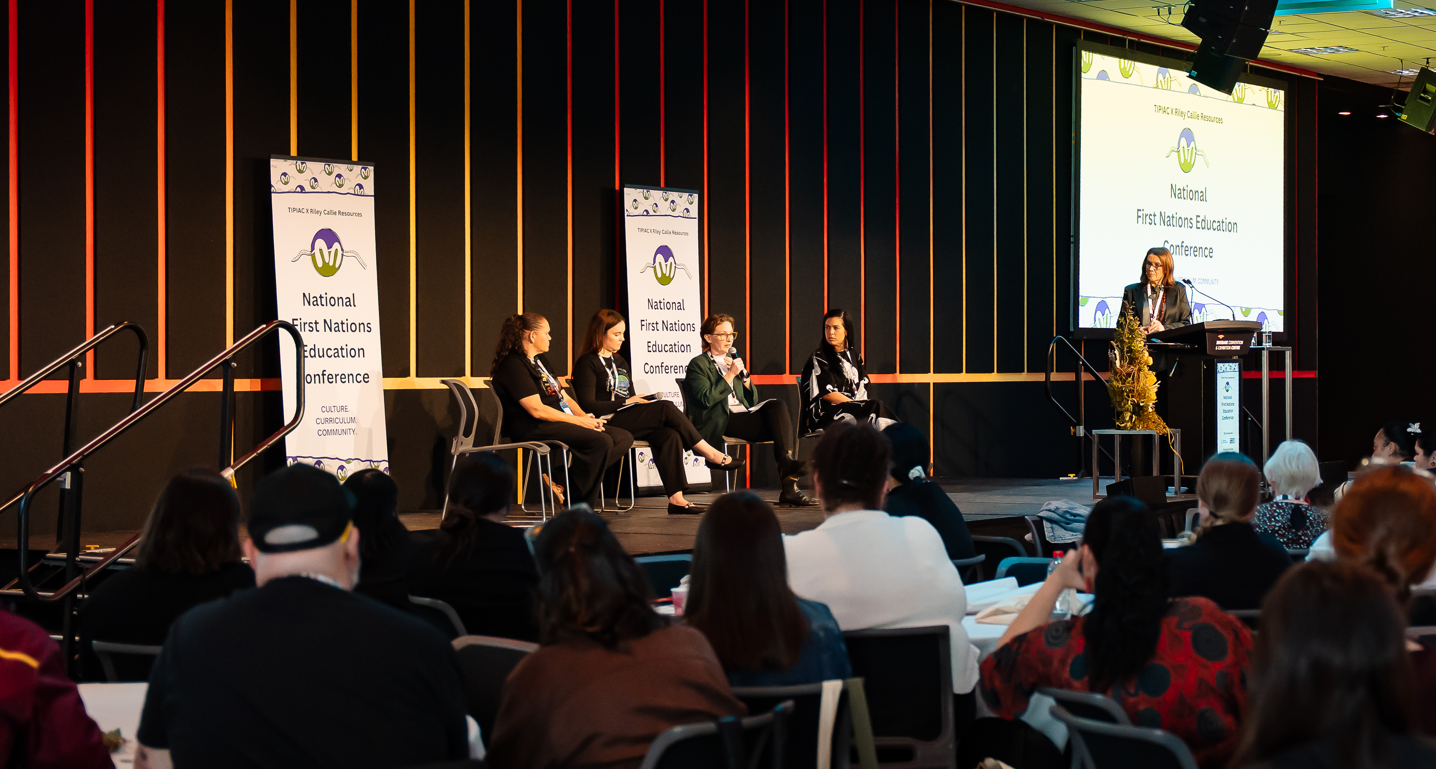
Yankunytjatjara and Wirangu woman Shelley Ware hosted the event, while authors Dr Anita Heiss and Michael Passi took part in book signings and shared their work with attendees.
Gamilaroi Ularoi Artist Lakkari Pitt also led a collaborative art installation which delegates contributed to throughout the day.
Ms Cochrane said First Nations leadership allowed knowledge and lived experience to be shared on the terms of those presenting it.
"For me, it was really important that this conference was led by First Nations people and that our voices were at the centre of the day," Ms Cochrane said.
"So often, conversations about First Nations education happen without enough First Nations people in the room, or without our voices being genuinely listened to.
"Debbie and I wanted to create a space where our educators, presenters and community members could share their knowledge, lived experience and expertise in their own way."
Embedding First Nations knowledge and culture throughout education was another focus, rather than limiting it to individual activities or significant dates.
Ms Cochrane said seeing culture respectfully reflected in education was important for First Nations children and young people, while non-Indigenous students should also develop an understanding of the Country they live on and Aboriginal and Torres Strait Islander histories and cultures.
"Our knowledges come from the oldest living cultures in the world," Ms Cochrane said.
"They carry thousands of generations of learning about Country, relationships, community, responsibility and how everything is connected.
"This is not about adding one activity or celebrating culture on special dates. It is about culture being respectfully and meaningfully embedded in everyday teaching and learning."
Organisers also wanted educators to leave with greater confidence to engage with First Nations histories and cultures.
Ms Hoger said educators often wanted to bring Aboriginal and Torres Strait Islander cultures and histories into their classrooms but could be unsure where to begin or worried about "doing it wrong".
"It's my hope that every educator or teacher who attended the conference, walks away not only with practical tools and skills to celebrate culture in their classrooms, but also a new sense of confidence in how to engage in this space," she said.
"Bonnie and I wanted to create this conference to show educators that when they listen to First Nations voices, and open not only their minds but their hearts to engaging authentically, there is no reason to fear stepping into this space."
Feedback received since the conference has also pointed to conversations continuing beyond the event, with attendees considering changes they can make when returning to their schools and communities.
Ms Cochrane said that response was what organisers had hoped to achieve.
"The comments we have received since the conference have been amazing. You could feel the passion in the room on the day, and we are now hearing from people about the conversations they are having and the things they want to change when they return to their schools and communities," she said.
"It feels like the conference has lit a fire in people. Not just to feel inspired for one day, but to keep learning, speak up and make real change for our children, families and communities.
Following the inaugural Magandjin event, organisers have announced the National First Nations Education Conference will return in 2027, with Sydney selected as the next host city.



