




A Charles Darwin University education expert has called for systemic change in how young people are taught after this year's NAPLAN results again highlighted the challenges Indigenous students are facing in classrooms across Australia.
Released earlier this month, the 2026 NAPLAN results showed the gap between Indigenous and non-Indigenous students remains, with Indigenous students continuing to lag behind their non-Indigenous counterparts at critical junctures of their schooling careers.
Data indicates in the Northern Territory — where the Indigenous student population is highest in the country relative to the overall population — more than 60 per cent of Indigenous children who sat the test needed additional support in reading and numeracy.
CDU Northern Institute Associate Professor Tracy Woodroffe, who has been a teacher across primary, secondary, and tertiary levels, said the national test reflected an education system which does not account for the intersectionality affecting a child's learning journey.
"Around 40 per cent of students in Northern Territory classrooms are First Nations, and the further you go in remoteness, the more Indigenous students there are," Associate the Warumungu Luritja woman said.
"We're really fortunate that many people are able to maintain their language, live in a way that feels like they're continuing their culture, but unfortunately intelligence in Australia is benchmarked against the English language.
"How reliable can a test truly be when many students, especially in the NT, don't speak English as their first language? We need an equitable education system designed to cater to all Australians."
CDU said the latest Closing the Gap figures indicate Australia is not on track to meet its Year 12 completion targets of 96 per cent by 2031.
As of March this year, just 68.1 per cent of First Nations people aged 20-24 had attained a Year 12 or equivalent qualification.
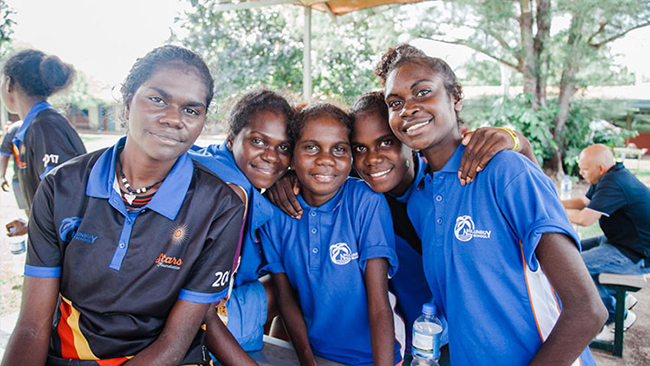
Associate Professor Woodroffe said the first step to creating educational change in Australia was becoming a teacher.
She said CDU's Bachelor of Education Primary and Bachelor of Education Secondary were well-positioned to help the next generation of teachers have a positive impact on young people.
"When you're a student teacher here at CDU, you learn about engaging with Indigenous people, communities, and families, and you learn about the context of the Northern Territory," she said.
"The core classes our students take are designed to ensure their learning aligns with the Australian professional standards for teachers, including knowing about Aboriginal culture and people, and knowing about their students and how to teach them.
"Putting those learnings into practice, from the classroom through to educational governance, will be key to creating an equitable education system for every young person in Australia."
Following the release of this year's results, Australian Curriculum, Assessment ands Reporting Authority (ACARA) CEO, Stephen Gniel, said persistent attainment gaps for specific student demographics, including Indigenous students, remained the education system's biggest challenge.
"It is also disheartening to see disparities persisting over the years in the attainment of students from our regional and remote areas, Indigenous students and those from a disadvantaged background," he said.
"This needs to be a continuing focus for all in the coming years."
Participation also impacted this year's NAPLAN figures. CDU said the Northern Territory's NAPLAN participation dropped to 76.5 per cent because 15 schools were closed during the testing period due to historic flooding events in remote communities.
This year's NAPLAN data also excluded Tasmania — which according to the Department for Education, Children and Young People has an Indigenous student population of 13.8 per cent in government schools — due to industrial action.



