




The Square Kilometre Array Observatory (SKAO)-led astronomy art exhibition Cosmic Echoes has gone on display at the Museum of Geraldton, showcasing art and stories from the cultures of Indigenous artists living and working close to the sites of its two next-generation radio telescopes.
The collaborative exhibition stems from a vision by the SKAO and its partners, CSIRO - Australia's national science agency, the South African Radio Astronomy Observatory (SARAO) and the Wajarri Yamaji Aboriginal Corporation (WYAC) to celebrate humanity's ancient cultural wisdom and how it relates to modern science.
Cosmic Echoes first launched at the International Astronomical Union General Assembly in Cape Town in 2024. After a year of travelling across South Africa, it has now arrived in Geraldton to begin the Australian leg of its world tour.
The communities that live near the SKA telescopes have been observing the night sky and giving meaning to its patterns through storytelling and creative expression for thousands of years.
In Australia, that community is the Wajarri Yamaji, the Traditional Owners and Native Title Holders of Inyarrimanha Ilgari Bundara, the CSIRO Murchison Radio-astronomy Observatory, the site of the SKA-Low telescope, about five hours drive inland from Geraldton.
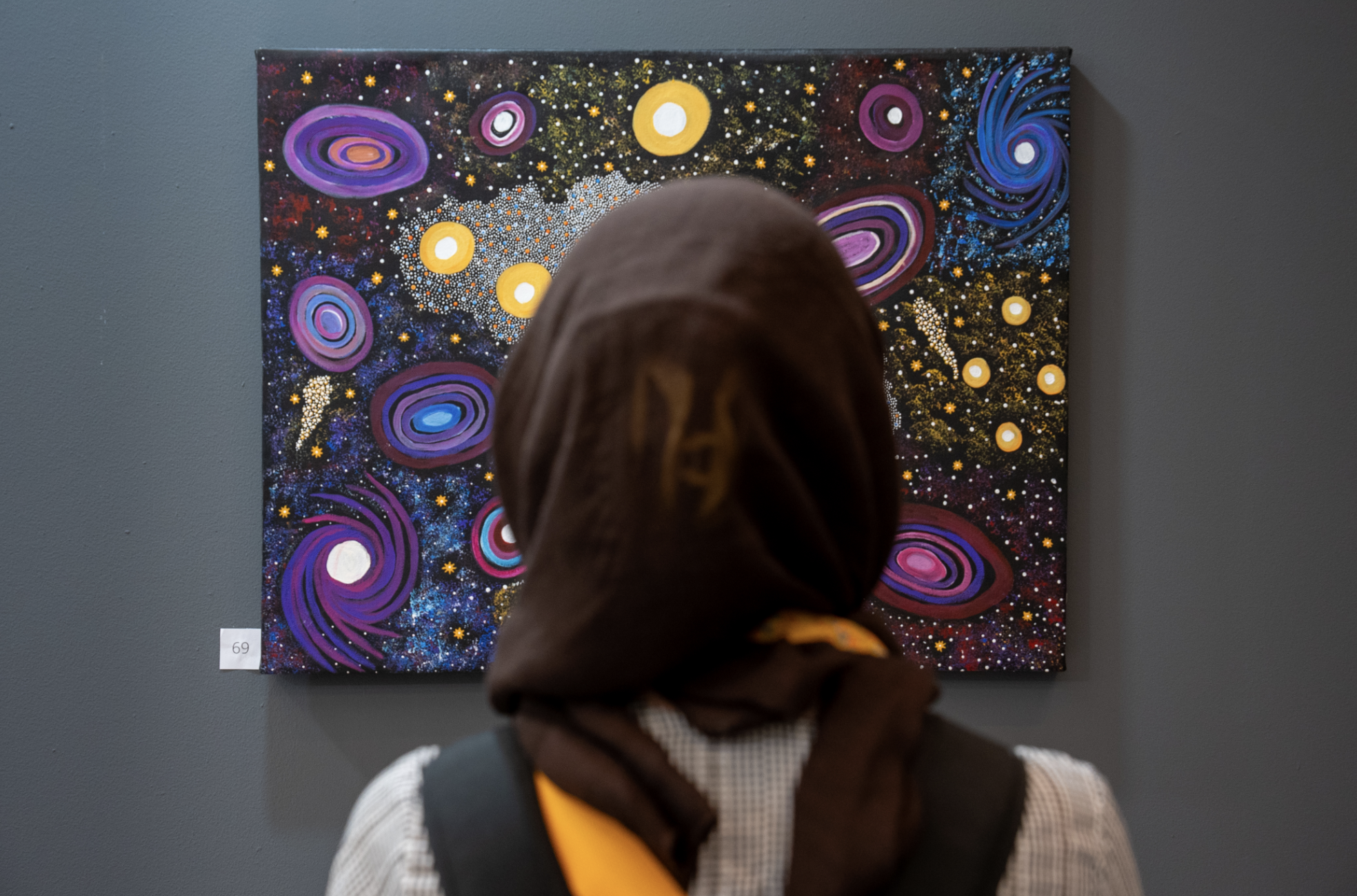
Wajarri Yamaji artist Carlleen Dingo said she was proud to have Wajarri art, stories and culture seen and heard by a global audience.
"My art has been able to connect with other people from other cultures on other continents. It gives me great pride. I live through my art," she said.
She is one of nine artists the SKAO and CSIRO collaborated with from the Wajarri Yamaji People in Australia.
Wajarri Yamaji artist Gail Rose Simpson travelled to South Africa in 2024, connecting with many of the South African artists who also contributed works.
"It was a privilege to travel to the other side of the world and share a space with other Wajarri and South African artists. I was incredibly inspired by the younger artists and the stories prevalent in their art," she said.
In South Africa a group of artists worked with local Indigenous youth and Elders from the Northern Cape to produce visual and performance art.
South African artist Junior Oliphant said he was honoured to be able to show his artwork, which explores the profound connection between Khoisan folklore and cosmic knowledge, with an Australian audience.
His artwork, Children of the San XII "My Ma se Taal", is a portrait of Dr Katrina Esau, the last living N|UU speaker of the Khoi and San people.
"This is more than just an art exhibition," he said.
"It's a journey through ancestral memory, resistance and cosmic curiosity. It is a celebration of our culture, heritage and language of our ancestors."
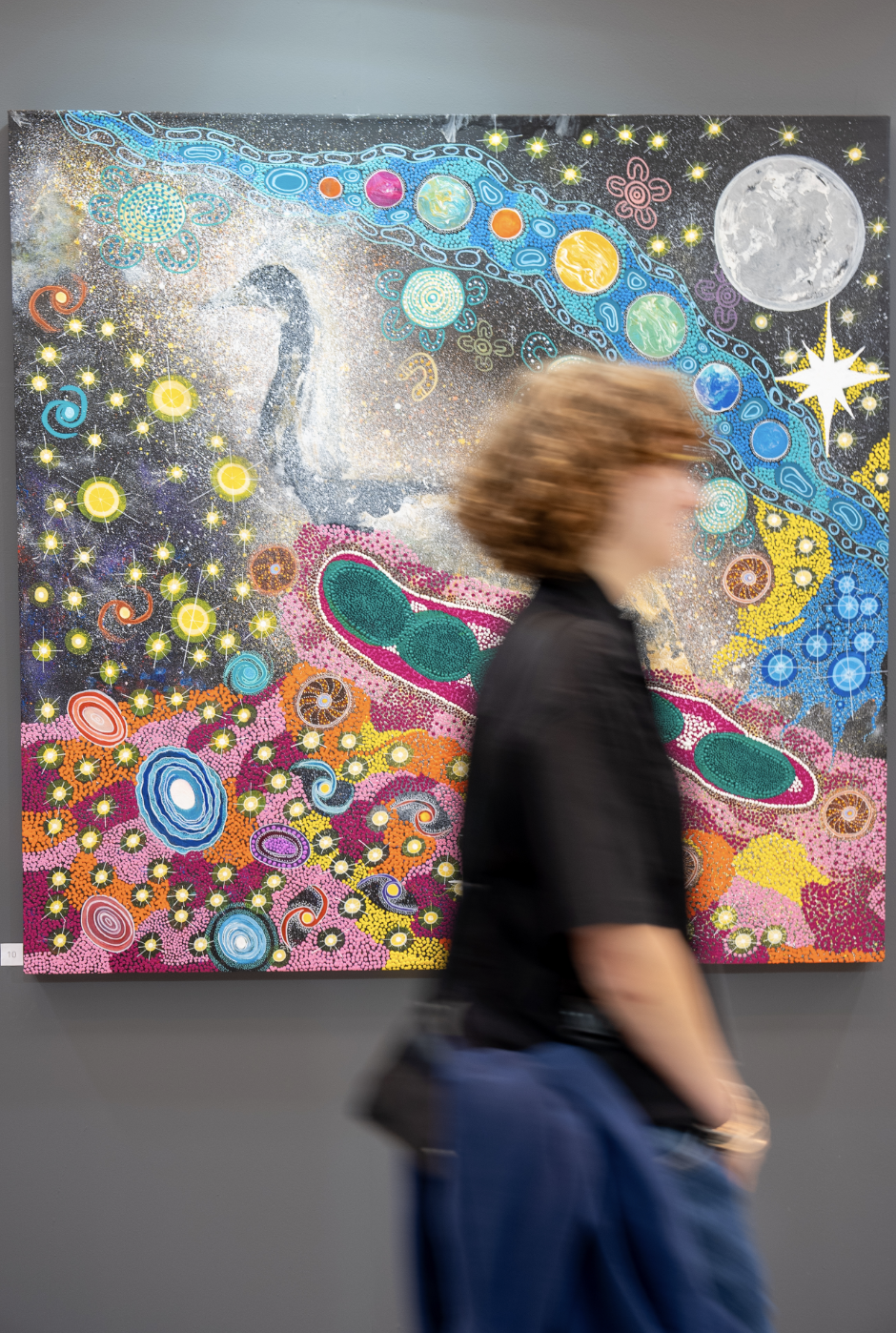
The exhibition features visual art, film, poetry and soundscapes from established artists alongside works from young aspiring artists.
Wajarri Yamaji Elder and WYAC director and Chairperson Jennylyn Hamlett was instrumental in the exhibition's creation.
"As Wajarri People our Dreaming stories, Country, sky and stars are part of who we are," she said.
"Guided by the knowledge of our Elders and Ancestors, we continue to share stories and cultural knowledge through artwork so our community remains strong and connected."
Many of the artworks feature similar themes and constellations, despite the artists being on different continents.
A common theme is the Pleiades star cluster, known as Nyarluwarri by Wajarri, and Khuseti by the San and the Khoekhoe of the Northern Cape.
The cluster is often referred to as the Seven Sisters across many cultures, including in Australia and South Africa.
Cosmic Echoes is the successor of the original Indigenous art-astronomy exhibition, Shared Sky, which toured the world over several years and was seen by tens of thousands of people. It is on display at the Museum of Geraldton until Sunday the 6th of September, before continuing its journey across Australia.
From there it will set out on an international tour, introducing a worldwide audience to Indigenous knowledge and the deep connection to the sky and stars that has existed at the SKA telescope sites for millennia.
For more fashion, arts, culture and lifestyle news subscribe for free to the Style Up newsletter.



