




The Aboriginal Medical Services Alliance Northern Territory has urged the broader community services sector to put Aboriginal community control into practice by embedding it in their own policies, programs and services.
In a keynote address at the Anglicare Australia National Conference in Garramilla/Darwin on Wednesday, AMSANT chief executive Donna Ah Chee said the wider sector had an important role to play in building on decades of hard-won progress in Aboriginal health.
She called on organisations to ensure programs and services principally aimed at improving the health of Aboriginal and Torres Strait Islander people are delivered through Aboriginal community-controlled health services wherever possible.
"We now have decades of experience and evidence showing that Aboriginal community control works. It delivers better access to care, culturally informed services and better outcomes for our people," Ms Ah Chee said.
"Aboriginal community control needs to be embedded across the services that affect our people's lives. That means mainstream organisations thinking differently about how services are designed, who delivers them and where resources go.
"Wherever possible, programs designed principally to improve the health of Aboriginal and Torres Strait Islander people should be delivered through Aboriginal community-controlled health services."
'In health, we know what works'
Ms Ah Chee noted significant improvements in Aboriginal health in Central Australia over the past 50 years as evidence that progress is possible.
Research examining health outcomes since the 1970s found life expectancy for Aboriginal men in Central Australia increased by more than 18 years between 1975-77 and 2014-18, while life expectancy for women increased by 8.5 years. Since 1999, the life expectancy gap has narrowed by 8.9 years for men and 3.4 years for women.
The research found Aboriginal community-controlled health services played a significant role in those improvements through reforms including increased primary healthcare investment, improvements to hospital care, alcohol supply reduction measures, and collaborative needs-based planning.
"It is easy when the latest Closing the Gap figures come out to conclude that nothing is working and we need to start again. But in health, we know what works," Ms Ah Chee said.
"Aboriginal community-controlled health services have been at the heart of decades of hard-won progress. The challenge now is to build on that success."
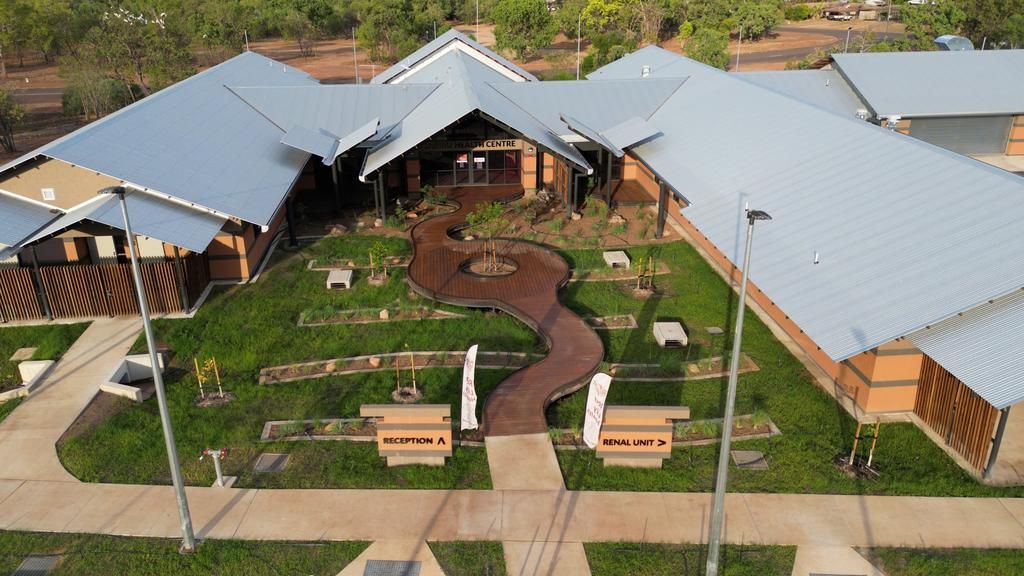
Presently AMSANT's 12 full member services provide two-thirds of all primary healthcare episodes for Aboriginal people in the Northern Territory, delivering around 550,000 episodes of care to 68,000 people in 2024-25. The sector employs more than 2,000 people, including around 800 Aboriginal people.
'Health services cannot do this alone'
Ms Ah Chee said further health gains depend on action beyond the health system, identifying education, poverty and housing as critical determinants of health, alongside the need to address severe workforce shortages in remote and very remote communities.
"Health services cannot do this alone. Without significant progress on housing, education, poverty and the other social determinants of health, we risk seeing progress on closing the health gap stall or even reverse," Ms Ah Chee said.
"We also need a sustainable health workforce in every part of the Northern Territory. Remote communities cannot have equitable access to healthcare if we cannot attract and retain the people needed to deliver it.
"We cannot simply leave remote workforce shortages to the market, because in many of these communities the market simply does not exist. We need targeted strategies that recognise the realities of delivering healthcare in remote and very remote Australia."
'Critically, we need to grow the Aboriginal health workforce'
The AMSANT head said growing the Aboriginal health workforce is a vital need.
"Aboriginal staff bring the cultural knowledge, language, relationships and lived experience that are fundamental to delivering culturally safe care," she said.
Ms Ah Chee also called for renewed commitment to the Closing the Gap Priority Reforms, particularly formal partnerships and shared decision-making between governments and Aboriginal communities.
"Sitting down as equal partners with government is not just about exercising our rights to self-determination. It is about taking responsibility and being accountable for outcomes. We don't shy away from that," she said.
"We know what works. Now we need governments and the broader services sector to put that evidence into practice — by backing Aboriginal community control, genuine partnership and the solutions our communities have built.
"If we get this right, together, we can keep closing the gap."



