


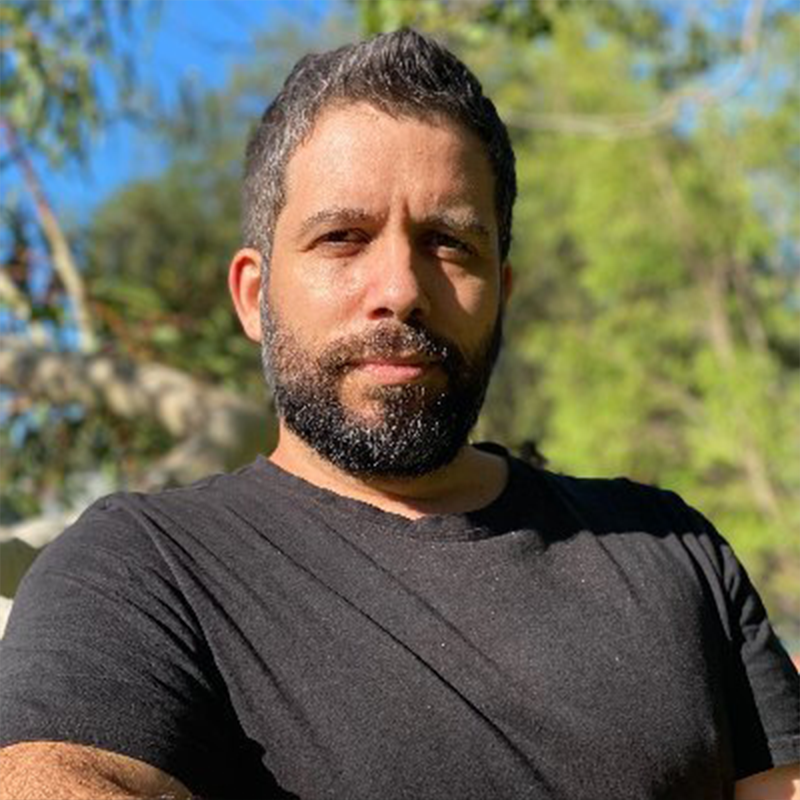

When Cops Are Criminals, a new book edited by Gunai/Kurnai writer and former police officer Veronica Gorrie, was published by Scribe this month.
Along with an introduction by Gorrie, the book features pieces by Amanda Porter, Edward Winters, Jacky Sansbury, Jason Tighe-Fong, Keith Quayle, Necho Brocchi, Jacinta Ryan, Lauren Caulfield, Emma Husar, Jeremy King, Maria Markovska and Kate Pausina; tackling a range of issues including the criminal foundations of Australian policing, corruption, the criminalisation of Aboriginal identity, and family and domestic violence.
Gorrie told National Indigenous Times the genesis of the book came from her experience with police, including as an officer for 10 years.
"I was seeing as a police officer was a sweeping violence against marginalised people in the community, people vulnerable people in the community, Black and brown people in the community, and anyone the LGBTQI in the community. This anthology details so many of their stories of the harm caused by the police and other custodial agents with impunity," she said.
"For a lot of people, police are not trusted…. They're not someone who we can call to sort out any conflict. They're violent."
Gorrie noted that in the first chapter, Dr Porter highlights that "well behaved" convicts were recruited as police in the early days of colonisation.
"Their role… was to round up my people and, and nothing's changed. Back in the day… their main role was to round up my people and to kill them. Hundreds of years later, and they're still doing it, and nothing's changed," she said.
When 'Being Aboriginal Is A Crime'
The book also examines the automatic criminalisation of Aboriginal identity in police systems.
"There's a chapter called Being Aboriginal Is A Crime. For Black and brown women especially, we can't contact police. It's not a protective service for us. Most times we're misidentified as the perpetrators," she said.
"I think what it is, is because the police is a predominantly white male institution so they can't see us. They're so used to locking Blackfellas up that they can't see us as victims. So even when we go to report conflict in the community or conflict within the families, we're being arrested and killed in some cases."
Gorrie said the books examines the pattern of police abusing power and getting away with it, "which obviously enables that power abuse to continue".
"What the reader needs to understand is that to report any harm or brutality or excessive force by police, you have to go to the police to report it, and then from there, most times, I'd say 95 per cent of the time, the complaints are not taken seriously," she said.
"I've witnessed (as an officer) people coming to the police counter to report issues during an arrest, or the way police have intercepted them and manhandled them… the officer at the desk will take the complaint and come back and they start laughing, it's not taken seriously.
"For the ones that have had successful outcomes with their complaints, it is a long journey, and I think it's set up and designed that way on purpose so that people get scared to follow through with their complaint."
Gorrie said she will continue to speak out despite the risks.
"Just last week in my hometown, you know, a non-Indigenous woman was being arrested by police, and I was filming her. Film cops; let's start surveilling them and see how they like it, just to make sure that people in the community are safe," she said.
The call is coming from inside the house
Part of 'When Cops Are Criminals' looks at the phenomenon of police officers who are domestic abusers.
"They'll turn up to a job, a family violence job, and then they're going home and flogging their partner in front of the children. And nothing's ever been done about it, and the partners are too frightened to speak up about it, because the people they have to put in a complaint to (are also police).
"It's disgusting, the stories I've heard since I've started this anthology."
Gorrie said the media and the reporting of criminal behaviour by police is an important part of the discussion.
"When the media does pick up on it… the headline will be 'off duty police officer'. Who cares if they're off duty?" she said.
"And there's no consequences for their actions. Usually, you will find out that they'll get stood down with pay. I'd love to be stood down with pay. That's just a bloody holiday."
She said the absence of consequences prevented serious change for the better.
"It happens with impunity… because there's never been any outcome on this continent since the very first death in custody. Let's be honest. It's not a death in custody. It's a killing in custody, and it's a form of genocide," Gorrie said.
"I've just been reading Amy McGuire's deadly book, Black Witness. When we had missing and murdered Aboriginal women and children again, when we report to police any matters, we're not seen as the perfect victim, or the right victim, so they don't take our complaints seriously.
"In my opinion, if there starts to be some reckoning within the police like sacking, some form of reckoning, it will actually send a message, a true message, for them to stop racially targeting."
It's time to move beyond policing
Gorrie said the practice of racial profiling remains endemic among police.
"My people, we know as Aboriginal people, Black and brown people, when we get pulled over and the police officer says it's a random intercept, we know it's not random, it's deliberate," she said.
"And because we know our rights, we're deemed to be smart arses, they'll make this interception long and they'll draw it out, and then, if you're more of a smart arse, they'll tell you to get out of the car, search your vehicle. They have so much power, it's unbelievable.
"Now it's time to move beyond policing. And there are communities out there trialling that right now… There are examples from other places that are moving from policing beyond armed force responses and towards community-based models of safety that people in crisis actually need.
"Aboriginal people all over the country, we've never called police. We still don't call police when we have conflict within our family or our little community, the first people we contact are our family members. We don't trust police, and it's unfortunate. And on that one, one off, where we feel like we really need police, we're deemed to be the perpetrators. And you know, essentially, you know, putting our own lives at risk of being killed in custody."
Gorrie noted reflected on recent figures from Victoria showing Indigenous women who sought help from police in domestic violence situations were being treated like the perpetrator, particularly if their partner was non Indigenous.
"It's racist. It's out and out racist," she said.
"One way we could shift from policing is for the state government to stop funding the police and building prisons, and put that money into community organisations that are already doing the work."
She said nothing would change without "accountability and actual consequences" for officers who do the wrong thing.
"Instead of being suspended on pay. Every time we have a case where an officer is - and it's incredibly rare, obviously - actually charged they are continuously cleared," she said.
"We also always know the outcome. You know the matter is going to be dropped and the copper in question is going to be exonerated. You know, as Blackfellas, when we go to court and we've got upcoming court matters, we know the outcomes; we're going to get imprisoned."
Gorrie said she hoped that readers would come to understand "what it's like for us".
"They can relate to other incidents with police, for example, the George Floyd incident, the killing in the US. And they emphasise with that, and their heart bleeds for that, but what they don't realise it's happening right here with the Traditional Owners of this country, and it's a form of genocide, and they're getting away of it," she said.
"If they're true allies, they should be helping us to encourage the governments to start resourcing community organisations that are doing the work to keep people safe in the community."
Gorrie's first book, Black and Blue (2021), won the 2022 Victorian Premier's Prize for Literature and the 2022 Victorian Premier's Literary Award for Indigenous Writing, as well as being shortlisted for the 2022 Douglas Stewart Prize for Nonfiction and the 2022 ABIA Small Publishers' Book of the Year.



