




The golden bandicoot has made a return to the Red Centre's Ngalia-Warlpiri and Luritja Country after an extended absence in Australia's arid interior.
Described as a historic event, the Kimberley's Ngarinyin People have gifted a founding population of the vulnerable bandicoots to Newhaven Wildlife Sanctuary's mammal restoration project.
The species was once found across mainland Australia but is now listed as 'threatened' with a highly fragmented distribution.
The golden bandicoot is a ground-dwelling marsupial named after the golden-brown fur on its back and sides that is covered with stiff long black guard hairs.
Once found across much of Australia, the species is now listed as vulnerable with wild populations only occurring in the far northwest Kimberley region in WA, and on a handful of offshore islands.
The demise of the Golden Bandicoot, which has declined by 95 per cent, has been largely attributed to predation by feral predators (mainly cats and foxes) and by an increased frequency of intense wildfires post-colonisation.
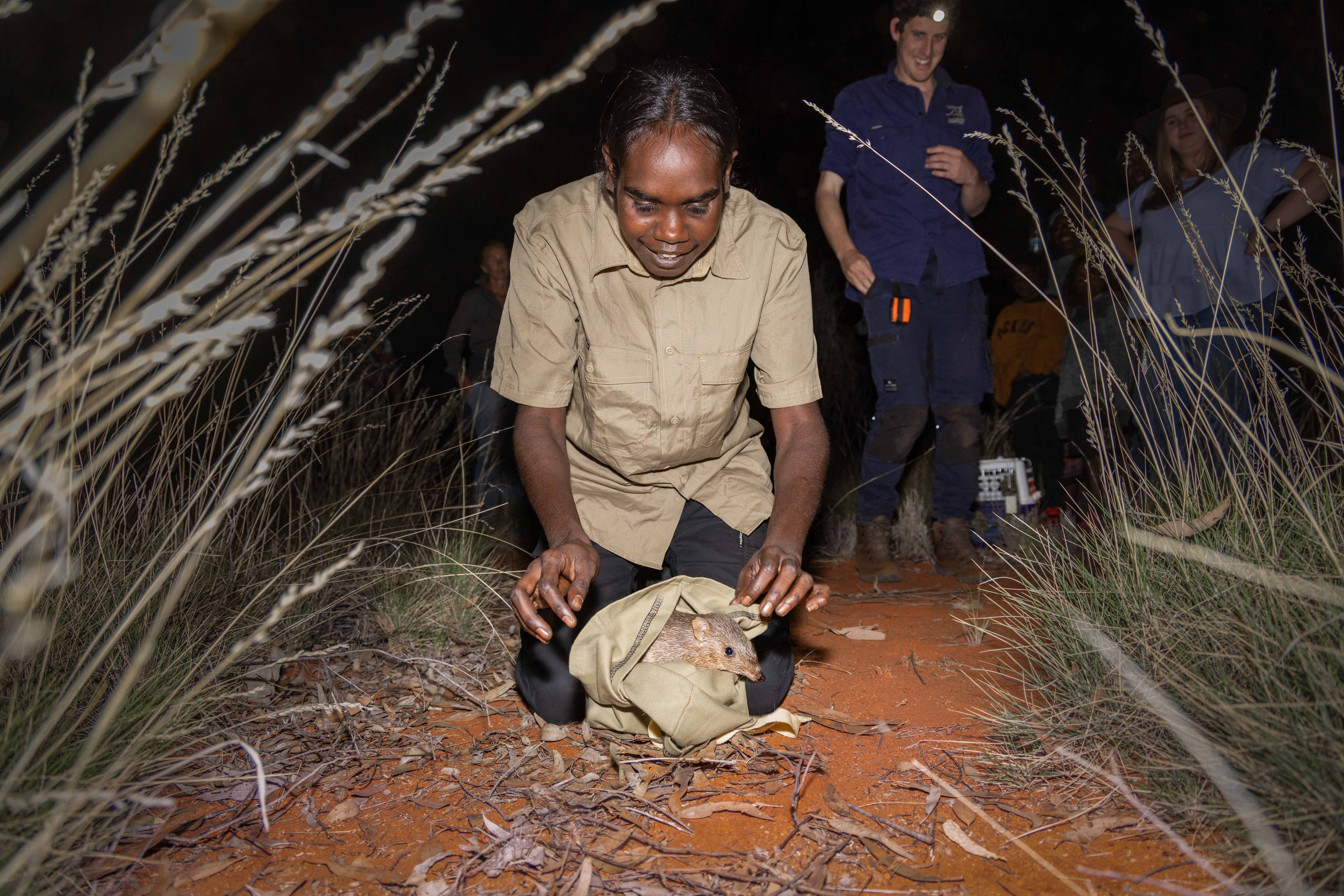
The Traditional Custodians of Watakinpirri Country have warmly welcomed the species' return to the rugged mountain ranges and its surrounding sandplains of Newhaven Sanctuary.
The small mammals used to be one of the most common animals in the arid zone, where it was an important food item for First Nations Peoples.
Currently the bandicoots were reintroduced to Newhaven and sourced from the Australian Wildlife Conservancy's Charnley River-Artesian Range Wildlife Sanctuary, in a collective project with Wilinggin Aboriginal Corporation (WAC).
Two WAC Darran.gu Wulagura (Strong Women) rangers Zarharny Charles and Nerelle Umbagai, as well as AWC ecologists, Dr Karen Young and Samantha Mulvena carefully transported the bandicoots.
The bandicoots were placed in pet packs, were transported approximately 1,000 kilometres from the Kimberley to Central Australia.
Upon arrival at their destination the bandicoots and their chaperones were greeted by the Newhaven conservation team including the Newhaven Warlpiri Rangers, Traditional Custodian Douglas Tjupurrula Dixon, Yondi Nulgit (Ngarinyin Traditional Owner) and Rachel Treacy (Darran.gu Wulagura Ranger Coordinator) from the Kimberley.
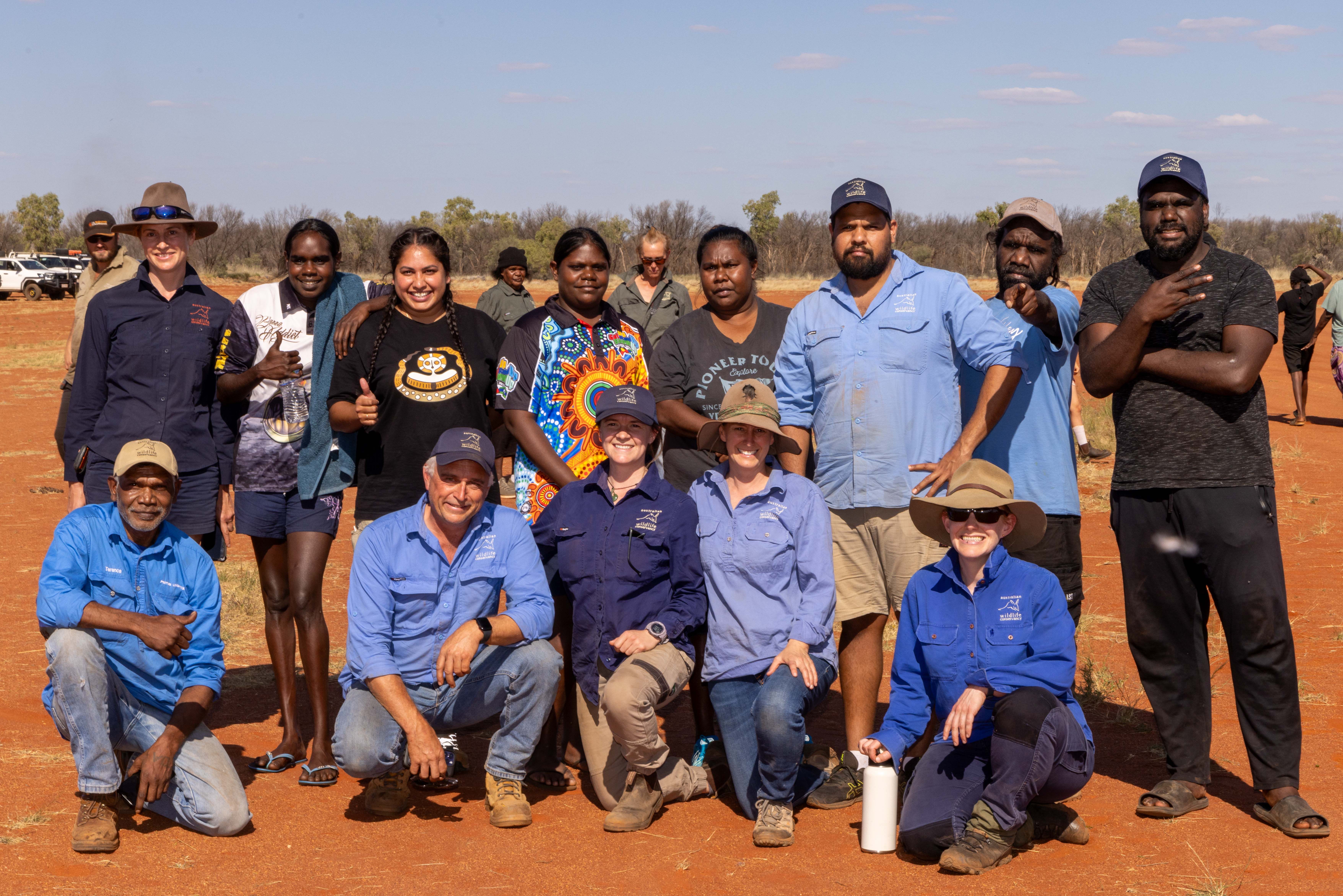
AWC ecologists conducted health checks on the Golden Bandicoots and attached VHF radio collars or tail-mounted tags to 20 individuals to monitor their movements and health for up to four weeks.
The bandicoots were then released inside Newhaven's 9,450-hectare feral predator-free fenced area, where they became the seventh species reintroduced to the safe haven.
Warlpiri woman and Newhaven local April Napaljarri Spencer said she was glad to see the reintroduction of the marsupial.
"I've come here and I'm really happy. These young people can look after and take on this country, parents can bring their children, so children can learn from this place," Ms Napaljarri Spencer said.
"Those animals that they brought today, the bandicoots from the Kimberley - we're really happy about that.
"Two women brought them to show us, and we will show them our country where these animals are coming to.
"These animals are really good for us and the country."
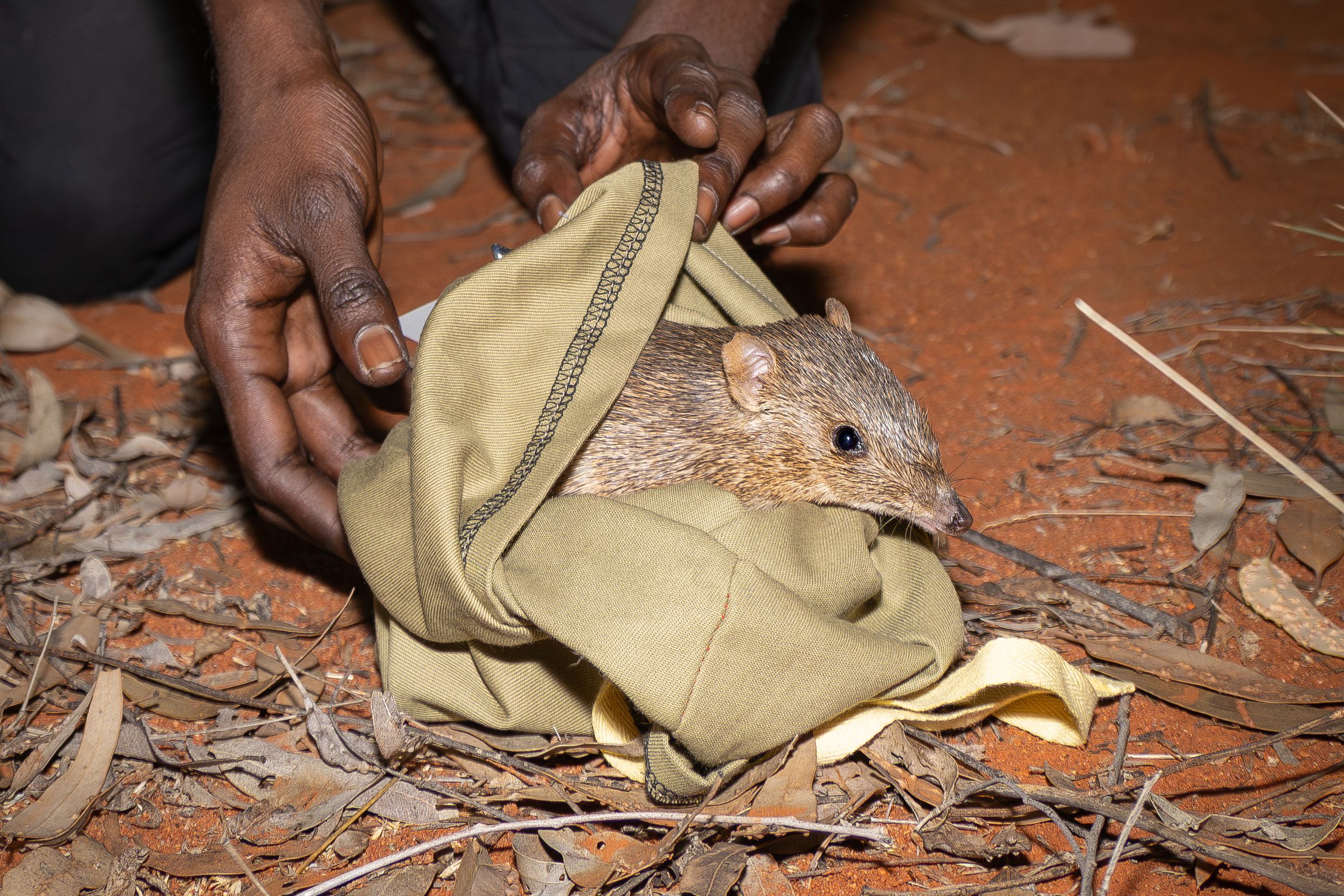
AWC chief science officer, Dr John Kanowski, celebrated the return of the bandicoots to Central Australia.
"The reintroduction will help secure the long-term future of the species," Dr Kanowski said.
"The Golden Bandicoot is one of many small mammals that have been extirpated from the region due to predation by cats and foxes and altered fire regimes.
"As ecosystem engineers, Golden Bandicoots play an important ecological role – turning over soil, which increases the rate of leaf litter decomposition, soil production and nutrient cycling.
"This has been a long-awaited reintroduction that required years of planning and research to successfully achieve.
"Our ecologists and partners have spent many hours in the field developing an identification process for the Golden Bandicoot while also determining their range and abundance."
The reintroduction aims to improve the conservation outlook for the threatened bandicoot by establishing a new, genetically diverse population in the arid zone, a major part of the former distribution of the species.
There are also plans for up to 60 additional golden bandicoots to be sourced from Barrow Island in WA and released at Newhaven later this month.



