



On the banks of Robbins Passage — the tidal strip between Robbins Island and mainland Tasmania on the state's far North West Coast — this week, a moving ceremony was held to honour the memory and legacy of a Tasmanian Aboriginal freedom fighter.
The commemoration saw dozens turn out to remember Tunnerminnerwait, a colonial-era resistance fighter from the Circular Head area.
Members of the facilitating Circular Head Aboriginal Corporation (CHAC) said this year's commemoration — which formed part of a day of cultural activities named in honour of the Parperloihener clansman — saw its highest attendance since the annual event began a few years ago.
The commemoration, which commenced in a secluded cutting of coastal brush and ended with wreath laying on the shoreline, was led by CHAC Cultural Manager Camilla Woolley.
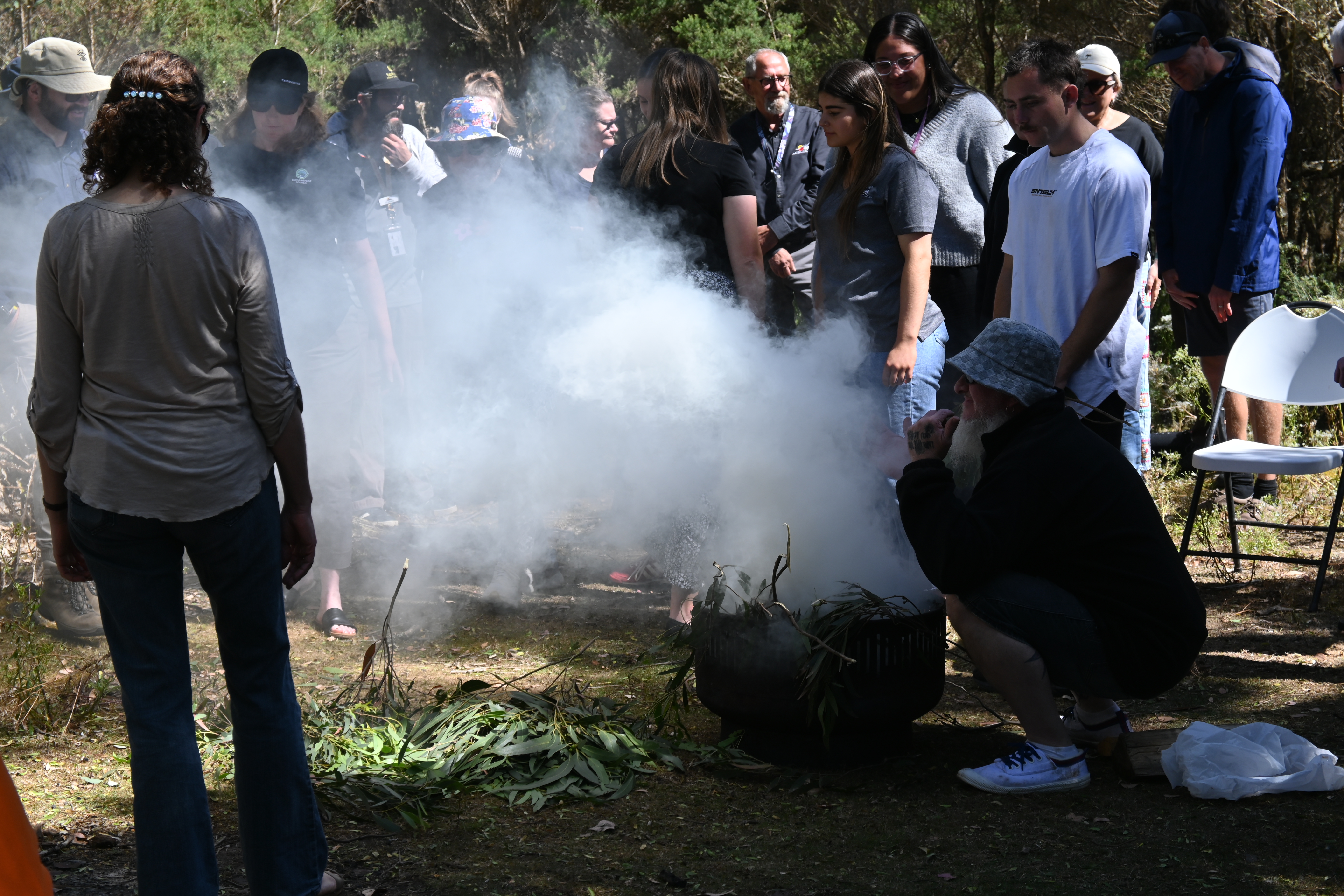
Ms Woolley spoke passionately to the dozens of attendees, honouring and reflecting on the life of Tunnerminnerwait and his companion Maulboyneener.
After being brought to mainland Australia by 'Protector of Aborigines' George Robinson in 1839, the pair became the first people to be hanged in Melbourne in 1842.
"Tunnerminnerwait is a legend of our region. He represents the enduring presence of Aboriginal people on this Country," Ms Woolley said.
"His story offers us many lessons that are still relevant today — the courage to stand up and fight for what is right, the ability to adapt to changes beyond our control, the resilience to keep going even when life doesn't go our way, and the importance of staying true to who we are."
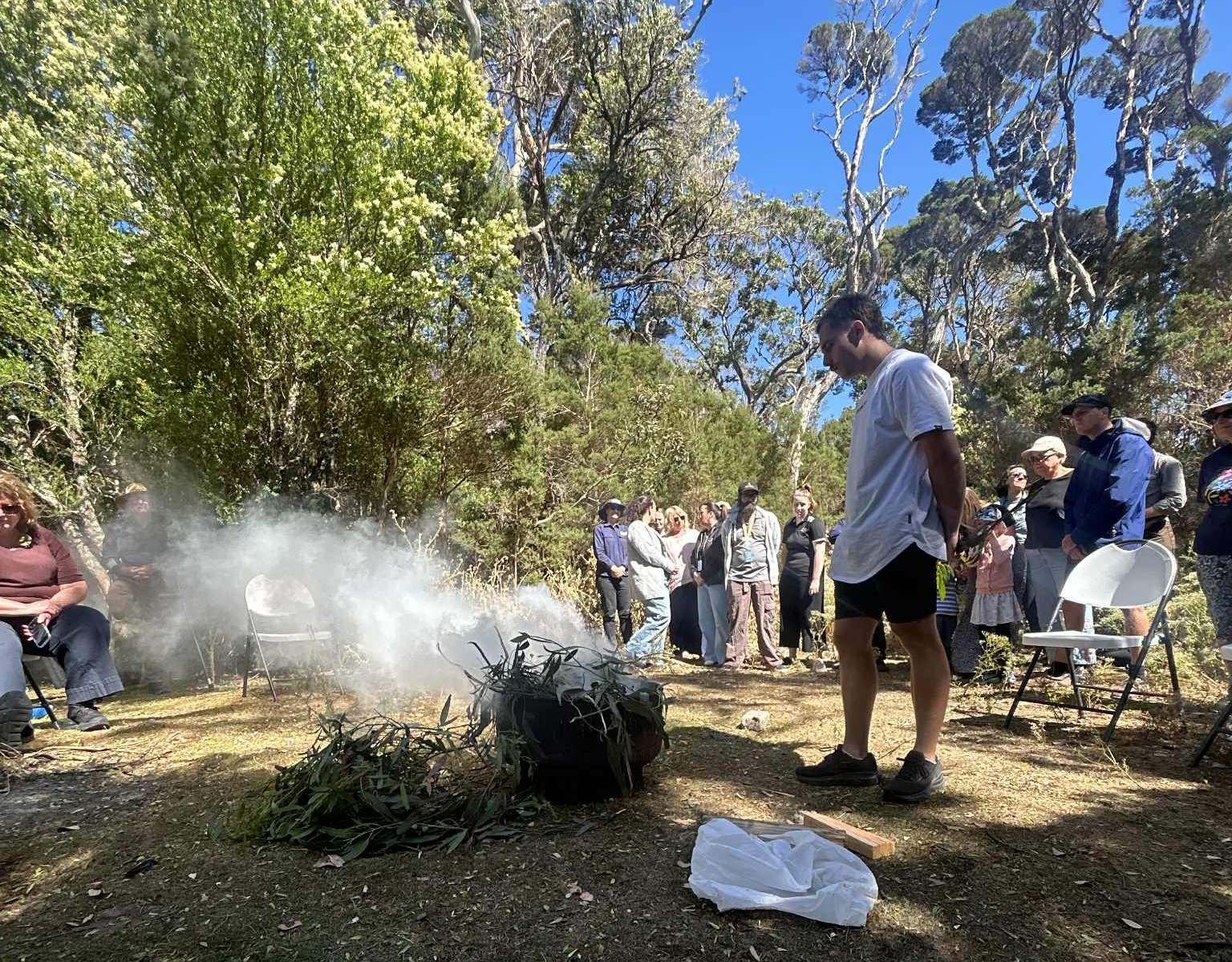
Following a Welcome to Country delivered in Marmanar — the Indigenous language of Tasmania's North-West which has been reawakened by CHAC — and preceding a smoking ceremony, Ms Woolley delivered a poem about Tunnerminnerwait's plight, her reflective piece captivating attendees.
"We gather here today, to honour Maulboyheener and Tunnerminnerwait, two young Tasmanian men, whose lives met an untimely end," she said.
"Born here, in Van Diemen's Land, Tunnerminnerwait, near the shores where we stand, the island behind us — his Country, his own, across this land, Tunnerminnerwait would roam.
"Here he learned of Country, and the spirits of ancestors in the sky. Of animals, and the paths where the birds would fly.
"Of ceremony, and songs from generations old, sacred knowledge passed down for him to hold.
"Kinship and connection, the rules and the lore, stories etched deep into the island's shore."
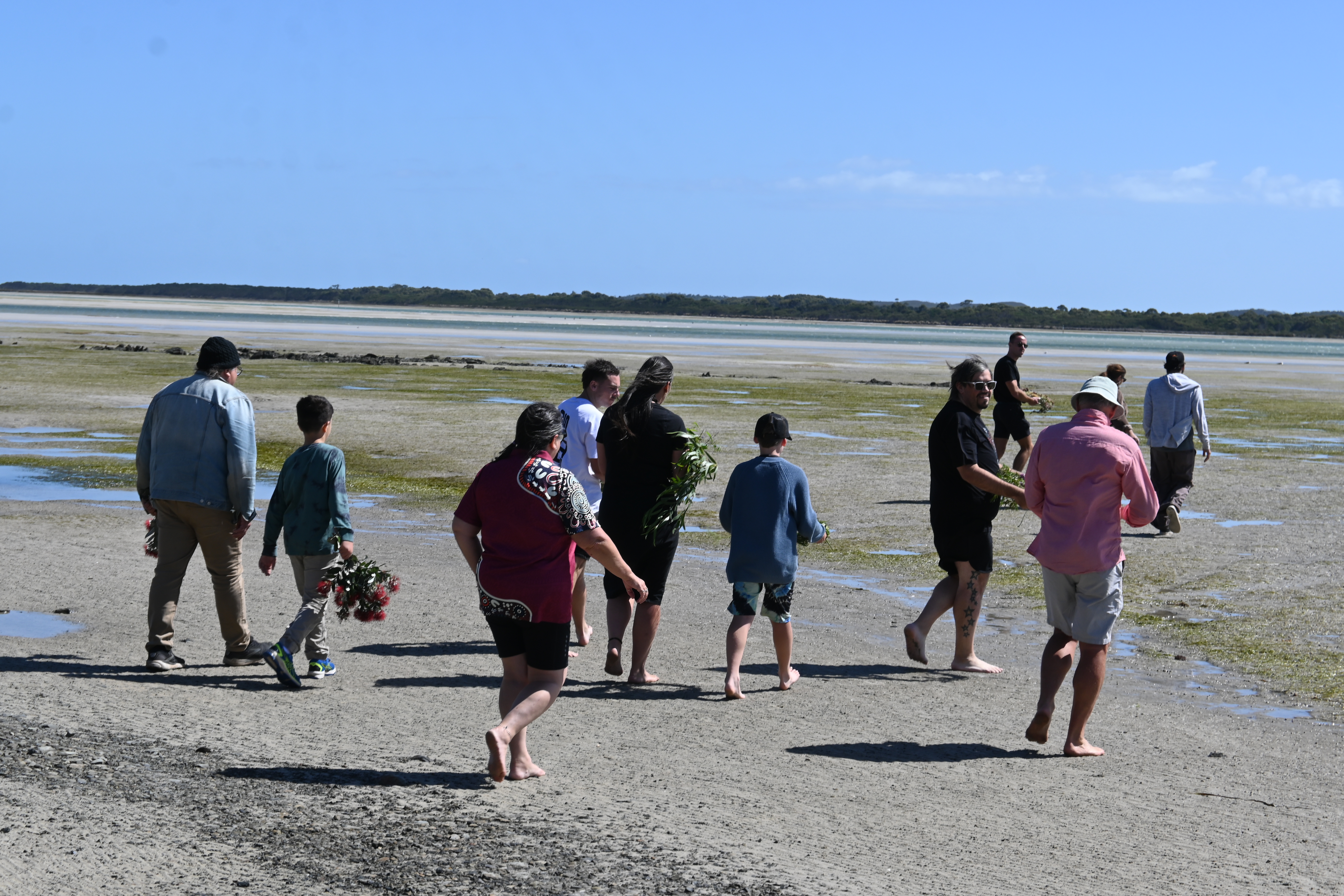
Following the ceremony attendees headed to Robbins Passage's coastline, where mob met the low tide to lay wreaths in honour of both Tunnerminnerwait and Maulboyneener.
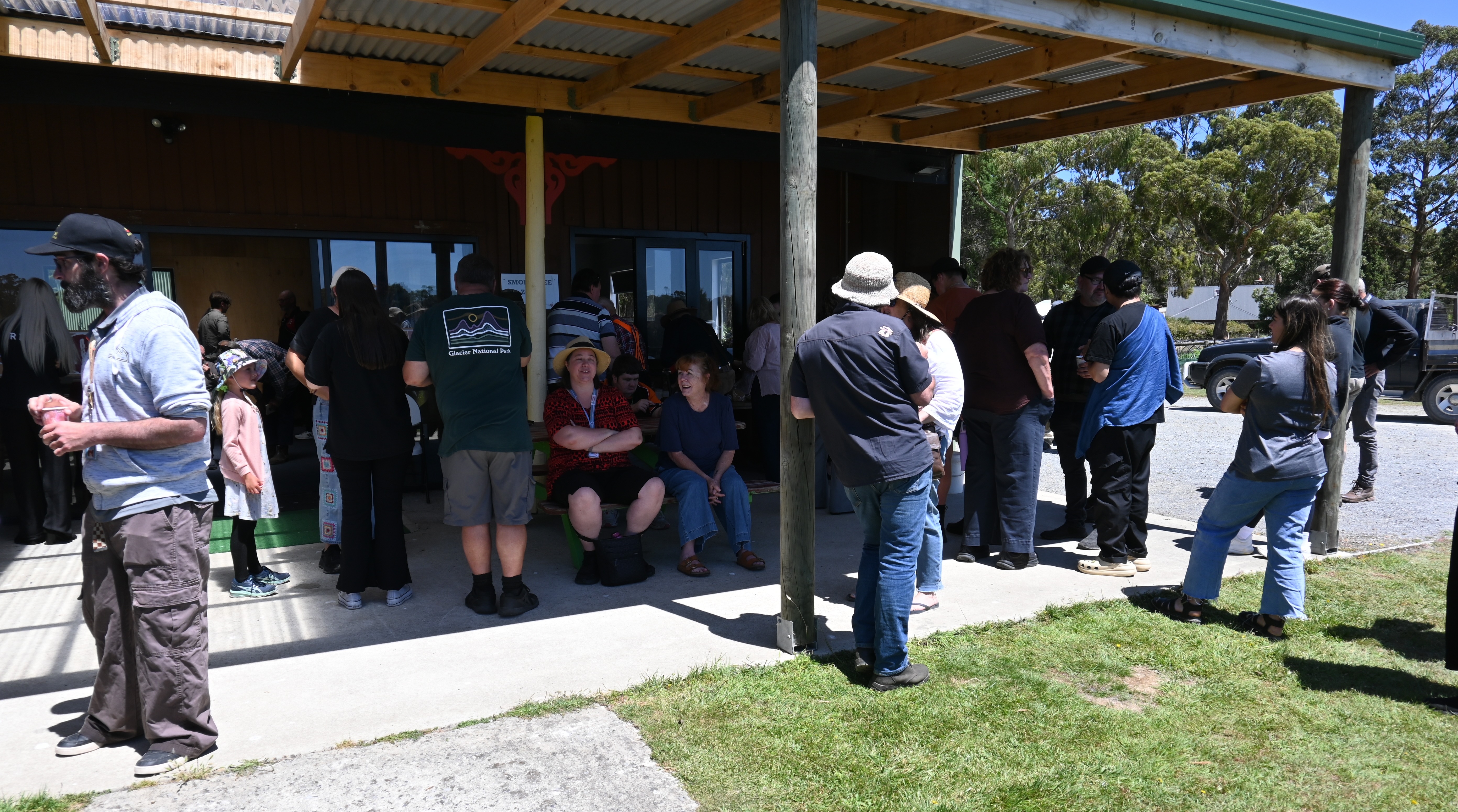
Later in the day crowds gathered at Trawmanna — an Aboriginal-owned parcel of land just outside of Smithton — for a community gathering and barbecue.
There, mob, allies and dignitaries mingled and shared stories — all while enjoying traditional Tasmanian Aboriginal cuisine.
At Trawmanna, CHAC's language program manager, Rochelle Godwin, told National Indigenous Times about the ongoing impact of Tunnerminnerwait's story on Circular Head's Aboriginal community.
She said Tunnerminnerwait's legacy stems far further than his resistance to colonisation and eventual hanging "which we always hear about".
"For us it's the level of connection that he provides to us there on Robbins Island," Ms Godwin said.
"Tunnerminnerwait means water bird in language, and you can just see that when you're down there [at Robbins Passage], and you can feel the water birds there.
"And Maulboyneener is crow, and there's always a crow out there, and he always says hello to us when we're out there as well."
Ms Godwin said records of Tunnerminnerwait's contact with British colonials has been crucial in the reawakening of Marmanar.
"He has been a pivotal resource within his journey with George Augustus Robinson and that friendly mission. He was one of the key figures that traveled with him for quite some time," Ms Godwin said.
"And he must have been a very clever man, because he picked up English very well and he was very good at conversing with the other Aboriginal groups as he crossed through Tasmania on that journey."
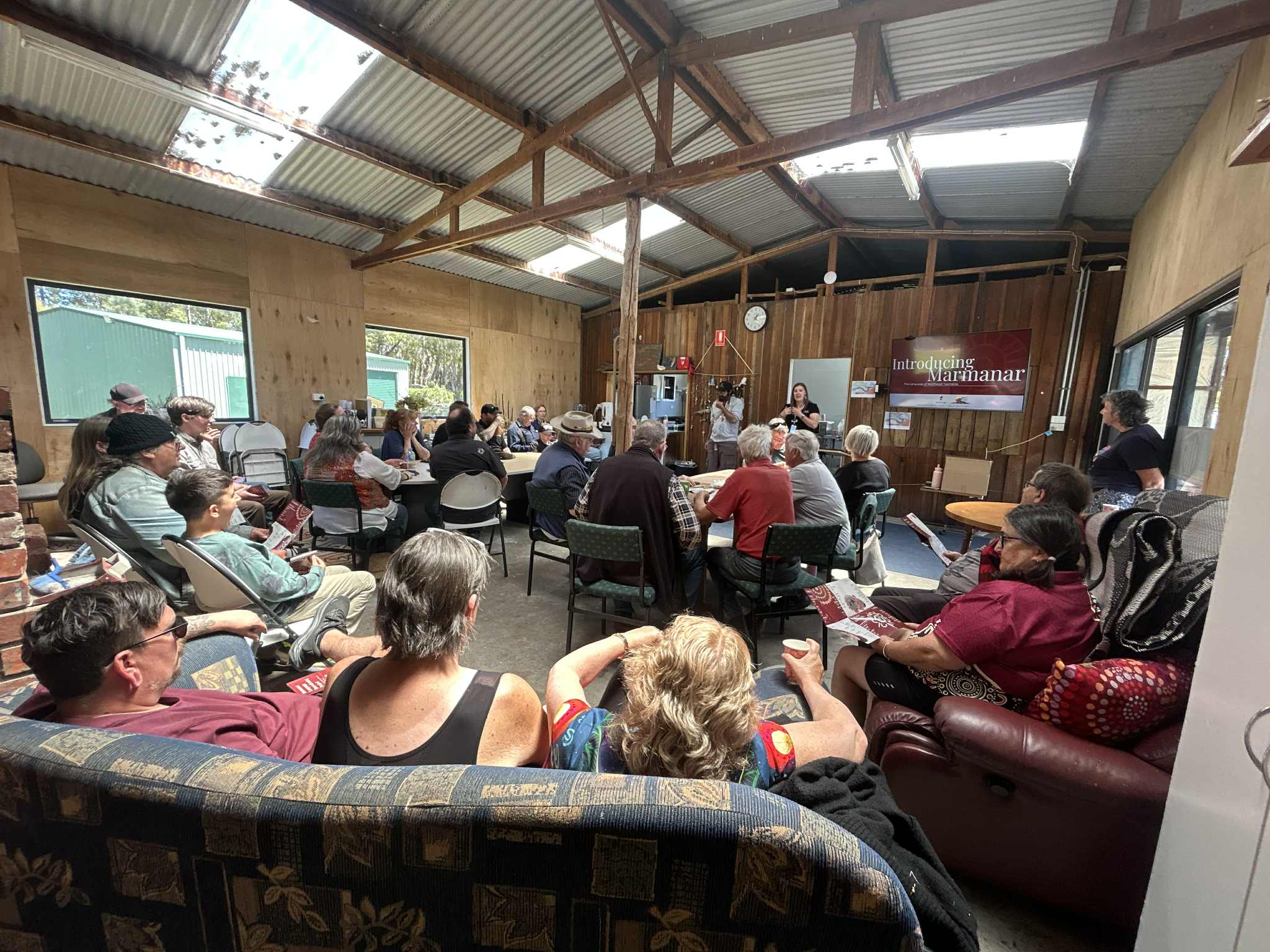
After lunch, CHAC's inaugural Marmanar community language workshop, facilitated by Ms Godwin and language program coordinator Steven Hafner, was well attended, the session introducing mob and allies to the first 50 words of the Marmanar language.
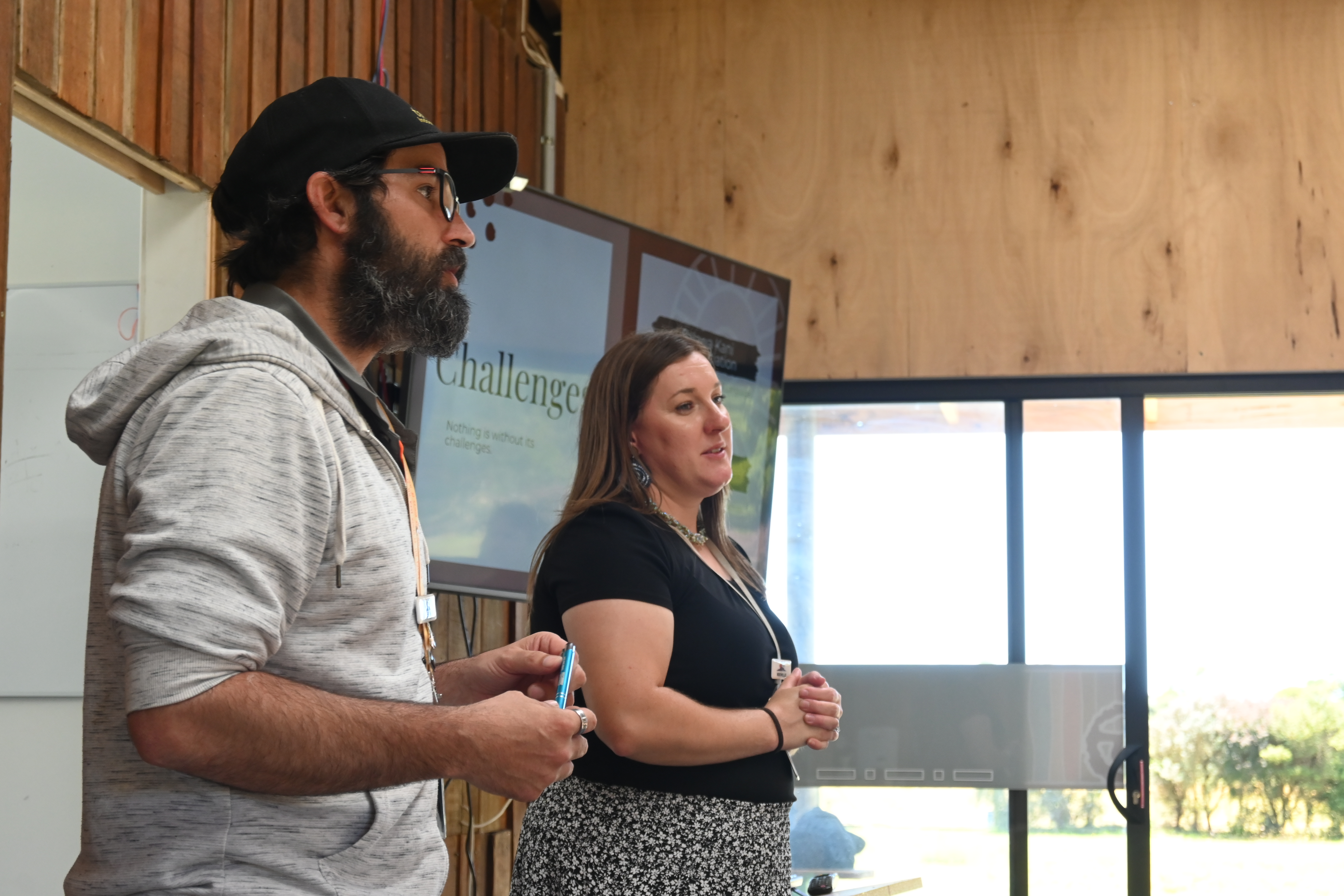
Ms Godwin said most of the resources which have informed the language revitalisation project stem from Tunnerminnerwait's time with Robinson.
"And that is so powerful for today and for remembering him, and that's why we chose [today] to host our inaugural community language workshop," she said.
"We've done it together with our staff and are trying to bring it to the community now. It's just perfect day for it."
Commenting on early success of CHAC's Marmanar language revitalisation project, Ms Godwin said the experience has been "the most powerful thing I've ever been part of".
"The amount of messages and yarns that I've had with community through this experience has been overwhelming," she said.
"Of support, of pride, of that expression of eagerness and hunger that they have for this language.
"And to think it comes back to words that Tunnerminnerwait would have said, is just full circle.
"When you say those words, when you're on Country, you feel the goosebumps, and that, for me, says we're doing the right thing here."
On the other side of Bass Strait the same day, the Tunnerminnerwait and Maulboyheenner Commemoration Committee honoured the pair at an annual ceremony held in Melbourne's CBD.



