




Deakin University has resisted calls for it to change its name after a panel, led by the university's first Aboriginal student, advised against the change.
Alfred Deakin, one of the founding fathers of Federation, was also one of the architects of the racist White Australia policy, and his name on the educational institution has prompted calls from some staff members to change the name of the university that was given by the Victorian parliament in 1974.
However the university has rejected that push, which is part of a growing movement to rename or consider the legacy of a number of colonial-era place names, whose namesakes behaved and held views now widely considered racist.
Following conversations with First Nations leaders as well as students and community members, Deakin University has published a Tanderrum—a Kulin nation term meaning "safe passage" or "agreement".
"Through this Tanderrum, both parties agree to reject the proposition to change the name of the University and jointly commit to truth telling and elevating the understanding and acknowledgement of the full history of our country," it says.
Addressing the "complex legacy" of Deakin, the Tanderrum sets out to "define a path" for the university and future truth-telling.
"We must ensure our way is clear of any impediments and encumbrances as we continue to deliver life-changing education for First Nations students and across our wider contribution to our communities." it says.
The university said the conversations, which were also with members of Deakin's own family, "did not shy away from the divisive nature" of some of his work, as well as the "longitudinal impacts on an inclusive and mature nation".
However, it argued: "We do, however, reject wholeheartedly being captured by, or colluding with, the darkness of history. We should all be drawn towards the light of the future."
Before his federal political career which saw him become the country's second Prime Minister, Deakin was elected to the Victorian Parliament.
He was Chief Secretary in 1886 when he played a leading role in drafting and passing an amendment to the Aborigines Protection Act-commonly known as the Half-Caste Act.
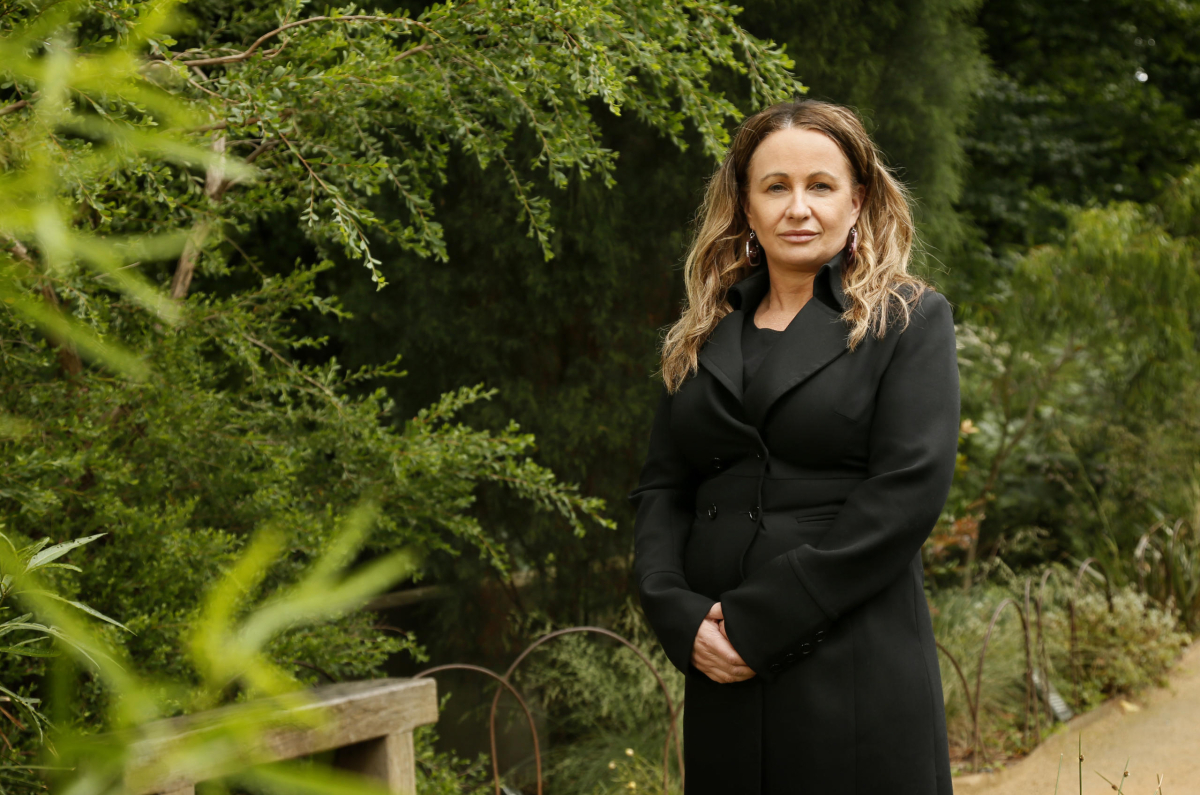
The law had a "devastating effect on Victorian First Peoples and was central to the beginning of the Stolen Generations," according to Yoorrook Deputy Chair Sue-Anne Hunter.
"This piece of legislation was the foundation of so much devastation for First Peoples," Commissioner Hunter said.
"Authorities were given the breathtaking power to remove Aboriginal children from their families to be placed in government institutions or domestic services, kickstarting the Stolen Generations."
Appearing at the Yoorrook Justice Commission last year, Deakin's great grandson, Peter Sharp, talked about his role in the legislation, where he said he was responsible, perhaps more than anyone else, for the policies designed to destroy Aboriginal Australia.
Speaking to The Age, Professor Mark Rose, who in 1978 became Deakin's first Aboriginal student and is now the university's deputy vice chancellor, Indigenous, said Deakin the man and Deakin the university were very separate.
Professor Rose, who is traditionally linked to the Gunditjmara people, added Deakin's policies had led to a "silent apartheid" which resulted in the exclusion of many First Nations people from education.
"At no point, do we want to justify it or shy away from [the history], but there is a complexity around it," he said.
"[Those involved in the process] didn't have any appetite in changing the name as part of the bigger picture of dealing with the legacy of Alfred Deakin."
The university said a "consensus was reached that the work of Deakin, the University, was critical to the national agenda and in particular for Aboriginal and Torres Strait Islander peoples and communities".
"To ensure unimpeded passage, the parties to this Tanderrum, underpinned by mutual respect for each other and the future generations of Aboriginal and Torres Strait Islander peoples, have arrived at a position that accounts for the past and garners the future."



