


Samoa has launched its first fully electric firefighting vehicles, marking a national milestone in climate resilient and low emission emergency response.
The initiative forms part of the Climate Action Pathways for Island Transport (CAP-IT) Project, a Japan-funded partnership between the Government of Samoa and the United Nations Development Programme (UNDP).
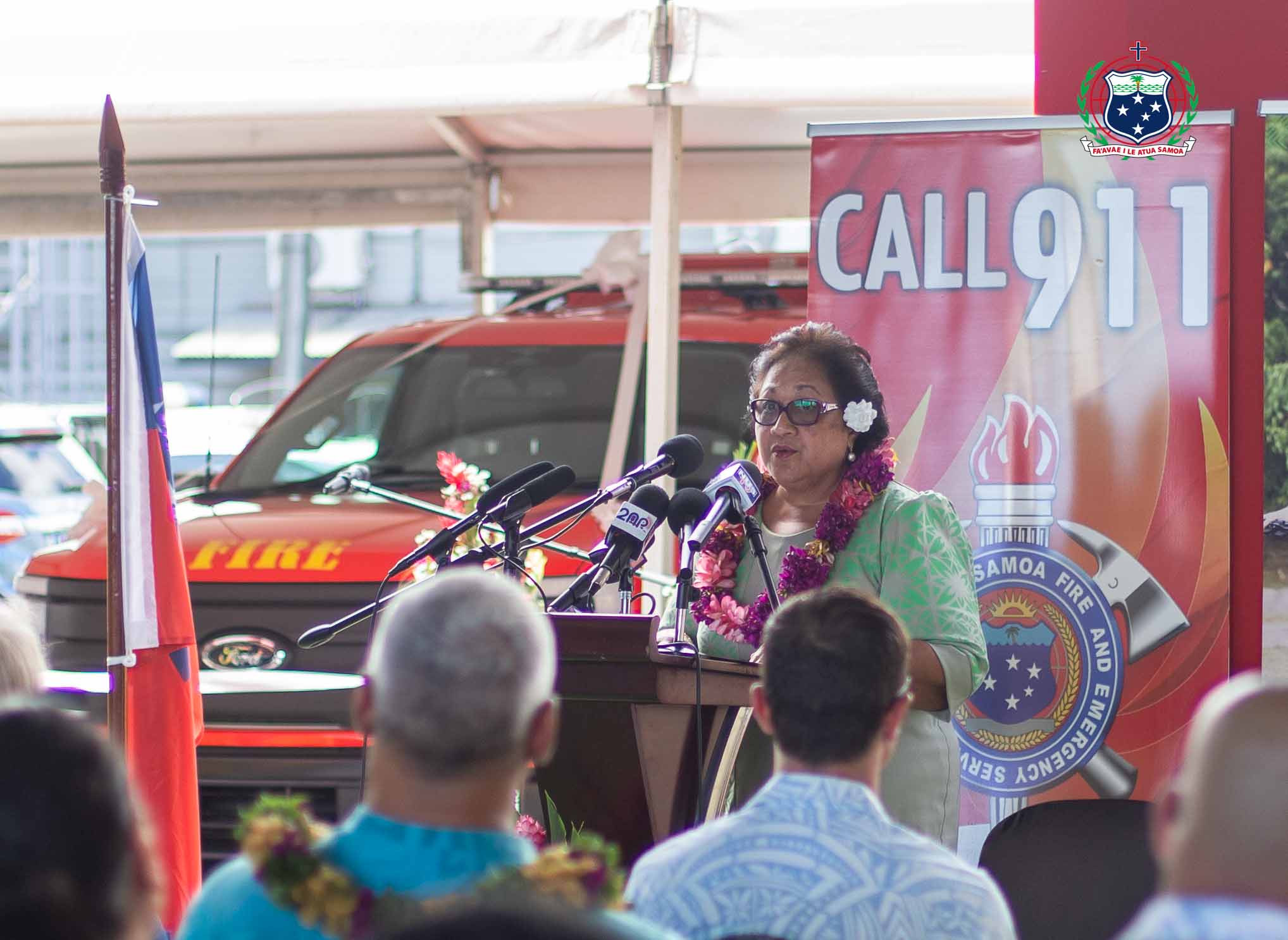
Minister for Fire and Emergency Services, Seve Tē'i Fuimaono, said the launch demonstrates how innovation and sustainability can strengthen Samoa's preparedness and safety.
"Today marks a historic step forward for Samoa's resilience and emergency readiness," she said.
"The introduction of these electric firefighting vehicles and specialised equipment demonstrates how innovation, sustainability, and strong partnerships can directly improve the safety of our people.
"We thank Japan and UNDP for their steadfast support in modernising Samoa Fire and Emergency Services Authority and advancing our green transformation."
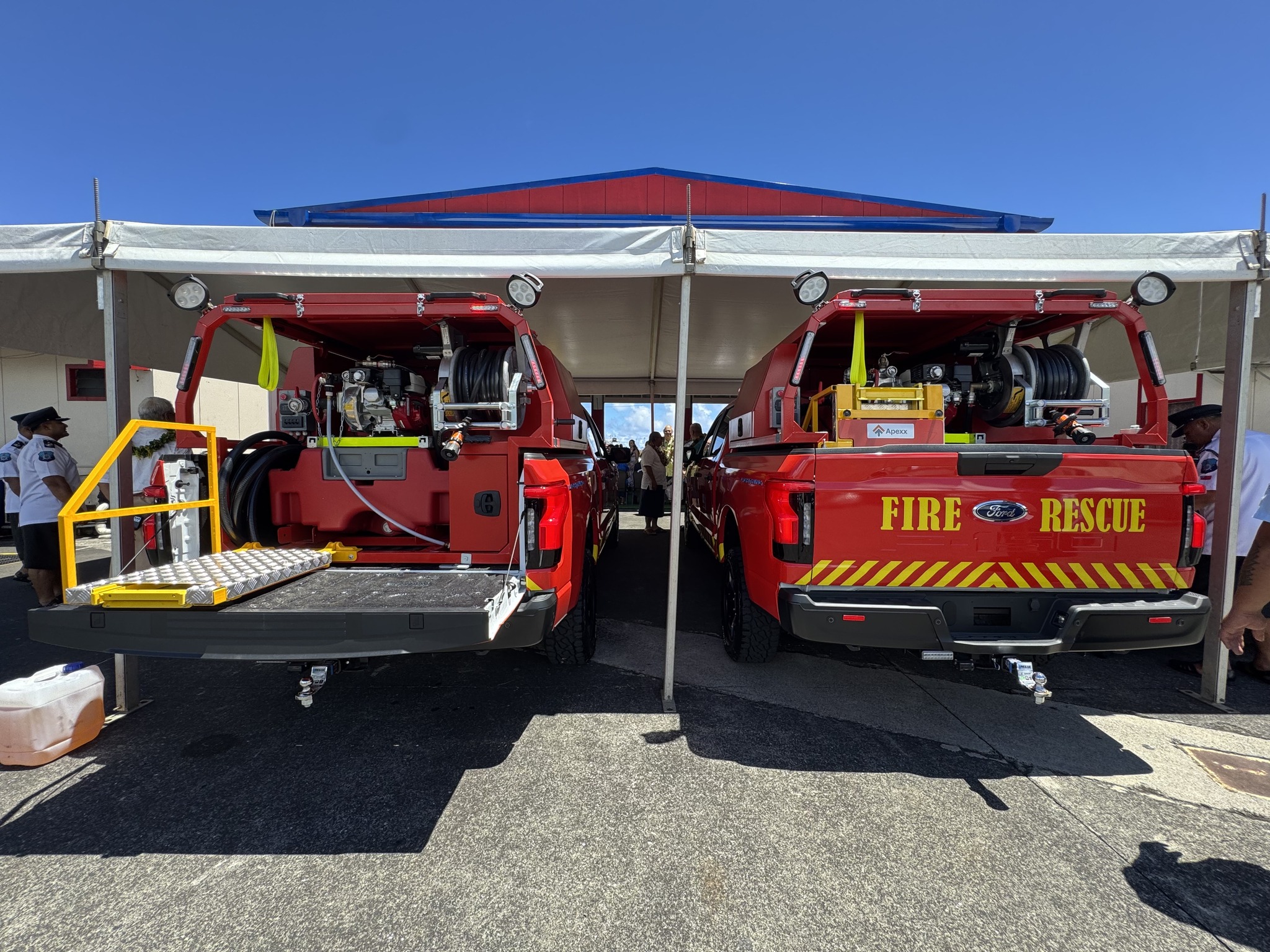
The two Ford F-150 Lightning first-responder vehicles are the first fully electric fire trucks in Samoa and among the first of their kind globally.
The vehicles were converted under the CAP-IT Project, which received more than $15 million USD of Japan's $37 million USD Green Transformation initiative to accelerate the shift to a low carbon future across Samoa, Papua New Guinea, Timor-Leste and Vanuatu.
The project is helping Samoa's transition by introducing a fleet of electric vehicles and more than 80 charging stations nationwide.
It also supports Samoa's Decarbonisation Strategy for the transport sector, which aims to cut greenhouse gas emissions by 13 to 18 per cent by 2030 compared to 2022 levels.
The project also contributes to Samoa's broader national goals of energy security, emissions reduction and climate resilience.
By reducing reliance on imported fossil fuels, the country is expected to strengthen economic stability and enhance its ability to respond to natural disasters and emergencies.
Ms Fuimaono said the deployment of electric vehicles for frontline response shows how clean energy technology can be adapted to meet the needs of small island nations.
"These vehicles are more than just tools for emergency response — they are symbols of innovation and our determination to protect both people and the environment," she said.
The Japanese Government provided more than $100,000 USD in specialised rescue and firefighting tools, including breathing apparatus, heavy duty cutting and spreading tools, and a positive pressure ventilation fan, with thermal imaging cameras and stabilisation tools arriving later this year.
UNDP Resident Representative, Aliona Niculita, said Samoa is leading by example in applying clean technology to public services.
"Deploying clean technology in essential public services, Samoa is showing the world that climate innovation can directly improve lives — protecting families, homes, and communities while contributing to national emission reduction goals," she said.
Fire and Emergency Services Authority Commissioner, Tanuvasa Oloapu Petone Mauga, said the investment improves the safety of frontline workers.
"This investment directly supports the safety of our fire-fighters and the communities we serve," he said.
"Our teams respond to emergencies every day, and having reliable, modern tools including EV-based fire trucks strengthens our readiness and ensures we can protect lives with greater effectiveness."

Chairperson of the Fire and Emergency Services Authority Board, Aiono Meresaini Siaosi-Laulua, said the partnership highlights the benefits of shared goals and cooperation.
"These vehicles and equipment represent progress, protection, and hope for our people," she said.
Ms Siaosi-Laulua said the collaboration between Samoa, Japan and UNDP reflects what can be achieved through sustained international partnerships focused on climate action and resilience.
The new vehicles and rescue tools will be deployed nationwide to strengthen the Fire and Emergency Services Authority's capacity in firefighting, rescue, and hazardous response.
As the CAP-IT Project expands, it will continue to build Samoa's capacity to integrate clean transport solutions across government and community services.



