


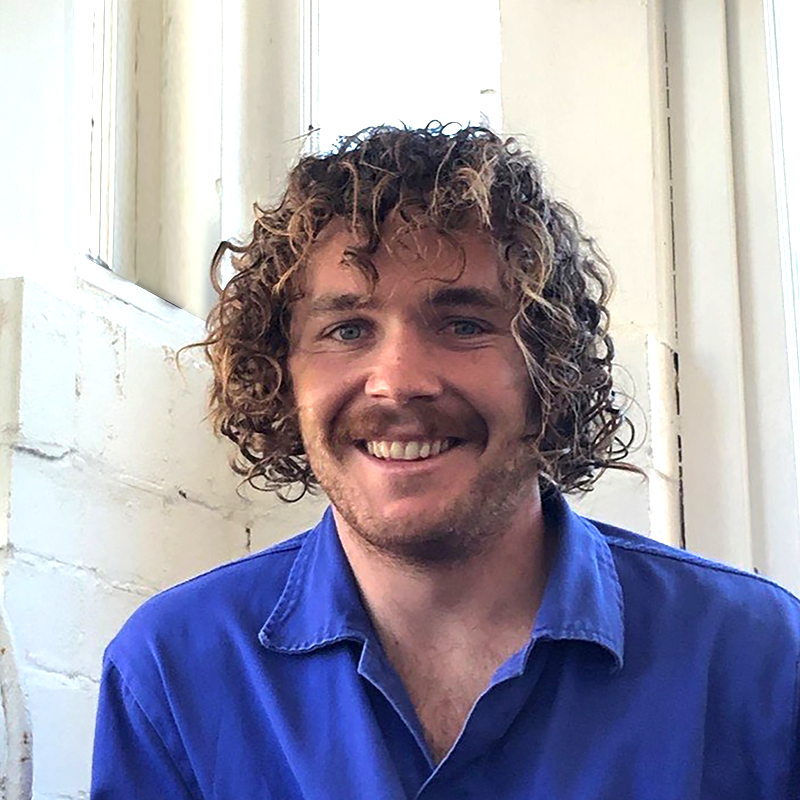

Driving through the Northern Territory outback, back to visit family in Borroloola, champion for the opportunities of Indigenous people, artist, sporting trailblazer and Stolen Generations survivor John Moriarty relayed his life experiences into a tape recorder.
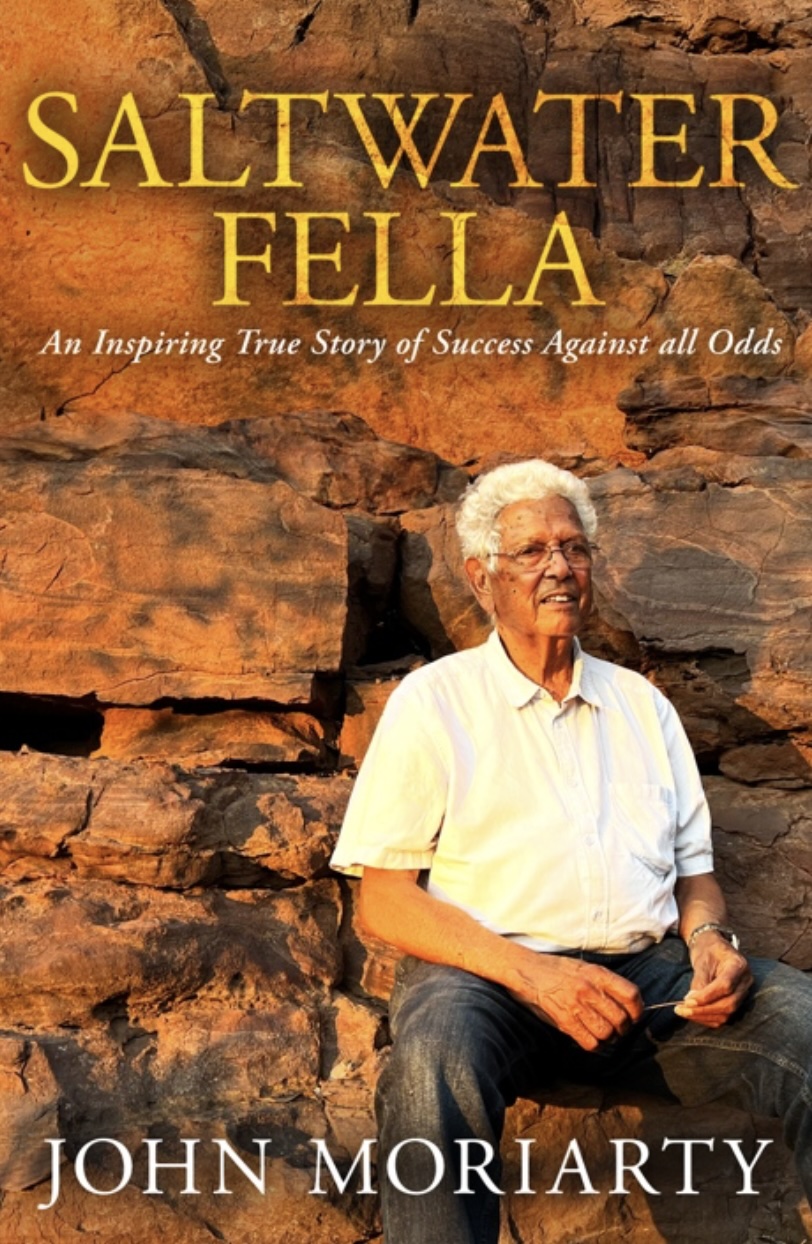
Those drives were made with his wife - and business partner - Ros, and were the starting point of his inspirational personal story in Saltwater Fella, first published in 2000.
Saltwater Fella has been republished this week, with some additions, by Melbourne University Publishing, via Miegunyah Press.
The Yanyuma man, then a young boy, was removed from his mother and community in Borroloola, near the Gulf of Carpentaria, in the NT.
"Years later, when I found my mother, I asked, 'Why did you let me go?'," Moriarty writes.
"My mother told me, in a very soft voice, 'My son, you were going to school. I took you to school every day ... then I went to pick you up this day and you were gone.'"
Moriarty recounts his and other young people's survival and forced disconnection from culture in institutions, school and university - where he was the first Aboriginal person to graduate from Flinders University in Adelaide, life in sport, and entry into what has been a life in advocacy, art and policy - in federal and state governments.
In 1960 he was the first Indigenous person selected in the Australian national soccer/football team.
In recent years, his John Moriarty Foundation and John Moriarty Football has worked to open the doors for others to follow, and empower healthy, strong Indigenous kids in regional and remote areas.
At heart Saltwater Fella explores his journey of reconnecting with his people and Country.
In opening pages Moriarty writes: "All along I've tried to regain the pieces of life that I should have had, the one that was shattered when I was a kid"
He told National Indigenous Times reuniting with his mother in Mparntwe (Alice Springs) as a teenager and returning to Borroloola as a young adult - "filling in the gaps of my knowledge of culture and my Country so I could then take my lifelong place there" - are moments for which he will always be grateful.
Travelling to Ireland to discover the roots on his father's side, "which is such a strong part of who I am", and joining his first football team are similarly moments "that changed my life's trajectory".
Later in Saltwater Fella, recounting his University days, Moriarty writes his Aboriginality "that inner fabric you build on to do all other things, to keep an end goal in your sights, even when it is only achievable over a decade or two or longer. It keeps you going while you're still striving for things".
That outlook has stayed true throughout his entire life, he said.
His entire career "has been focused on building bridges of understanding and reconciliation between Aboriginal and non-Indigenous people, whether this is through sport, art and design, business or government policy."
"This is what drove me to share my story. Like my Yanyuwa and Irish ancestors before me understood, storytelling is powerful and by sharing mine I want to inspire others to stand up for what they believe in, to take action when they see a need for change and that change is possible."
In the 25 years since Saltwater Fella was first published, Kevin Rudd delivered an apology to the Stolen Generations, the Uluru Statement from the Heart was issued, and some significant steps forward have been taken, though challenges remain and the work is far from done.
In the same year of the book's initial release - 2000 - the Walk for Reconciliation crossed the Sydney Harbour Bridge in extraordinary numbers.
"Australia is quite a different nation than it was in 2000," Moriarty said.
"The appreciation of Aboriginal culture and the groundswell for reconciliation was only just beginning to ignite.
"25 years on, there is certainly more awareness and interest in Aboriginal culture and history. I can see a real movement for embracing Australia's Aboriginal narrative within our national identity."
"Just like the 1967 Referendum where I fought with those who achieved the yes vote, all these events collectively help move us forward as a nation, towards one that embraces our Aboriginal heritage for a shared future, while acknowledging the past," he said on a time of reflection when adding to the book.
In a new epilogue, Moriarty tells 'The Balarinji Story', his and Ros' award-winning design and arts studio which 'started as a vision to celebrate our children's heritage' and later 'set about changing Australia's view of itself through the lens of design'.
Since 1994, Balarinji has partnered with Qantas in collaboration with other Aboriginal artists on the 'flying art series'.
"I hope my story gives people insights to the experiences of Aboriginal people in Australia and encourages anyone to believe they can find their belonging, even when the odds are stacked against you," Moriarty says of his book.
Of his legacy, he added: "I've never lived my life focused on how others perceive me and I've never believed you have to have the loudest voice in the room to be heard. I hope my legacy lives on in the work our teams are achieving to change opportunities for Indigenous people, and for Indigenous and other Australians to all belong in our country together. "
Saltwater Fella was first published with facilitation from journalist and author Evan McHugh.



