




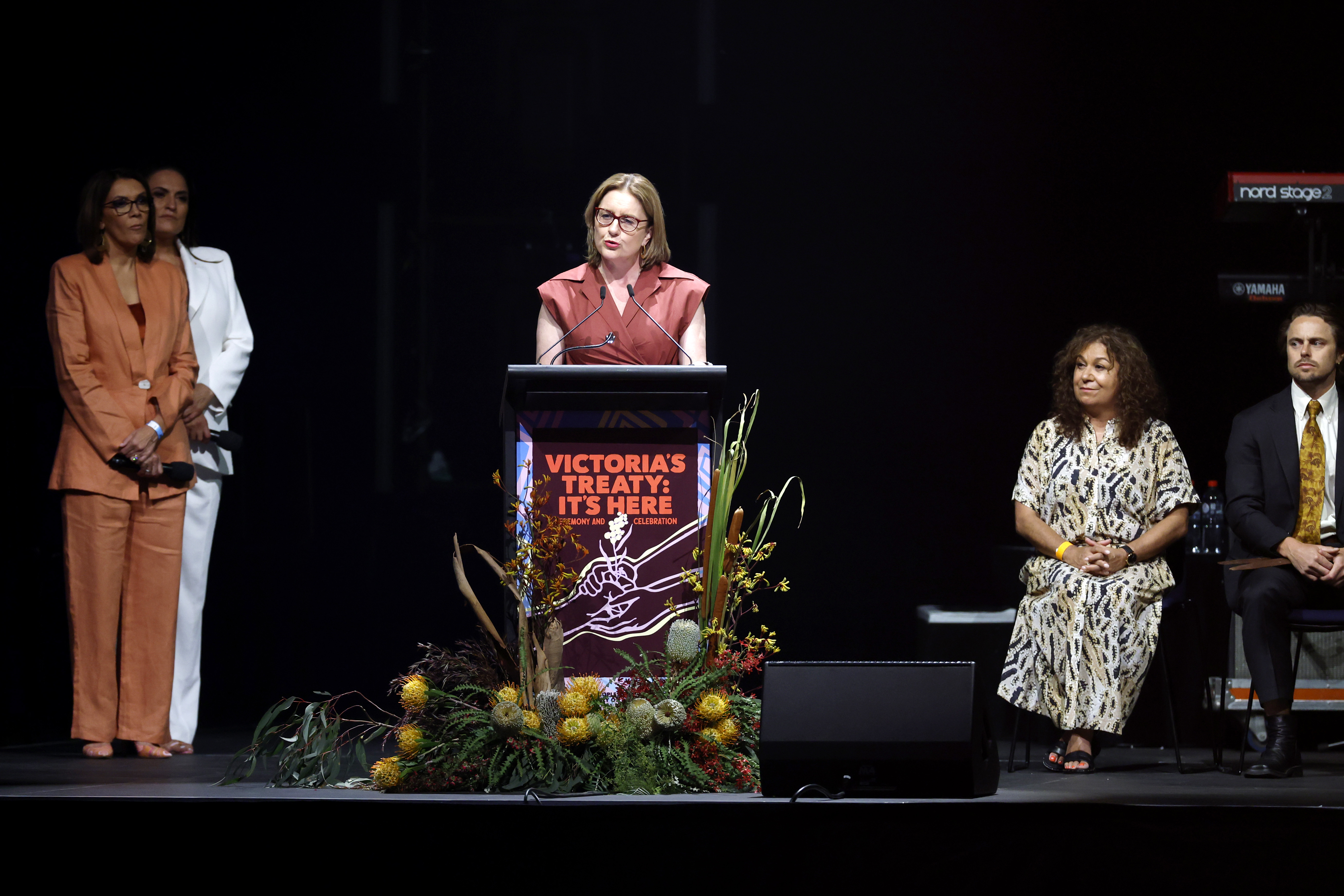
Victoria's historic Treaty — the first agreement of its kind between First Peoples and a state in Australia — has officially come into effect following a night of celebration in Naarm.
Although signed into law last month, Treaty included a provision delaying its commencement until after a cultural ceremony and celebration, which was held on Wurundjeri Country on Friday.
The milestone came in the same week the Allan Government formally apologised to First Peoples for the "harm inflicted upon them through the actions and inactions of the State, and the colony that came before it".
For Lisa Briggs, a Gunditjmara woman and Assembly Member for the Metro Region, Treaty represents "change for our future".
"I've got 11 grandchildren, so they're going to feel the impacts of the treaty changes more than I will, but it's about opportunity — restart, refresh of relationships," she told National Indigenous Times.
"I just think the more you immerse yourself in understanding about what Treaty is, the more that you will find it useful to whatever you want to do in your life, particularly about change.
"One of the things everyone talks about is Close the Gap. Close the Gap keeps us surviving; Treaty will make us thrive."
The free event at John Cain Arena drew thousands of Aboriginal and non-Aboriginal Victorians, including members of the First Peoples' Assembly, Premier Jacinta Allan and Minister for First Peoples Natalie Hutchins.
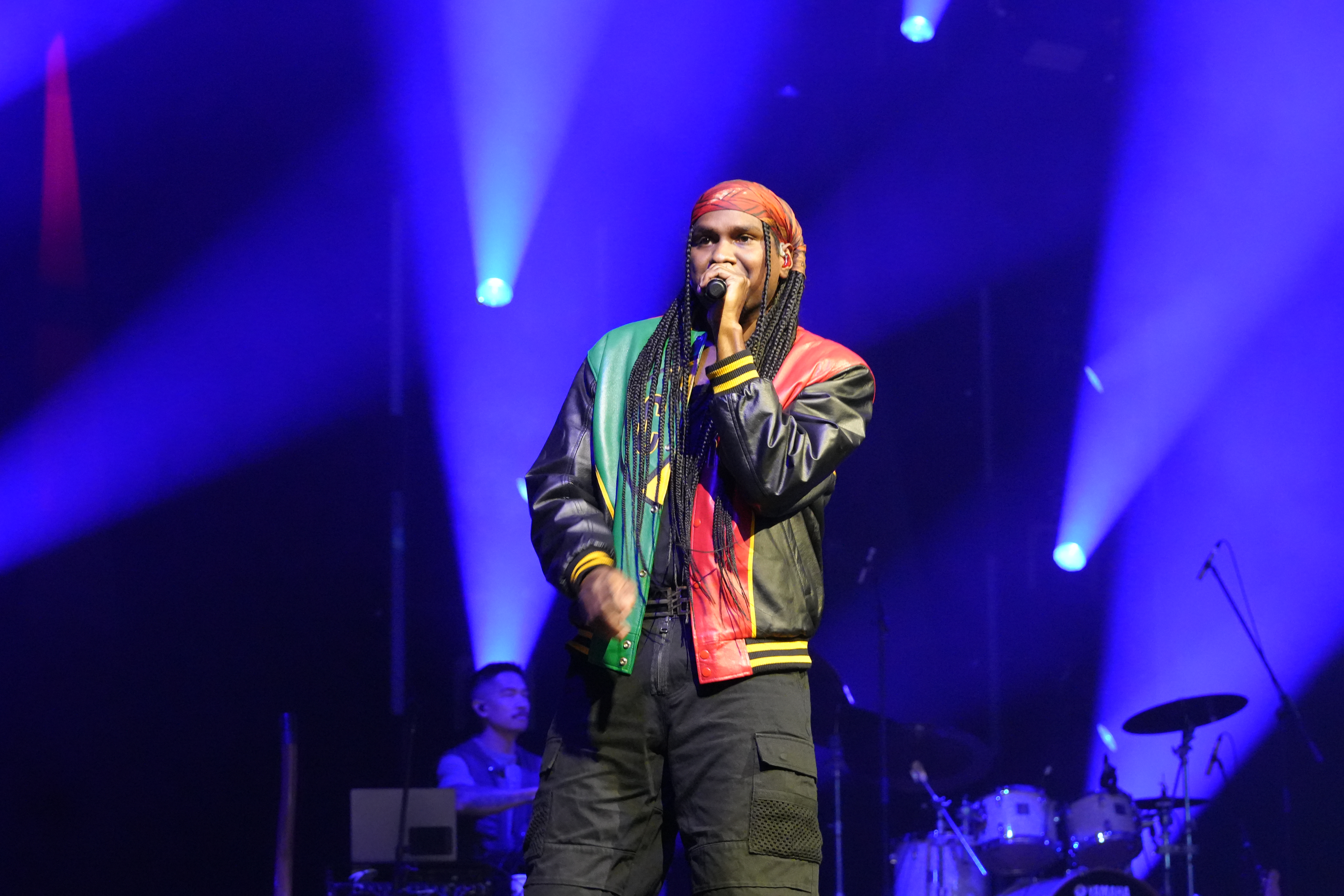
The celebration featured performances by Baker Boy, Briggs, Paul Kelly, Missy Higgins and Yothu Yindi.
Aunty Donna Wright said the road to Treaty had been a "really long journey", but Friday was "all about the community and celebrating with them".
"We are here to celebrate a momentous occasion with our mob, with our communities, about the first treaty in Victoria," the Gunditjmara woman told National Indigenous Times.
She says Treaty is about "having a seat at the table". Being able to exercise self-determination on issues affecting Indigenous people across the state for their individual communities.
"We're such a diverse mob, and it's really important that those local issues are pushed or on the agenda, so we can talk about it when we have the solutions, and everyone's part of that decision making," Ms Wright said.
"And there's this big vision, there's this big dream of a better future for our kids. We want them to prosper; want them to grow; want them to have every opportunity, like all kids. Treaty is that chance to do that."
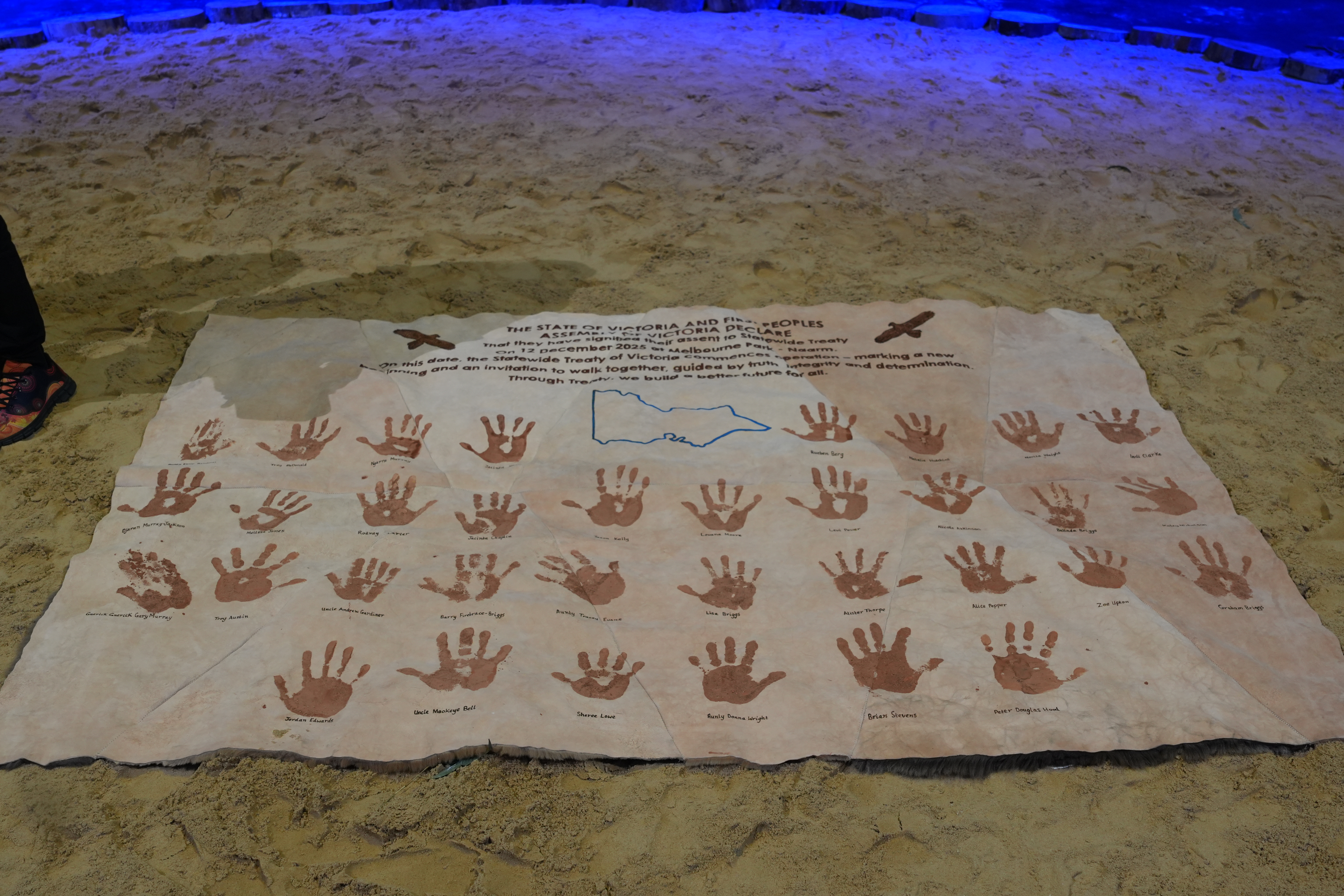
Throughout the day, a kangaroo-skin version of the Treaty was marked with ochre handprints from Aboriginal community leaders across the state.
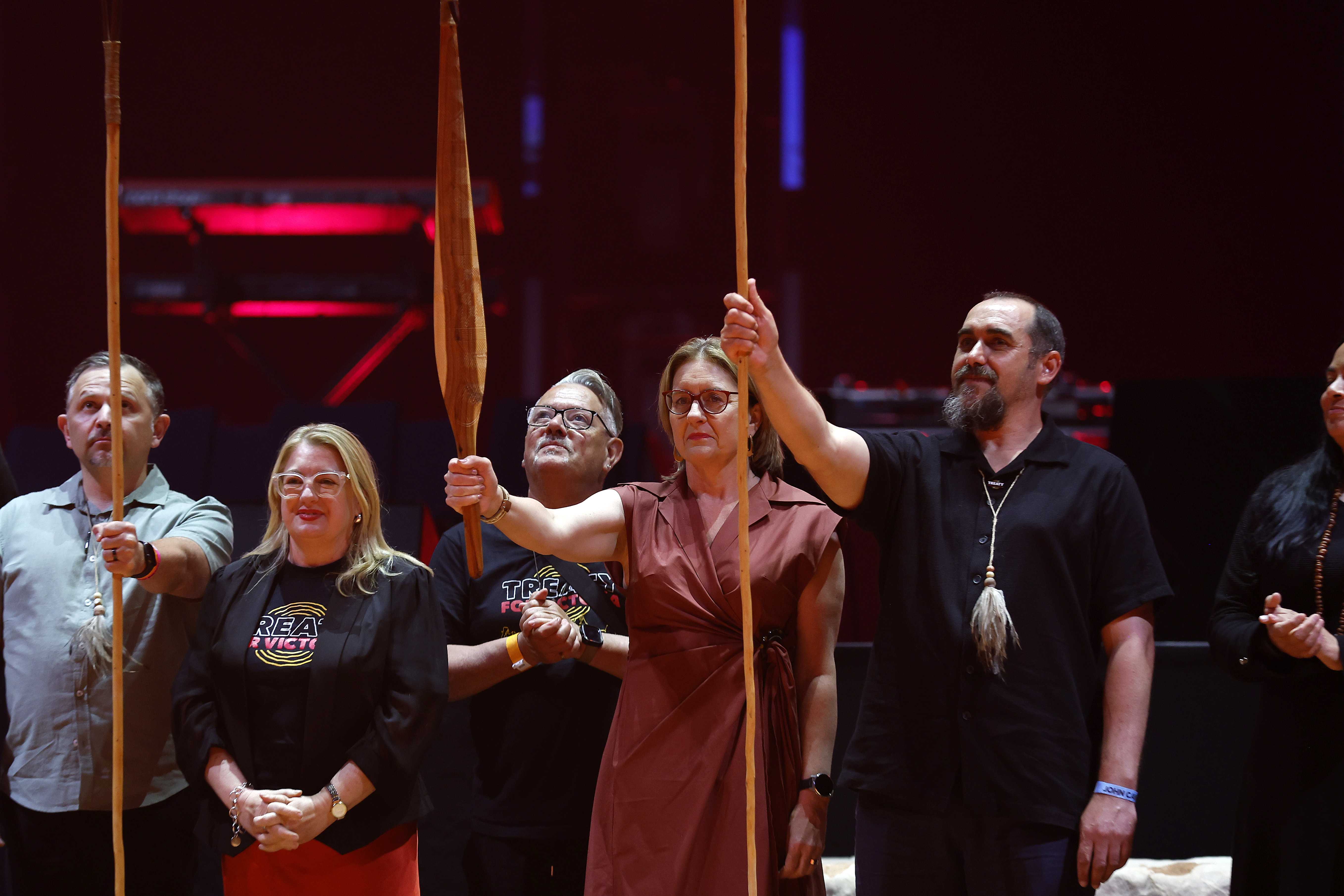
During the evening's celebrations, Ms Allan, Ms Hutchins and First Peoples' Assembly co-chairs, Ngarra Murray and Reuben Berg, finalised the agreement by placing their hands in ochre and imprinting them on the kangaroo skin.
"This treaty is born from strength, resilience and the resistance of our people. It is born from our unyielding love for our country and our communities and our unwavering belief in a better future," Ms Murray said.
"Treaties are a bridge, not just between us and the state, but between black and white, the past and the future."
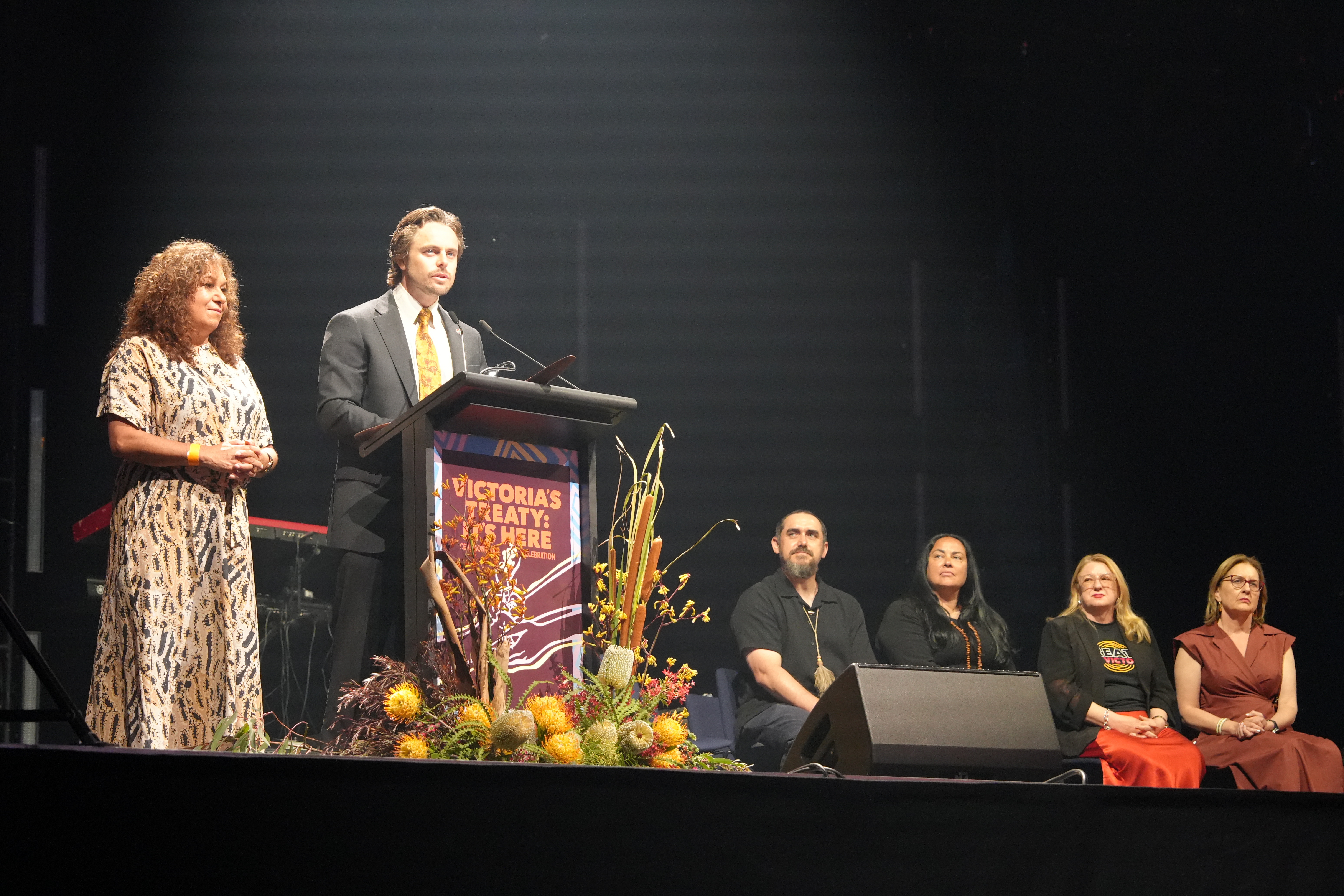
Addressing the crowd, Treaty Authority Chair Jidah Clark congratulated Victorians, saying Treaty had delivered a "stronger sense of belonging, a stronger identity, and who will inherit a more just and fairer future".
"Treaty is a call for justice, it is an invitation to reckon with the past, to set us all on a path to healing, and to celebrate the legacy of the world's oldest continuing culture," the Djab Wurrung man said. "Victoria has accepted that invitation."
For Yorta Yorta Elder Paul Briggs, who travelled from Shepparton, the events on Friday — which also included a gathering at the Aboriginal Advancement League in Thornbury — marked the culmination of decades of advocacy and effort.
He said the day reflected the "accumulation of a lot of history, and a lot of work, to get to this point in time — where the rights of First Nations peoples have been recognised".
Describing Treaty as an "incremental step", Mr Briggs said it was nonetheless vital for the "establishment of the rights of First Nations peoples, and in particular here in Victoria".
"It's a principle that should be absorbed and celebrated right throughout the country," he told National Indigenous Times.
"I think it follows up on the 1967 referendum — on the rights of people to be included. Treaty is a recognition of the sovereignty of First Nations peoples in this country, and the opportunity now to negotiate a relationship with the broader society, and for our people to be treated with respect and value."



