




Victoria's historic Treaty bill has passed the state's upper house, paving the way for it to be formally signed before the end of the year and marking the first such agreement to be signed in Australia's history.
The Statewide Treaty Bill passed the Legislative Council on Thursday night with support from the Greens and the crossbench. The Opposition voted against it, having withdrawn support for the previously bipartisan process last year.
The First Peoples' Assembly of Victoria - which negotiated the Treaty on behalf of Indigenous Victorians - welcomed the milestone with Co-Chair Ngarra Murray calling it a "historic moment for our people".
"We will tell our children about today, and they will tell their children, passing down to future generations the story of how decades of Aboriginal resilience and activism led to Australia's first Treaty," the Wamba Wamba, Yorta Yorta, Dja Dja Wurrung and Dhudhuroa woman said.
"Treaty marks the beginning of a new era, one where First Peoples' 60,000 years of knowledge and culture is respected and celebrated. It's an opportunity for all Victorians to acknowledge our shared history, heal and move forward together."
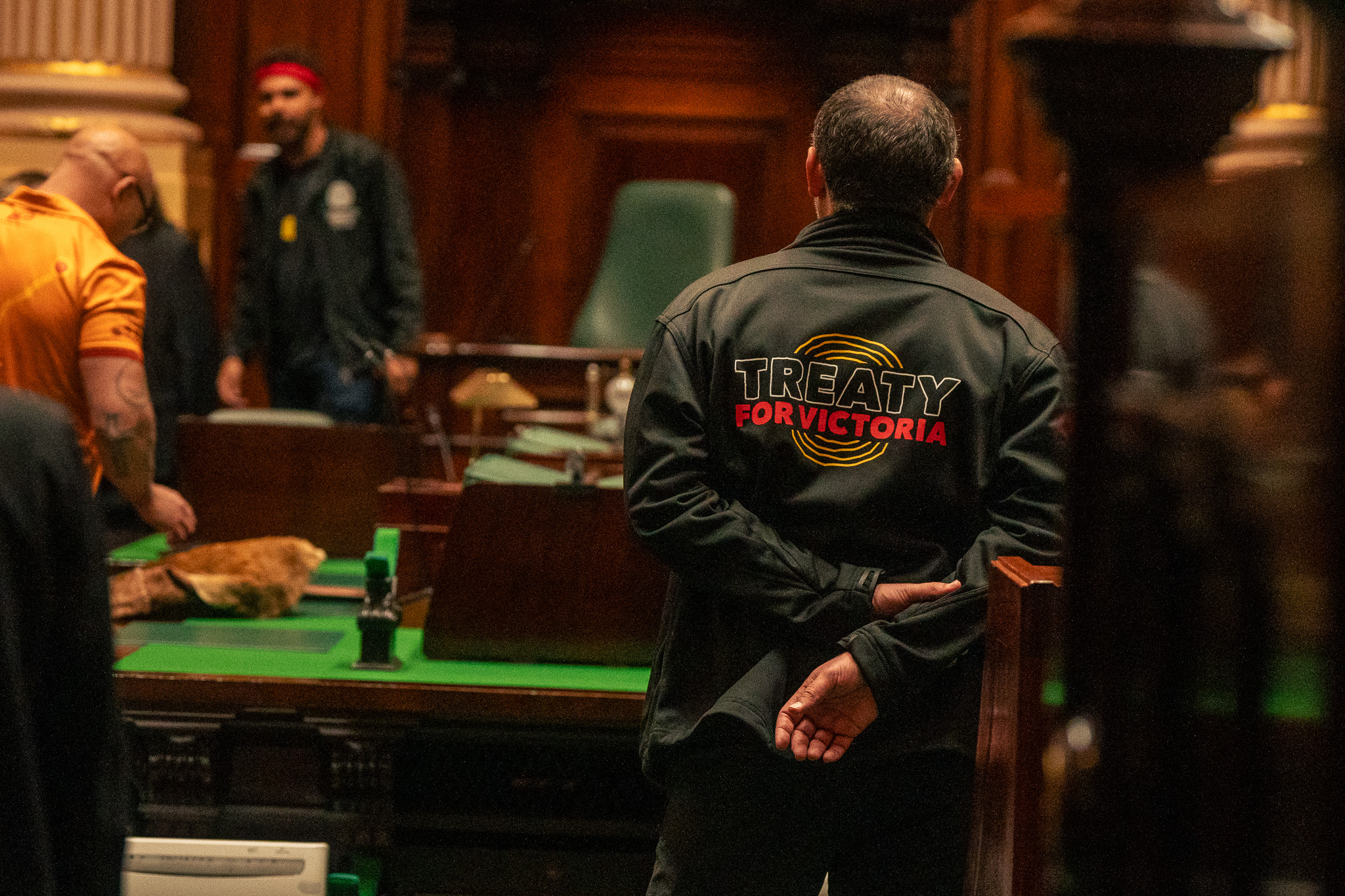
Gellung Warl, meaning "tip of the spear" in Gunaikurnai, will be the new Aboriginal governance structure. Under this, the First Peoples' Assembly, along with a new, permanent truth-telling body and an accountability commission, will look to oversee policies to close the gap in Victoria.
Under the legislation, the Assembly - democratically elected twice since its creation - will be able to make representations to Cabinet, ministers, and both houses of Parliament. It will meet with the police commissioner, address Parliament annually, and report on issues affecting Indigenous people.
Assembly representatives will also attend cabinet meetings at least twice a year, with all discussions held under strict confidentiality.
The bill clarifies that Treaty will not limit or override the powers of Parliament - a point repeatedly emphasised by both the government and the Assembly.
Fellow Co-Chair Rueben Berg, a Gunditjmara man, said the legislation enshrines a principle long advocated by First Peoples: that Aboriginal communities are best placed to decide on matters affecting their lives.
"Through Treaty, we will have the ability to use our expertise to come up with and deliver practical solutions for our local communities, in areas like health, education, housing and justice. This will mean better outcomes for our people as we know what does and doesn't work for us," Mr Berg said.
"This has only been possible thanks to the hard work, advice and support of thousands of First Peoples all across the state. We are grateful to everyone who has walked with us on this journey over the years to get us to Treaty."
Minister for Treaty and First Peoples Natalie Hutchins - who has overseen the process across multiple portfolios - said the legislation is about "acknowledging the truth of our past and working on a future built on mutual understanding and respect for First Peoples".
"This is a historic moment for Victoria - today we've taken a major step forward in building a future that empowers and respects First Nations Victorians," she said.
Premier Jacinta Allan said the bill will give Aboriginal communities the "power to shape the policies and services that affect their lives".
"This is how we build a fairer, stronger Victoria for everyone," she said.
Despite broad Indigenous support, the Victorian Opposition has pledged to repeal Treaty within 100 days if it wins next year's election. Some conservative commentators have argued the Assembly could act as a second chamber of Parliament, despite having no veto powers.
The Liberals proposed no amendments to the bill. Frontbencher Bev McArthur told Parliament: "Every facet of this bill, I oppose strongly. I oppose it in principle. I oppose it theoretically and politically. I oppose the language in the bill. I oppose its intent, the processes it creates, the bureaucracy, the expense."
The Opposition says Treaty is not the "best way to close the gap and deliver better outcomes for Indigenous communities" and have instead proposed creating a new department, First Nations Victoria, and an unelected Aboriginal advisory body. It was a decision condemned by Victoria's peak Indigenous health body as "deeply hurtful and disrespectful".
The First Peoples' Assembly said the Statewide Treaty will formally commence later this year, with a public celebration scheduled for December 12.



