


On December 27, 2021, at around 9 p.m. in Fredericton, NB, it was minus 10 degrees Celsius. A not uncommon temperature for the time of year. There was a little snow on the ground and a slight wind was blowing off the Wolastoq (St. John river). All in all, it seemed a typical Monday night.
Except that on this night, a 38 year old Sitansisk mother of four - Erin Brooks - walked out of a St. Mary's smoke shop, got into a waiting car and was never seen again.
Police are investigating her disappearance as a homicide. Erin's family, friends and the community have offered a $65,000 reward to anyone who can lead the police to her whereabouts yet, as of today, the police are no closer to solving this case than they were five years ago. Her family goes on without her, wrapped in grief and uncertainty, surrounded by a tight knit community sharing in their sorrow.
Erin Brooks is not just a statistic and she should never have been thought of as one. She was a loving mother of four. She was a daughter, a wife, a sister, a friend to so many. Erin Brooks mattered and her disappearance has taken its toll on all who knew her.
As heart-rending as this is to her loved ones, Erin Brooks' story is sadly not an isolated one within Indigenous communities. The grief, the uncertainty, the horrendous pain - is all too familiar for the First Nations, for the Metis and for the Inuit.
- Indigenous women and girls are roughly six times more likely to be murdered than non-Indigenous women in Canada.
- Indigenous women make up between only four per cent to five per cent of the female population in Canada, yet Indigenous women represent roughly 16 per cent of all female homicide victims.
- More than 80 per cent of Native and Indigenous women experience violence in their lifetimes, and over 50 per cent experience sexual violence.
These facts were already known in 2021. They were known to our governing bodies. They were known to law enforcement. They had been published and were easily found if someone cared to look. They were the harsh reality lived within all Indigenous communities.
And these facts have not changed in the five years since.
The night that Erin Brooks disappeared, 45 Canadian Indigenous women had already been murdered that year.
It's far past time for us to come to the realization that there is a distinct evil in this land. It is pervasive. It is cunning. It is systemic. And it keeps evolving.
It is an evil that has lived and thrived in our society for generations - nurtured and fed - growing stronger and more devious with time.
It is an evil which preys upon the marginalized and it withers the souls of all those who suffer by it, those who perpetrate it, those who witness it and those who ignore it.
It is an evil that has a purpose. And that purpose is Genocide.
In September of 2016, the Canadian government formally launched the National Inquiry into Missing and Murdered Indigenous Women and Girls. Its final report was published on June 3, 2019.
Following almost three years of over 2,300 interviews with families and survivors, of examining institutional practices and policies (including law enforcement) and of researching the available data on all forms and systemic of violence against Indigenous women and girls across Canada, the National Inquiry council came up with 231 recommendations, as well as the following conclusion:
"The violence the National Inquiry heard about amounts to a race-based genocide of Indigenous Peoples, including First Nations, Inuit and Métis, which especially targets women, girls, and 2SLGBTQQIA people. This genocide has been empowered by colonial structures, evidenced notably by the Indian Act, the Sixties Scoop, residential schools and breaches of human and Indigenous rights, leading directly to the current increased rates of violence, death, and suicide in Indigenous populations."
As Canadians, we don't want to believe that the organized erasure of a people is happening - or has ever happened - within our country. However, denial does not erase the evidence that it is. Denial does not erase the tragedy or the grief or the horror.
Feigned ignorance will not wash away the blood or the guilt. Only awareness and action will ever give reconciliation a chance. Only taking responsibility and following up with positive actions can we achieve atonement.
We have to ask ourselves how we got to this point. How did this apparent genocidal racism become so embedded and normalized in our culture?
We hear a lot about colonialism and colonizers these days, which many believe is where it began.
Colonization was once the greatest aspiration of European nations. It has now finally been recognized as the evil that it is. There was a time when explorers - who traversed the globe seeking lands to claim for their respective nations - were revered and held as heroes. The brutality, subjugation and slavery which ensued were hidden in the history books and excused as necessary for the global expansion of more 'enlightened' and Christian nations.
Doctrine of Discovery and Terra Nullius
When people within a society wish to commit atrocities upon others, they must first create the illusion that their victims are less than human. That is what the Doctrine of Discovery did, and it did it well.
Europe believed it needed more land. European nations wanted greater wealth and resources. And the Catholic church craved not only converts for "the greater glory" of their God, it also needed the protections afforded it by the royal houses of Europe, as well as the tithes they provided. From this inherent greed for power, riches and religious fervour was born (and borne) the Doctrine of Discovery, a doctrine written through a series of Papal Bulls and based on a blend of political and church ideologies.
This Doctrine granted nations the permission needed for them to claim foreign lands as their property, even if said land was already inhabited. Terra Nullius is a latin expression meaning "land belonging to no one" or uninhabited. And the papal bulls, defined what was inhabited and what was not. The colonizers and their partners in crime, the church, did not recognize Indigenous people as owning the land unless they had established permanent settlements with European style farming, as well as being Christians.
The papal bull Dum Diversas of 1452 actually gave colonizers the right to enslave non-Christian peoples and the subsequent papal bull Romanus Pontifex in 1455, reinforced slavery and gave a Christian colonizer the right to wage war on indigenous populations living on land they wished to claim.
It would seem that as far as the Church was concerned, Humanity and Human dignity were not defined by God, but instead, by the profitability of the slave trade and the greed of kings.
The Indian Act
It should be noted that on March 30, 2023, bowing to increasing pressure on the Catholic Church over newly released evidence of thousands of burial sites in connection with residential schools (most operated by the Church) in Canada, the Vatican repudiated the Doctrine of Discovery in a statement rejecting any concepts that do not recognize the inherent human rights of Indigenous people.
However, the church has refused to revoke or rescind the original 15th century papal bulls. And so their inhumane principles carried on for hundreds of years and led the way towards the injustices of today.
It was under the precedents set out by the Doctrine of Discovery that both the British and the French argued legality in colonizing the land that formally became Canada in 1867. Under British dominance, the Indian Act was created. This despicable document began its journey as the "Gradual Civilization of Indians Act" of 1858, which John A. Macdonald introduced while he was the Attorney General of Canada West.
The Indian Act was a racist treatise, based on the premise that Indigenous people were somehow lower than Europeans and would have to be civilized before they could be assimilated into society. It did not recognize their beliefs, their customs or their languages and basically made their practice against the law.
To quote Tuesday Austin, a Wet'Su'Weten woman and member of the Butterflies in Spirit, a First Nations women's dance group, raising awareness for the Missing and Murdered Indigenous Women, Girls and 2-Spirit (MMIWG2S+):
"They took our Totems. They took our customs. They took our potlatch. They ripped our dialect from our tongues."
The Indian Act of 1878, was made law to give the Federal government sweeping power over First Nations people and to force their assimilation into a British based society. It paved the way for generations of sorrow and condoned - even propagated - the racism directed at Indigenous people
This Act allowed the federal government final determination on who is to be legally considered First Nations. It established that the government has complete control over recognizing First Nations status and who is entitled to any specified federal rights and benefits.
A 'blood quantum rule' was used to remove status from anyone considered to have less than one-quarter 'Indian blood'. Most critics and scholars believe that the concept of 'blood quantum' is rooted in eugenics and that it lacks scientific validity. They argue that it acts as an "extinction formula" that will eventually legislate future generations out of tribal membership. The fact remains, that 'blood quantum' has been used in reducing Indigenous land holdings and to limit treaty obligations and federal benefits.
The Indian Act also removed status from any woman who married a non-First Nations spouse. This was a clear case of blatant gender discrimination that would take over a hundred years to address. It wasn't until April of 1985, that amendments to the Indian Act were made to allow women to retain their status and for those unjustly stripped of theirs, to re-establish.
This had been a hard fought battle for decades by activists such as the late, great Mary Two-Axe Earley, and though these amendments were a huge victory, they could never fully heal the generational damage done to individuals, to the communities and to the matrilineal branches of homes and governance.
The Indian Act gave the federal government control over Indigenous heritage as well as the basic legality of their existence.
The reserves, and the land on which they are established, still remain property of the Crown. Those who live upon them do not own the property or hold title and are required to gain federal approval for any land use and /or economic development.
The Indian Act gave the government power over where the indigenous would live and how they would be governed. First Nations people were finally allowed to vote without conditions in a federal election in 1960.
It controlled what they were allowed to believe, how they were allowed to speak and where they could congregate. The Indian Act has been revised occasionally over the years, but each right gained, that other Canadians take for granted, has been hard fought for.
The Indian Act from its onset has been an abomination. It was written by the powerful with the aim of subjugation. Any act of Parliament concerning the Indigenous of this country should have been based on a partnership. It should have only included recognition and not restriction.
Sadly, the opposite occurred.
Though church-run residential schools were first established in 1831, the Indian Act made First Nations education a federal responsibility, thereby establishing the legal framework for the 1920 amendment which made attendance in reservation schools compulsory.
Children between the ages of seven and 15 were forcibly taken from their homes, often by the RCMP. They were then held at residential schools until they completed the mandatory schooling requirements.
These schools were underfunded and overcrowded with staff who were not held to account concerning how they treated the children in their care. Accounts of physical and sexual abuse were rampant, as were unexplained deaths. Every effort was made to 'Kill the Indian in the child'. This was an attempt at generational erasure of a culture.
These residential schools, and the very concept of them, are by far the blackest mark on Canada's history. Though the last one was closed in 1996, the devastating effects are still being felt - within communities, within families and by survivors.
Prime Minister Stephen Harper recognized this and, in 2008 issued an apology to all survivors, in part saying:
"The burden of this experience has been on your shoulders for far too long. The burden is properly ours as a Government and as a country. There is no place in Canada for the attitudes that inspired the Indian Residential Schools system to ever prevail again. .... The Government of Canada sincerely apologizes and asks the forgiveness of the Aboriginal peoples of this country for failing them so profoundly."
The sentiment within these words rings true, though I cannot vouch for the sincerity. The same day that PM Harper made this apology, one of his MPs, Pierre Poilievre made the following racist, insensitive comment, which was in stark contrast to Mr. Harper's, during a radio interview:
"Canada's Aboriginals need to learn the value of hard work more than they need compensation for abuse suffered in Residential Schools."
Not only did Pierre Poilievre accentuate a negative racist stereotype, he also flippantly reduced the seriousness and veracity of the residential school abuses. Spreading these tropes is far from harmless - they fan the flames of intolerance and prejudice. When our political leaders use their positions of authority to punch down on a marginalized community, it emboldens others to do the same.
Many Canadians, myself included, felt he should have lost his seat over this blatantly racist comment. He didn't.
Rumour has it that Prime Minister Harper forced him to apologize publicly, however there is no record of Poilievre being formally censured in any way. It should also be noted that Harper later rewarded him with several cabinet position promotions. Actually, Poilievre currently holds the positions of leader of the Conservative Party of Canada, as well as the leader of the official opposition, giving him the opportunity to reach an even wider audience now.
Like a lot of urban Canadians in the 1960's, I was raised in a middle class household. Though my parents were liberal leaning with progressive values, I don't remember much diversity where we lived. Ours was an almost completely white neighbourhood and to be honest, I don't recall any people of the First Nations at the catholic elementary school I attended or at the church where we prayed every Sunday.
We were taught a pasteurized version of Canadian history, with no reference to the Indian Act or to residential schools. The infamous 'Sixties Scoop' wasn't front page news or widely talked about during our childhood. There were only fleeting mentions of the doctrine of discovery in our history books, definitely without any in-depth explanation of what it meant and the magnitude of the damage it caused.
We were taught that Europeans were welcomed when John Cabot and Jacques Cartier came to these shores and the fur trade began. Our textbooks said that they came in peace and brought prosperity - as well as the word of God - to a savage and backward people. We were taught that they traded fairly and that equitable treaties were sought, signed and honoured.
We were not taught the truth. It was not in our school's curriculum.
We were not taught the specifics of the planned and systemic 'assimilation' of a people - the why and the how. The horrors of the residential schools were kept from us. We weren't told of the graveyards filled with young bodies - located where playgrounds should have been. We weren't told about the abuse - physical, sexual or both - being suffered by children. We had no idea of the 'Starlight Tours' in Alberta, Saskatchewan and Manitoba.
Though many Canadians can claim blissful ignorance, we cannot claim that any longer. Maybe many of us did not know then - but we do know now.
And we also know now that the authorities knew then. For decades complaints went in to the police, to the churches, to the government - and they failed to act. They buried the reports and the evidence. They ignored the crimes and they hid the guilty.
We now know that over 4,118 children died while attending residential schools, according to the National Centre for Truth and Reconciliation - though many researchers and former commission leaders estimate that the exact number is much higher, anywhere from 6,000 to over 10,000.
And now that we know, what can we do? What will we do?
We can start with awareness. We must spread the word and not let it be hidden any longer - from anyone. We can stand up to the 'deniers' and keep the truth front and center.
Then we must follow up with action.
Of the 231 recommendations and calls to action within the final report of the National Inquiry into Missing and Murdered Indigenous Women and Girls only two have been fully completed according to independent sources. It has been over seven years since the final report was filed.
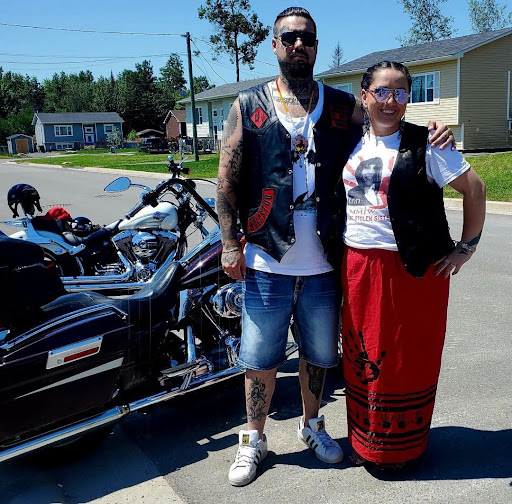
Justin Henderson is Wolastoqey from Stitansisk First Nation in Fredericton, NB. He is a husband, father, grandfather and a successful businessman, who is also studying Wabanaki Governance at the University of New Brunswick. When I asked him how he felt about the National Inquiry and its final report, he was very frank with his reply.
"I believe that the National Inquiry into Missing and Murdered Indigenous Women and Girls was important. It gave families and survivors a chance to tell their stories and finally have those experiences heard and put on the record.
But no, I don't think it ends with the report. A report doesn't keep anyone safe - action does.
There were 231 Calls to Action. That's a hell of a lot of recommendations, but what matters to me is what actually changes.
When it comes to the government's response to the Inquiry, I think they could be doing a hell of a lot more. Seven years is a long time when we're talking about people's lives.
We've had the report. We've had the Calls for Action. We've had plans, meetings, announcements and promises. So many promises.
But families are still waiting. Women and girls are still going missing and being murdered. Communities are still struggling with the same problems.
The Calls to Action weren't written so that they could sit on a shelf. They were written because families are hurting and people are dying. "
Justin Henderson knows his community and knows the needs of his people. He lives and works there, donating countless hours to selfless community service forming an unbreakable bond with land and those who live on it. He has stepped up to the plate and is not stepping back.
To Justin, leadership is not simply having a title. It's about actually doing something -not just talking about it. It's about looking after your people, listening to them and helping them in every way that you can. True leaders leave something better behind for those coming after.
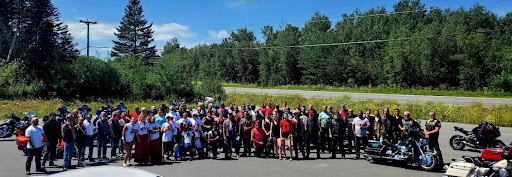
For five years, the Warriors MC have held a memorial ride in honour of Erin Brooks and to bring awareness to the MMIWG. The ride is organized by the Warriors, but is open to the public and attended by hundreds including other motorcycle clubs, independent riders, community members as well as supporters who all participate by getting involved in raising funds and awareness. Over the last five years thousands of dollars have been raised through registration fees in the run as well as donations and gifts. All of which is then donated to worthy causes in the community including to Gignoo Transition House for Women (https://www.gignoohouse.ca/contactus). This year over 70 bikes registered and thundered through the ride in solidarity, mutual respect and reverence.
Justin Henderson expressed the feelings of himself, and the club, best;
"The MMIWG Run for Awareness is more than a motorcycle run. It is a ride for those who can no longer ride beside us. It is a ride to honour Missing and Murdered Indigenous Women, Girls and Two-Spirit People, to stand with their families and to remind our communities that they are never forgotten.
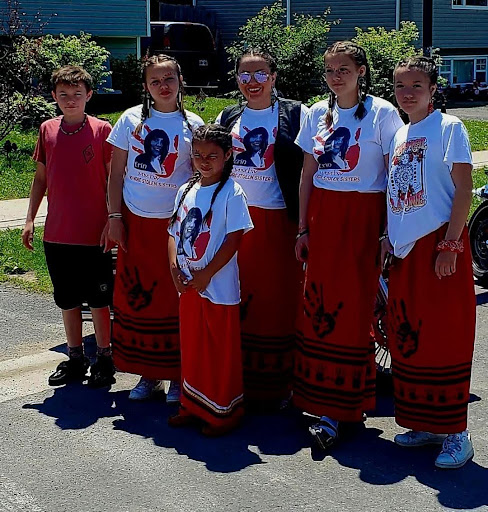
Overall, since January 1, 2026 we raised over $7,600 through Warriors MC for community charities. That number doesn't include the food and clothing donations, street outreach and the other hands-on community work we continue to do throughout the year.
With the help of our community, we also held a separate fundraising run this year that raised enough money to assist with headstones for both Montana Solomon and Erin Brooks.
Erin Brooks is family. She's my wife's sister and the aunt of my children. In addition to how important a cause it is, it's personal. We're a family still waiting for answers.
Although Erin has not yet been brought home, having a place marked in her honour has given our family and her friends a physical place to visit and remember her. This means a tremendous amount to our family and to the community.
For us, the goal isn't simply raising money. It's about using our club and our platform to make a difference wherever we can. Whether that's keeping Erin's name, memory and story alive or bringing awareness to MMIWG or helping another family with a headstone or supporting women and children or providing food and clothing or helping people directly through street outreach - we believe in showing up and doing the work."
And there is much work being done. The Crazy Indians Brotherhood is an international organization based on helping native peoples who need to find their way out of poverty, crime, addiction and abuse. There are chapters across Canada and the United States feeding the people, providing donated clothing as well as organizing remembrance marches, prayer circles and teaching events. These men are all volunteers and work selflessly for the good of others, answering the higher calling of being a benefit instead of a burden.
Tse Tsm Lek is part of the Salish nation and lives on the Scowlitz reserve in British Columbia. He is of the Sturgeon people as well as President of the CIB Stolo chapter. His name, given to him at birth roughly translates to 'Helper of the people', which seems prophetic in hindsight. He goes by 'Gotchie', his grandfather's name which means 'Big Man" and he lives up to that description, as well. Though Gotchie has lived a violent past, he is a peaceful man now. A loving father, husband and friend.
Speaking to him today, he told me;
"We have had so much taken from us over the years. It is time now for us to be getting it back. Our dignity, our spirit and our healing - these things are easier to deal with on a full stomach. We are stronger with warm clothes and away from our addictions. That's why our Brotherhood is out here on the streets. A lot of our people lose their way. They fall and just need a hand up. We are that hand. We give hope when it has fled and we keep faith when it seems lost. If you need help - just ask. We'll be there for you, so that you can be there for others.
Not one person is worthless. No one is beyond hope. Everyone was once someone's child. And every child matters, no matter their age."
It is still an often dark and dangerous path for the First Nations. The racism and prejudices of old still remain, as can be seen by the rise of Indian Residential School deniers. White Nationalist groups such as the Second Sons Canada, are crawling out from under their rocks, faces hidden by masks with the intent to provoke, intimidate and frighten. But just as these enemies are surfacing, more and more people are standing up against them. And we are so much stronger together than we will ever be alone.
Let us stand together with our Indigenous brothers and sisters. Let us honour the brave warriors who have left us and those who still survive. For generations they have survived when all had turned against them. The weight of nations tried to conquer them, to quench their flame, to erase their culture. And yet the culture survives. The teachings and the language of the elders all remain. And they will carry on.
"I am First Nations ... no longer burdened with weakness, from grief and pain of humiliation. I now stand with dignity and strength within my native spirit for I am free." - Shirley Kiju Kawi.
This article was first published by Rabble.



