


Tonga's weather service has begun incorporating traditional environmental indicators into daily television forecasts as part of efforts to combine generations of community knowledge with climate science.
The Tonga Meteorological Service is expanding a traditional knowledge database containing observations linked to weather, climate and natural hazards.
The work could see more traditional indicators included across the service's existing forecasts and climate information products.
Director of the Tonga Meteorological Service, Laitia Fifita, said the approach could preserve cultural knowledge while making public information more relevant to communities.
"Documenting traditional knowledge is not simply about preserving our past, but also about using generations of lived experience to help protect our future," Mr Fifita said.
"By integrating traditional knowledge with climate science, we can develop public weather and climate services that are more meaningful, trusted and accessible to our communities, ultimately helping to build a safer and more resilient Tonga."
The initiative follows a week-long workshop at the service's headquarters in Fua'amotu focused on traditional knowledge documentation, database management and communication.
The Secretariat of the Pacific Regional Environment Programme (SPREP) organised the workshop through the third phase of the Climate and Oceans Support Program in the Pacific (COSPPac3).
Participants reviewed traditional knowledge collected by the service and its partners over several years, adding more records to the database and identifying weather and climate products that could include the indicators.
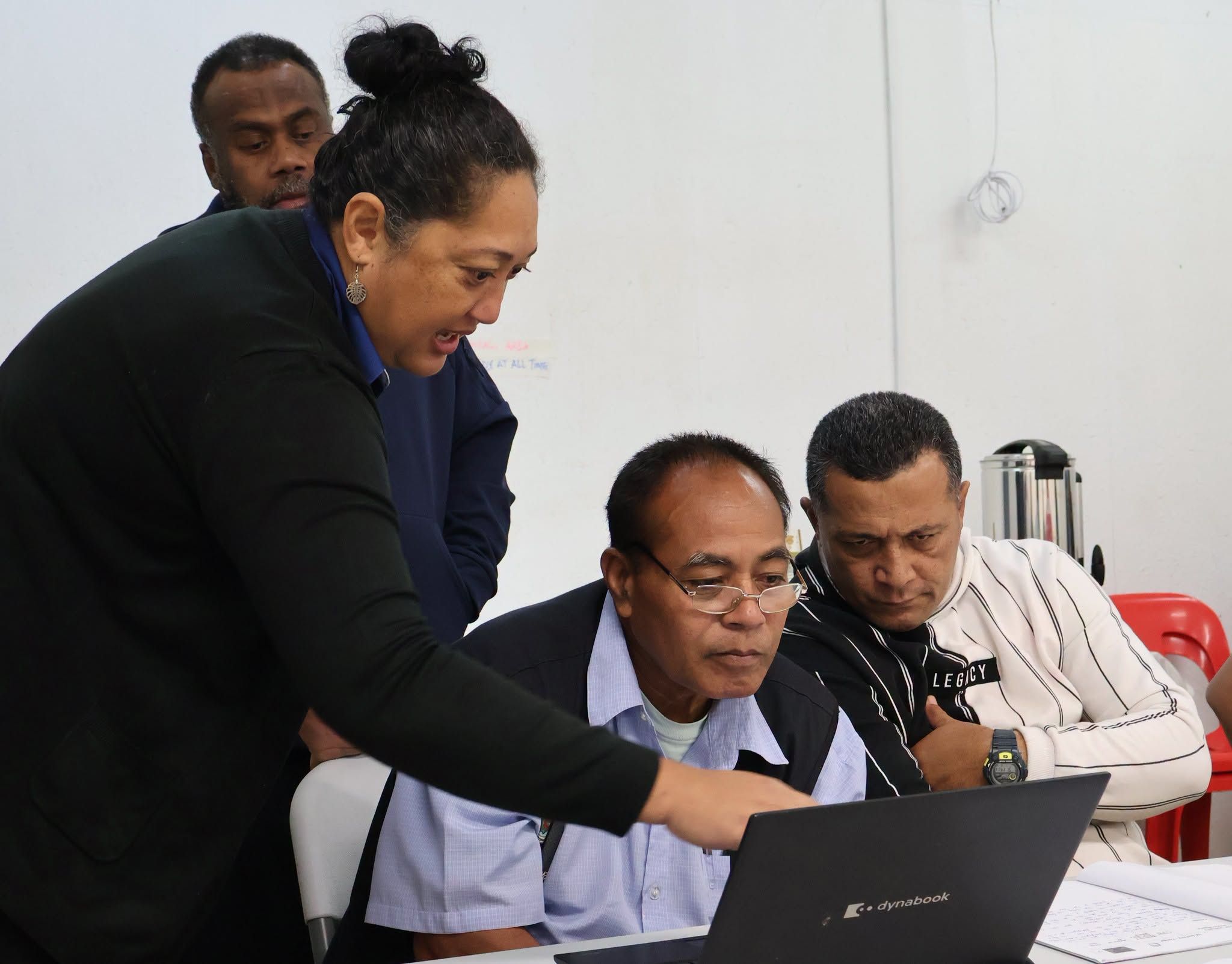
Tonga Meteorological Service forecasters, Lineni Latu and Vaiola Vainikolo, said traditional indicators could connect scientific forecasts with observations familiar to Tongan communities.
"For example, when people see clear skies at sunset, traditional knowledge tells us this can be an indicator to prepare for a cooler evening," they said.
"Sharing these indicators alongside our weather information helps the public better understand what they are observing in their own environment and, importantly, how they can prepare for the conditions ahead."
The project is intended to ensure knowledge passed through generations continues to support climate resilience and public decision-making.
It also focuses on community leadership in how traditional knowledge is documented and used.
COSPPac3 Traditional Knowledge Adviser Siosinamele Lui said communities needed to lead the process.
"This approach places traditional and indigenous knowledge holders at the centre as leaders and knowledge authorities," she said.
"It ensures that data collection processes uphold cultural protocols, data sovereignty and intergenerational knowledge transfer."
The work is supported through COSPPac3 and the Republic of Korea-Pacific Islands Climate Prediction Services project.
COSPPac3 is funded by Australia's Department of Foreign Affairs and Trade and New Zealand's Ministry of Foreign Affairs and Trade.
Both projects help Pacific weather services strengthen climate information and preparedness using scientific and traditional knowledge.
The expanded database is expected to preserve knowledge that could otherwise be lost while supporting forecasts that reflect both scientific monitoring and generations of Tongan observation.



