


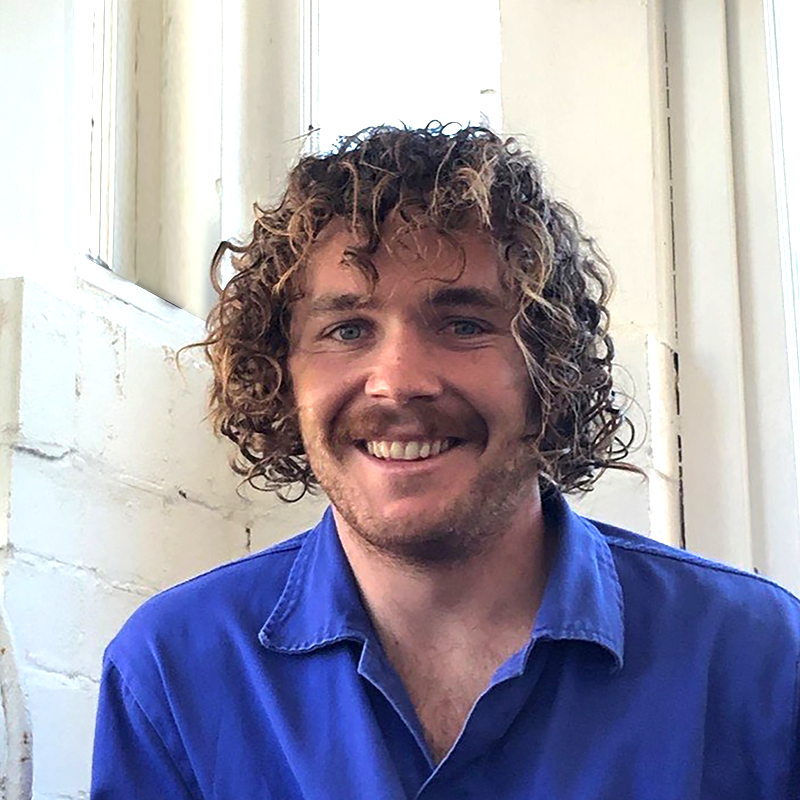

Wiradjuri astrophysicist Dr Kirsten Banks, maybe better known by her online handle astrokirsten, says science is for everyone, even if they don't know it.
Dr Banks boasts more than 800,000 followers between TikTok and Instragram, with millions upon millions of likes on her videos.
Like many, her interest in the stars above was sparked early.
Now she's sharing stories and knowledge with the world, from more contemporary discoveries and knowledge to those dating back tens and thousands of years.
Earlier this year Dr Banks was named in the Forbes 30 Under 30 Asia list for making "the wonders of the universe - black holes, cosmic discoveries, the search for life beyond Earth - accessible and engaging" and using "her Wiradjuri heritage to incorporate Indigenous teachings about the stars".
More recently, she was named a finalist for acclaimed science honour Australian Museum Eureka Prize's Promoting Understanding of Science category.
For her, it's all about getting others interested.
"I like to say that I'm in the business of fostering people's curiosity," Dr Banks said.
"I love sharing people's curiosity about the universe and sharing my curiosity with them as well, because everyone deserves a chance to enjoy and engage with science.
"When we have a more well-informed society, we can do amazing things."
That fostering comes with public talks, school visits and more in addition to her online juggernaut.
She told National Indigenous Times it was a school year group outing to see a documentary about the Hubble Space Telescope which kicked off what would later become her career.
During her first year of University, she began working at the Sydney Observatory as a tour guide.
"That's where I fell in love with talking about space."
A first dip into some social media as well as public talks, work in schools, and a little bit of money coming with it soon followed.
But it was during COVID 19 and her PhD, with speaking opportunities drying up, that content creation came calling.
She currently also works part-time as a lecturer at Swinburne University and in their Virtual Universe flagship facility - an immersive, interactive, 100+ square metre stereoscopic LED wall.
In schools, her talks about Aboriginal astronomy get a lot of love. In part, the "amazing" thing about it is the opportunity to explore something which wasn't taught in the classroom when she was younger, Dr Banks explained.
"We had Acknowledgement of Country towards the end of my primary school and high school, but there wasn't really hugely ingrained cultural teaching and learning. But now there's a real drive for wanting to share this, and it's awesome," Dr Banks said.
First Nations knowledge-sharing is always intrinsically embedded in what she does, she added.
On where modern science and Indigenous knowledge meets, she said: "They intersect everywhere, and they should intersect everywhere. When we bring together more ideas and different perspectives, we can continue forward in our quest for knowledge a lot faster and more effectively."
"For me, it's just in my everyday life, being a Wiradjuri woman and scientist, those things go hand in hand and drive, basically, my philosophy of sharing astronomy and space with everyone, but there are awesome ways that we can see this happening in research today."
Dr Banks will be doing exactly this at Beaker Street Festival in Nipaluna/Hobart and wider Tasmania this week.
She'll panel with Nobel Laureate Professor Brian Schmidt and UTAS Senior Indigenous Scholar Theresa Sainty about local Indigenous connections to the stars above for the Dark Sky Dinner on Thursday.
Along the state's north coast in Penguin next Monday she joins Hive Planetarium's chief astronomer Dr Martin George for Expanding the Cosmos at Mount Gnomon as part of the festival.
In between, she'll discuss social media for The Beaker Street Debate.
Stories from her Wiradjuri heritage are part of Thursday night's discussion, and she's up for the challenge coming with the debate on Friday night.
"I'll definitely be talking about some of my favorite constellations, like the dark constellation Gugurmin, or the emu in the sky, we call it Gugomen in Wiradjuri culture, but also how these stories you can learn a lot about the world around you," Dr Banks explained.
"Not just from what's in the sky, but also what's happening on the ground, how relationships work and the interconnectedness of our whole world."
Simply put, when it comes to the work and passion she's following, it's about bringing others along.
"It's about showing everyone that science is for everyone. It doesn't matter what your background or who you are. Everyone belongs in science, everyone can be a scientist, and I hope that in the work that I do, eventually everyone does feel like they can be a scientist," she said.



