




Urgent funding and change of direction for healthcare in prisons is required, according to the peak body for Victorian Indigenous-controlled health organisations, as data this week revealed the highest number of Indigenous deaths in custody since national monitoring began.
The national deaths in custody report from the Australian Institute of Criminology (AIC), released on Wednesday, found 113 deaths in custody in 2024-2025, including 33 First Nations people — the highest number of Aboriginal and Torres Strait Islander deaths in custody since 1979-1980.
"Every one of these deaths represents a person loved and valued by their family and Community," Victorian Aboriginal Community Controlled Health Organisation (VACCHO) CEO, Jill Gallagher, said. "Many of these are preventable tragedies that continue to shatter Aboriginal and Torres Strait Islander communities."
According to the AIC real-time dashboard, at least 617 Aboriginal and Torres Strait Islander people have died in custody since the 1991 Royal Commission into Aboriginal Deaths in Custody.
Human rights lawyer and National Justice Project CEO, Professor George Newhouse, says the numbers reflect people "not getting appropriate social care and healthcare in the community".
"And then," Professor Newhouse told ABC Radio, "it's the failure of the system to divert those people into healthcare or social welfare — and into prisons".
In 2024-25, there were 26 Indigenous deaths in prison custody — up from 18 the previous year — and six deaths in police custody. The proportion of Indigenous deaths in prison custody exceeded the long-term average of 19 per cent for the third consecutive year.
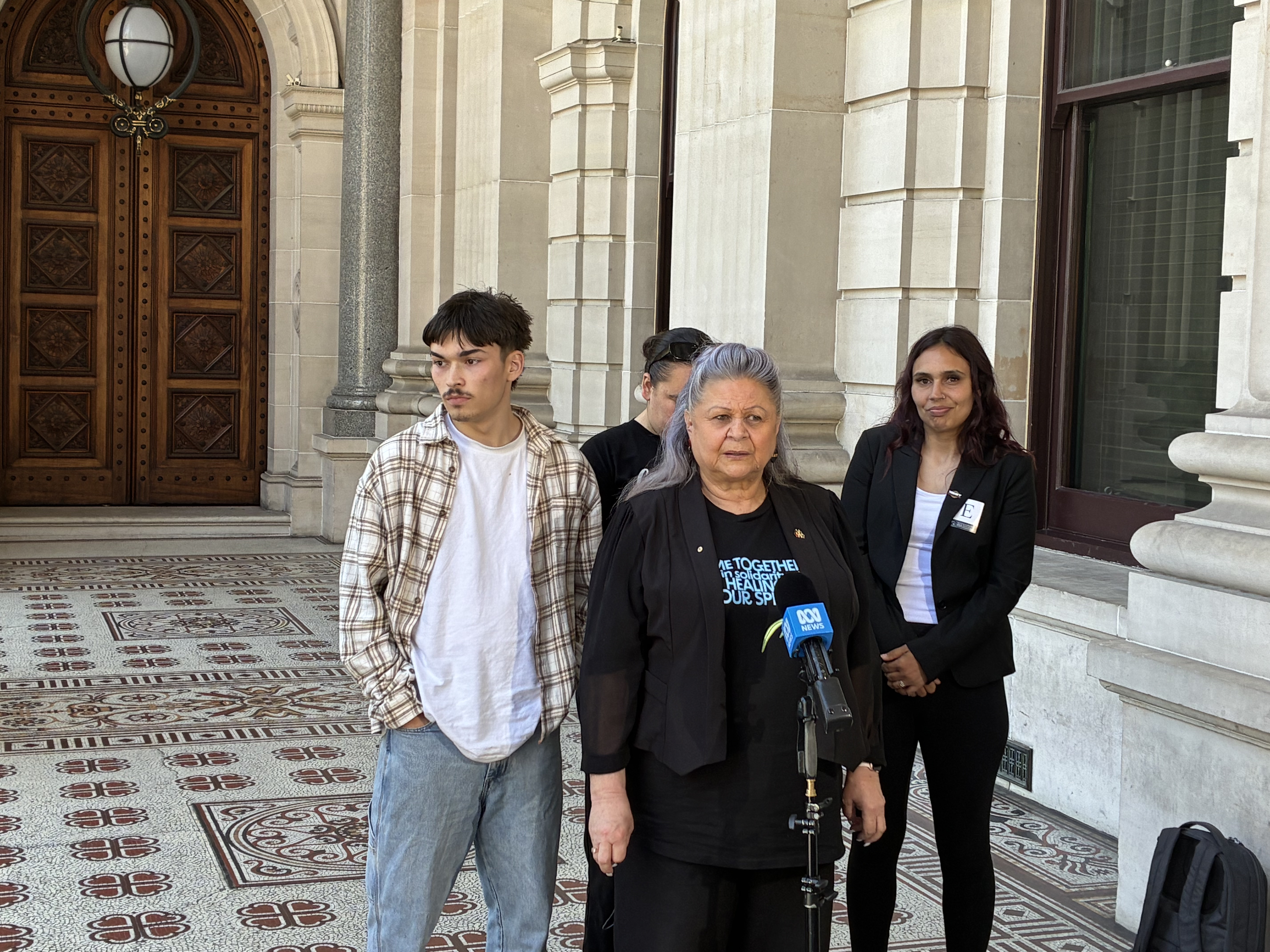
VACCHO describes the figures as a "national crisis" that the federal government can no longer ignore, arguing they highlight systemic failures in custodial health systems.
The organisation says prisons remain "ill-equipped to meet the cultural, social, and health needs" of First Nations people and has called for the responsibility for prisoner health and welfare to shift to the Department of Health, ensuring prison healthcare is delivered by a public health provider.
"This is not a new problem. Maintaining the same way of doing things will maintain the same results," Dr Gallagher said.
"Governments who fail to act cannot hide behind ignorance — therefore, we are left to assume it is pointed indifference to our families' losses."
First Nations Social Justice Commissioner Katie Kiss told the ABC states and territories are responsible for prisons and custodial settings, including the welfare of inmates. She argues there are concerns jurisdictions are "non-compliant with those international human rights standards".
"So first and foremost," Commissioner Kiss says, "we need federal government working with states and territories much more intensively to ensure that we're compliant in those systems".
Despite the Royal Commission urging imprisonment be used only as a last resort, 42 per cent of First Nations people who died in custody were unsentenced prisoners.
Professor Newhouse said people with nowhere to be bailed to will be forced to remain in jail.
"The other [issue] is this so-called 'get tough on crime,' cynical policy of governments, where bail is being restricted further and further," he noted.
"So you're seeing cynical politics, and social issues like homelessness, leaving people in jail, who have not even been convicted of a crime — and they're dying in grossly disproportionate numbers."
Additional concerns include the erosion of diversionary programs, which Victorian Aboriginal Legal Service CEO Nerita Waight says have been repeatedly cut while governments simultaneously introduce more punitive laws.
"State and territory governments are openly pursuing and celebrating policies that throw our people behind bars, all in the name of political point-scoring — and our people are paying the price with their lives," she said.
In its submission to the 2026-27 State Budget, VACCHO sought almost $2 million to continue Aboriginal-led service design for a new Aboriginal Community-Controlled Organisation (ACCO)-led custodial health model — a key recommendation of the Yoorrook Justice Commission.
Dr Gallagher said the model is an "essential step toward addressing the root causes of these preventable deaths". She added: "It must be properly funded and implemented before more lives are lost.
"An ACCO-led model has been put forward time and time again — by Aboriginal people, by inquiries, and by coroners. This is because we know that Aboriginal Health in Aboriginal hands achieves real change and deliver real results."
VACCHO says embedding cultural safety, prevention and trauma-informed care in prisons will enable holistic support that continues beyond incarceration, including through housing, employment and health services.
"If governments are serious about closing the gap in health and justice outcomes," Dr Gallagher says, "then Aboriginal-led solutions must be at the centre".
13YARN 13 92 76
Lifeline 13 11 14



