



The Quandamooka Truth Embassy has welcomed confirmation that the Yalingbilla whale skeleton will not be placed on the Point Lookout headland, marking a major development in a five-year campaign to protect one of Minjerribah's (North Stradbroke Island) most culturally important places.
The update was shared widely through a recent community flyer, which stated that native title prescribed body corporate, QYAC had confirmed the whale bones would instead be housed at the Queensland Museum.
A new round of community and stakeholder engagement will now determine future uses of the site, signalling a shift from the earlier proposal for a Whale Interpretive Centre.
The whale at the centre of the proposal had washed ashore on Minjerribah several years earlier and Goenpul woman Pekeri Ruska said its bones were an integral part of the government's tourism plan, despite many in the community viewing the act of displaying the bones as "grotesque" and "deeply disrespectful".
The bones were initially taken for preservation with little clarity about their final placement, before the headland was identified as the preferred site.
Ms Ruska, one of the coordinators of the Quandamooka Truth Embassy, noted the community's opposition to the project began when the whale centre was listed as a priority in the government's economic transition strategy following the end of sand mining on the island.
"The project for the Whale Interpretive Centre came after the announcement of the closure of sand mining on Stradbroke Island," she said.
"The government's response to the closure was to develop what they titled an economic transition strategy.
"And the idea of it was to transition the island away from what they were calling a sand mining economy to a tourism economy... that economic transition strategy came about with very little engagement and at times none at all with the First Nations community."
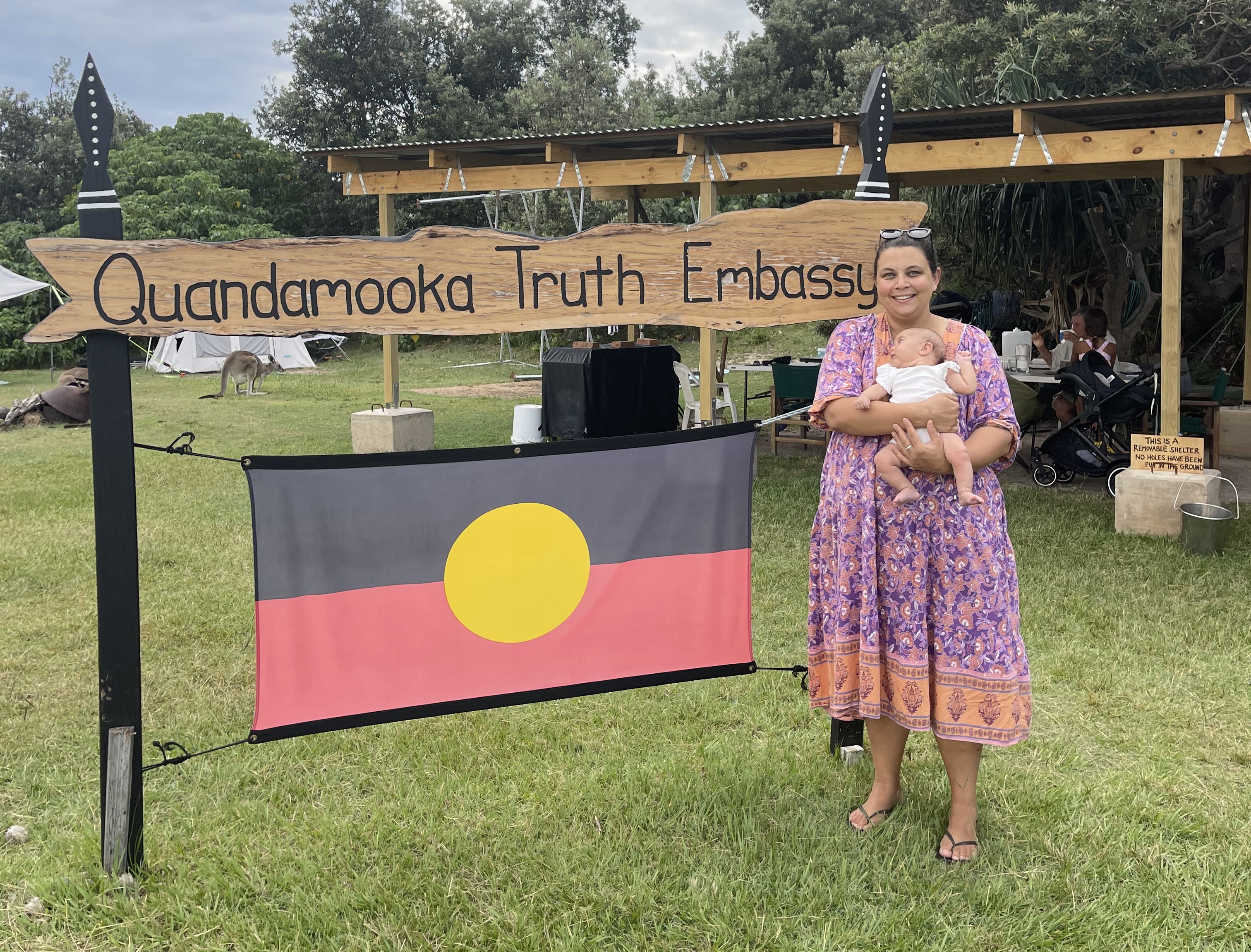
She said the whale centre formed part of a suite of tourism-driven proposals that did not reflect community priorities or cultural responsibilities.
The suggestion that a large structure would be built on the sacred headland immediately alarmed elders who understood the cultural, environmental and historical significance of the location.
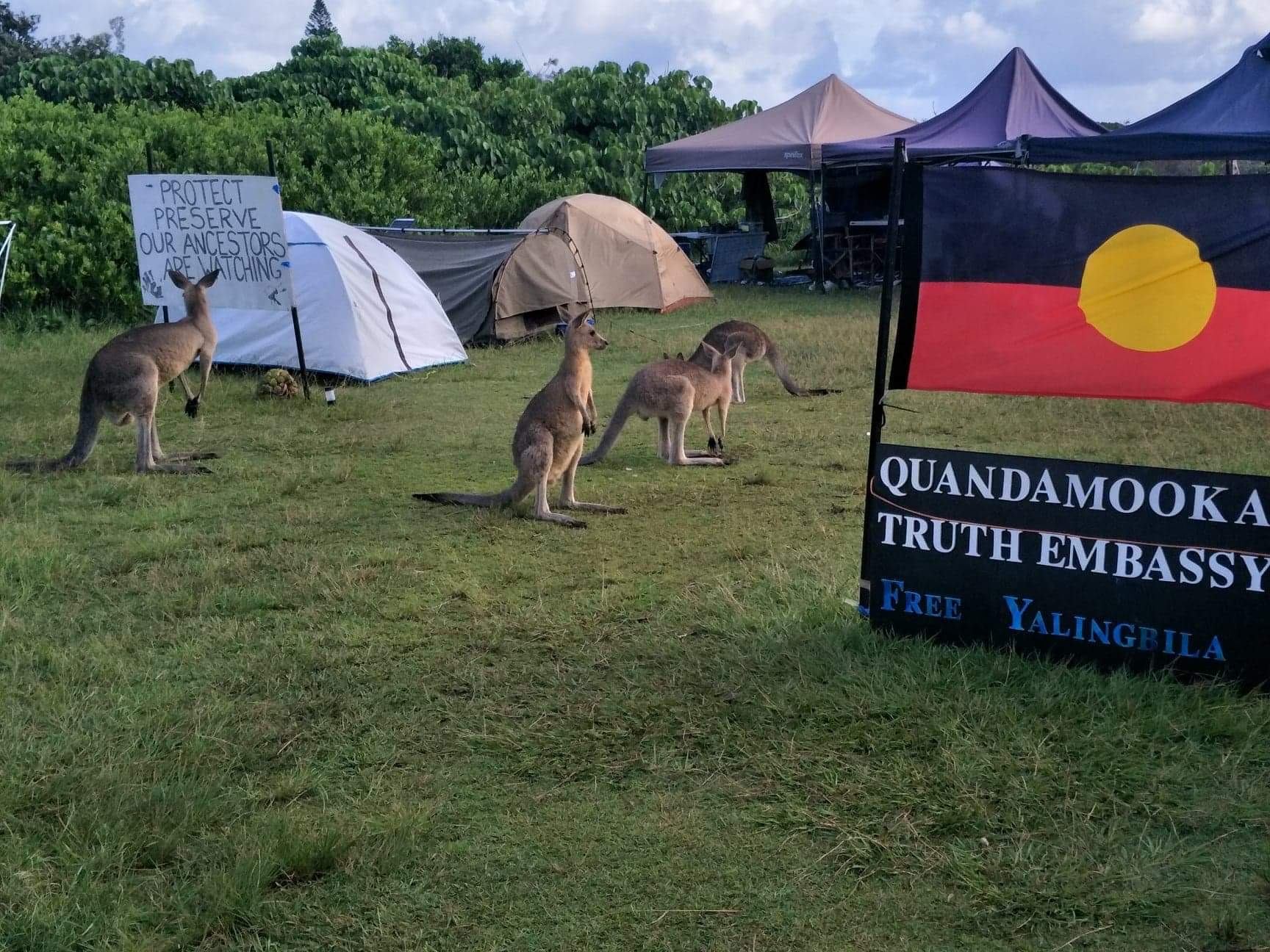
Ms Ruska said the community tried multiple avenues to stop the proposal before turning to direct action by setting up camp in the area.
"All that we did through all of the campaigning, was informed by our elders," she said.
"We tried a number of different actions to stop the build from happening. However, none of those were successful."
Elders ultimately supported establishing the Quandamooka Truth Embassy, a peaceful occupation grounded in cultural rights and responsibilities.
"Ultimately they didn't come in and they didn't try and move us off. And we were the sole reason why the Whale Interpretive Centre building did not go ahead," Ms Ruska said.
During the first year of the camp, eight Quandamooka Elders lodged a section 10 application under the Aboriginal and Torres Strait Islander Heritage Protection Act, seeking long-term protection of the headland.
That application remains active.
Truth Embassy member and applicant Dale Ruska said the latest announcement offers hope that future planning will recognise the full cultural significance of the site.
"As one of the Quandamooka Truth Embassy members, and one of the eight section 10 applicants, I feel encouraged to hear the announcement made at the QYAC AGM regarding the Yalingbila proposal not going ahead," he said.
"I am even more encouraged to hear that the future use of the proposed site will guarantee that all important cultural heritage values will be respected, accepted and incorporated into any future planning."
Mr Ruska described the headland as an ancient and sacred cultural landscape shaped by millennia of environmental change, as well as more recent encounters with explorers, military forces and settlers.
He noted the announcement provides hope that First Nations cultural presence can be re-embedded and protected for generations to come.
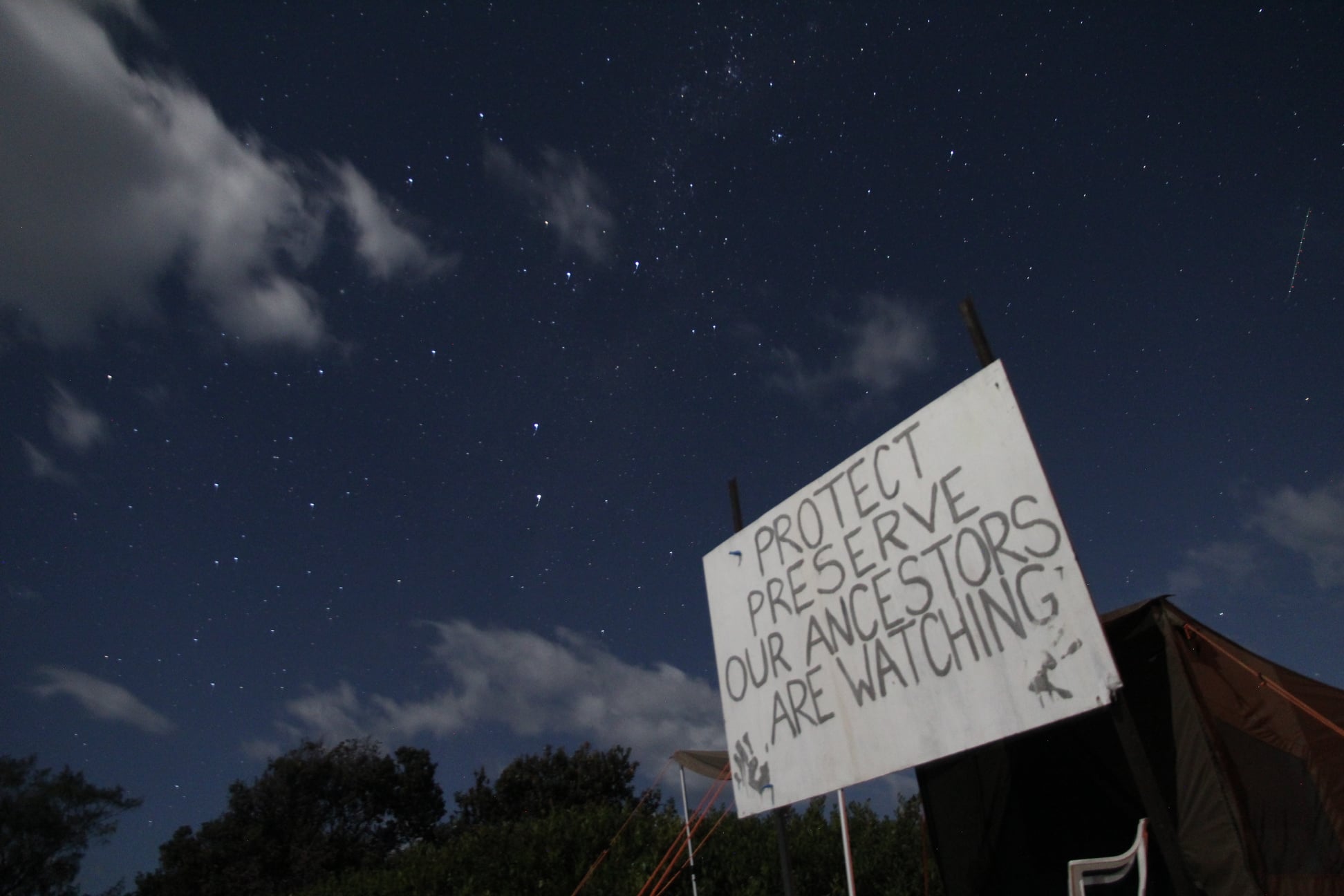
For Ms Ruska, the decision brings relief after years of holding space to protect the headland, often under difficult conditions.
"To be honest, it was a complete sense of relief because it took a significant toll on our community and on our elders who were based up there and camping up there for a large part of those last five years," she said.
She said the campaign demonstrated the power of community-led protest and the ongoing role that Aboriginal embassies play in protecting Country.
"I am optimistic... I hope that this really does mean a change in the way in which our Native Title body are going to relate and engage differently with community," she said.
The section 10 application will remain in place until Traditional Owners are assured that any new proposal will not risk harm to the headland.



