




As incarceration and out-of-home care rates for Indigenous children continue to rise across the country, Australia's inaugural National Commissioner for Aboriginal and Torres Strait Islander Young People says her role is clear: it's time to amplify children's voices in policymaking.
For Sue-Anne Hunter, this is no symbolic appointment. It's a responsibility built on decades of frontline work and advocacy, and one she doesn't take lightly.
Speaking exclusively to National Indigenous Times, the Wurundjeri and Ngurai Illum Wurrung woman isn't shy about the difficulties of her role. Having recently finished up as commissioner and deputy chair of the landmark Yoorook Justice Commission - Australia's first official truth-telling body - she argues it's not a burden "our kids need to carry".
"I'll carry that burden," she says. "I want their voices to be heard, and... in a really safe way."
With a background in the family services sector - including having worked at the peak body for Indigenous children, SNAICC, as well as at the Victorian Aboriginal Child Care Agency, and as a frontline social worker - Commissioner Hunter's appointment follows years of calls from Indigenous families and peak bodies for a dedicated advocate to hold governments accountable for outcomes affecting Indigenous children.
Despite that achievement, she's quick to point out that little has changed in what people are still fighting for. It is also a role yet to be legislated. And whilst the government has committed to doing so, there isn't a clear timeframe for when this will take place.
Despite the support from Labor for the new position, the mechanisms of government work slowly.
Nowhere is this more evident than in policies impacting Indigenous children and young people.
The numbers tell the story. First Nations children are 27 times more likely to be in youth detention than their non-Indigenous peers, and 10 times more likely to be in out-of-home care.
The horrific stories of children as young as ten being housed in detention across the country - some of it in adult facilities - continue to cast a stain on Australia's international standing.
"We all know youth detention in the Northern Territory is bad," Commissioner Hunter says bluntly. "What's happening is just horrible; it's a human rights violation."
A post shared by National Indigenous Times (@natindigtimesStill, she notes, part of her task is understanding the constitutional limits of her role - particularly where the federal government's influence ends and the states' powers begin.
Still, she argues part of her task is understanding the constitutional limits of her role - particularly where the federal government's influence ends and the states' powers begin.
"I know this sounds like a line, but until I know where my levers are and where I can push and what I can do, I think it's everybody's responsibility [to close the gap]," she says.
"I need to know where my legislation starts and finishes - where I can push. And then I really need to understand more of the levers from the Commonwealth, where I can push on and what they can do."
It's a constitutional issue that has fallen heavily on the Minister for Indigenous Australians, Malarndirri McCarthy, who has tried to reason - often unsuccessfully - with different leaders across the country about closing the gap.
Commissioner Hunter notes her office is already working out "where our push comes to shove is" and how to help the various state and territory commissioners - some with more legislative powers than others - "push further on their own jurisdictions".
But her agenda isn't just about naming what's broken. She's determined to highlight success stories and raise expectations for Aboriginal and Torres Strait Islander children.
"We all know it's doom and gloom in spaces," she says, but argues that highlighting "where kids are doing really well and what that looks like" is vital.
"We as adults need to encourage our mob's kids - that they can do more. And I think if we raise the expectations of them, that helps them grow. Part of our role is, 'what are the good things that are happening, not just the doom and gloom, and who's doing it well? And what does that look like?'"
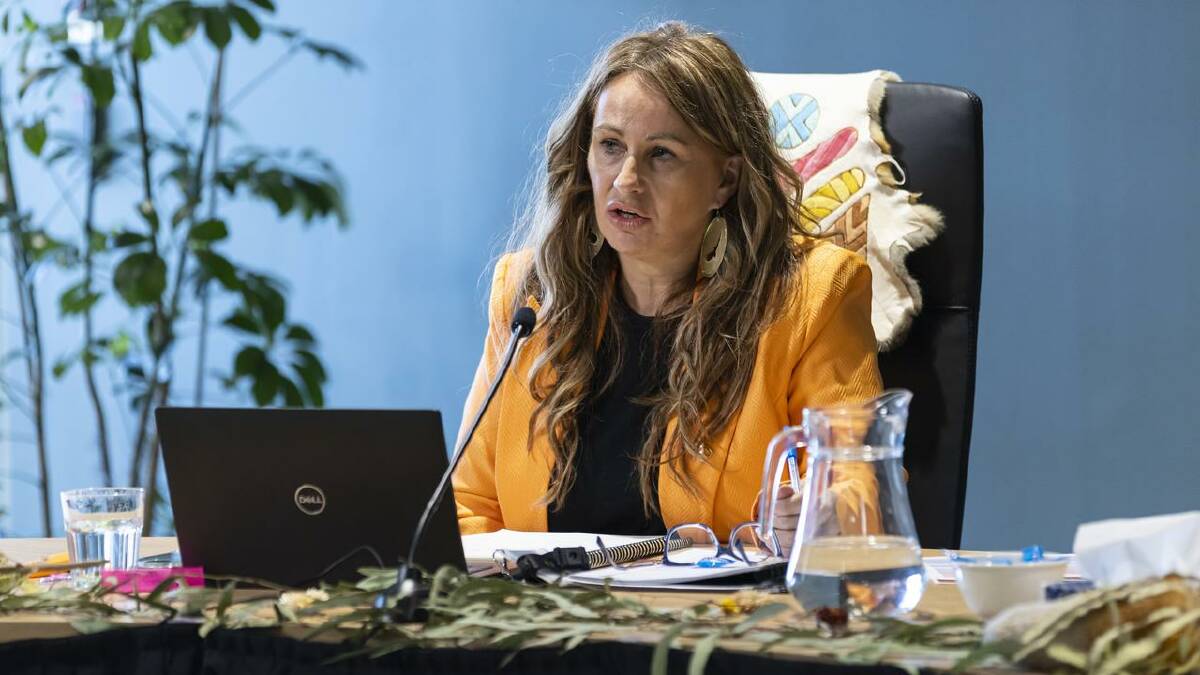
Still in the early stages of establishing her office, Commissioner Hunter says her focus right now is on building strong foundations - legislation, powers, and funding - in partnership with Social Services Minister Tanya Plibersek, whom she praises for her commitment. And, having spent considerable time interviewing her during the Yoorrook process, one thing is clear - she isn't one to hand out praise lightly.
"I love the fact that in this role they talk about amplifying the children's voices," she says.
"I couldn't think of a better minister to work with. To be honest - she's really for this... I think we're going to be in a good space."
Ms Plibersek told National Indigenous Times the government created the office of the Commissioner to "ensure the voices of Aboriginal and Torres Strait Islander children are not just heard, but are amplified".
"First Nations children and young people are the heirs to 65,000 years of continuous culture and heritage," she said. "We must ensure they can grow up connected to their family, community, culture, and Country."
Despite the reciprocal goodwill, independence and accountability, Commissioner Hunter stresses, remain central to her position.
"Part of the role is accountability, holding government to account," she says.
"I'm happy to hold them to account, but I want to do the work properly. I don't want to just hold them to account and say 'you're not doing this.' I want to hold them to account, saying 'You're not doing this, and here's some options to move forward'.
"My job is to ask the questions of the minister. It's her job to say 'yes or no,' or her office to 'say yes or no.'"
Rather than repeating the cycles of inquiry and neglect that have marked decades of policy, the Commissioner wants to use the newly-founded commission to drive practical reform.
"We want to do some really groundbreaking and some creative work, and not the same thing," she says.
"I could get to this role and go out and do a listening tour, but I think we all have done enough commissions and inquiries to be able to pull them together over the years and say, 'Okay, these are all the recommendations, what's gone through, what hasn't, what are the barriers, how do we work forward?'"
A post shared by Senator Malarndirri McCarthy (@malarndirri)
It's an ambitious path - and she doesn't hide that it will be a difficult one.
"I know this isn't going to be easy, like this is going to be hard... sometimes calling stuff out is hard," she says. "But at the same time - just being really clear - this isn't about me... it's far from about me."
Commissioner Hunter's clarity leaves little room for interpretation. This isn't a ceremonial appointment; a person to say "yes, great job".
If it were, the government likely wouldn't have appointed someone who has just played a leading role in upending 190 years of colonial history in Victoria, calling out government ministers with unprecedented regularity.
Instead, it is about a structural challenge to a system that has long failed Indigenous children.
"The focus is, and always will be, on the children and youth," Commissioner Hunter says. "Our kids deserve more, and that's why I'm in this role. They just deserve better."



