




When Queensland's Attorney-General, Deb Frecklington, told a meeting of attorneys-general in August that the LNP government "won't be changing anything" when it comes to incarcerating children — despite pressure from the federal government — it underscored a sentiment long felt by those who look at the Sunshine State: human rights are not a political priority.
After all, it is a state that imprisons more Indigenous children than any other jurisdiction in Australia, whilst its Human Rights Act has been suspended multiple times to allow for punitive policies — including housing children in adult watch houses and criminalising breaches of bail.
It is a state that now allows children as young as ten to be sentenced to life in prison for a range of offences — some of them non-violent.
It is a state that seems to have stopped caring about children's rights.
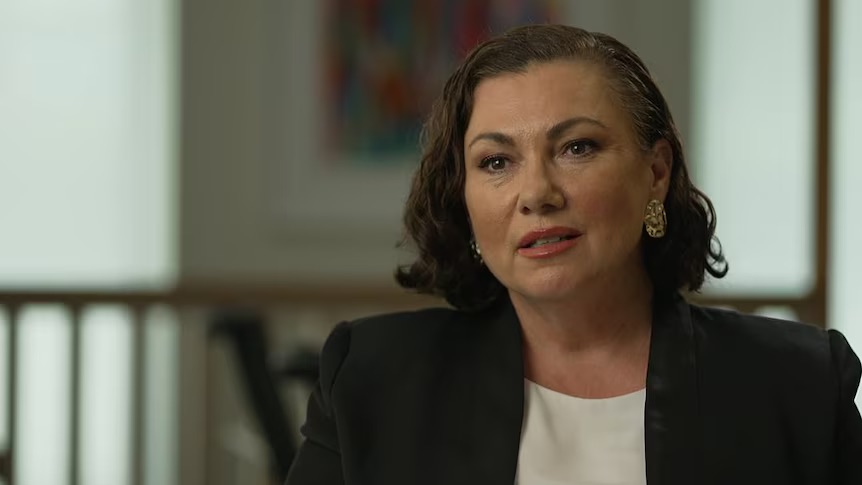
For Queensland's Aboriginal and Torres Strait Islander Children's Commissioner, Natalie Lewis, they are issues which demand attention.
"I am deeply concerned that human rights protections for children in Queensland, particularly Aboriginal and Torres Strait Islander children, are being wilfully disregarded in a human rights jurisdiction," she says.
"This is particularly true for children involved in Queensland's statutory child protection and youth justice systems, which continue to detain Aboriginal and Torres Strait Islander children and remove them from their families at disproportionate and increasing rates."
The watch house crisis
The housing of children in adult watch houses has become a symbol of the decline of human rights protections in Queensland, with widespread outrage at the lack of support for some of the state's most vulnerable.
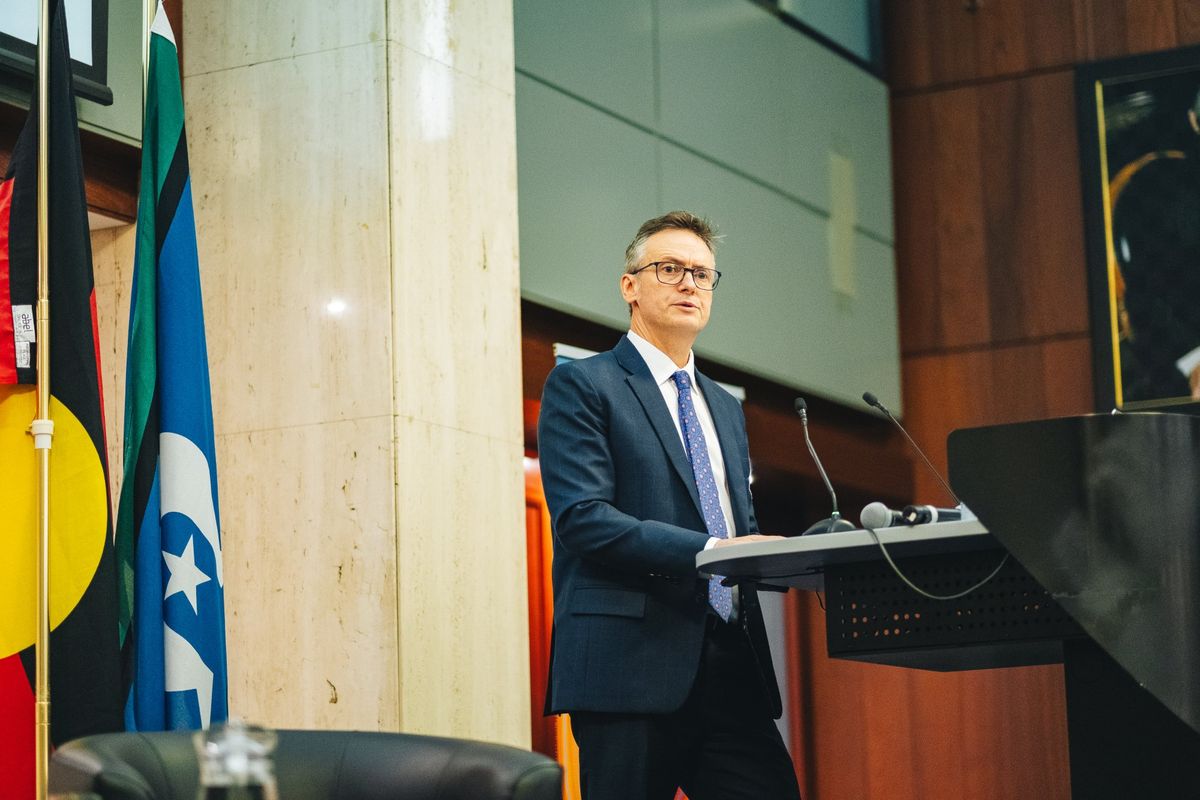
As Queensland's inaugural Human Rights Commissioner, Scott McDougall, steps down after seven years in the role, he says the use of watch houses has defined his tenure, describing it as the "biggest human rights issue" he faced.
He recalls that early in his term, he was "struck by the complacency of the bureaucrats around the table" — none of whom were Aboriginal — who were "so readily prepared to use watch houses [as] essentially as overflow facilities for detention centres".
"I just couldn't believe how complacent they were," Mr McDougall tells National Indigenous Times. "And I described it to that meeting at the time as something that needed to be fixed, otherwise it would be the most egregious human rights breach that I would likely face in my term as Human Rights Commissioner. I think that was sadly a pertinent comment, in that it's come to pass."
Breaching international obligations
Many of the children detained in watch houses are Aboriginal or Torres Strait Islander. The removal of detention as a last resort and the Crisafulli government's "adult crime, adult time" laws have drawn criticism for breaching Australia's international obligations and violating section 11 of the Closing the Gap agreement.
"Youth justice reforms include life-equivalent sentences with mandatory minimum non-parole periods of up to 20 years for children as young as 10; the removal of detention as a last resort; the recriminalisation of breach of bail; and the use of police watch houses for children — these are all fundamentally inconsistent with Australia's obligations under the United Nations Convention on the Rights of the Child, which we ratified more than 30 years ago," Commissioner Lewis says.
"These reforms have rolled back more than three decades of progress aimed at separating child justice from adult punishment and delivering rehabilitative responses that are known to be effective."
The government argues they are fulfilling their election mandate, refusing to apologise whilst condemning experts who have expressed concern.
Maggie Munn, the First Nations Director at the Human Rights Law Centre, notes the current LNP government has not only overridden the Human Rights Act but also abolished the state's truth-telling inquiry and Treaty process.
"Regressive laws from the Crisafulli Government have escalated [and] violated the human rights of Aboriginal and Torres Strait Islander children, punished First Nations communities, and undermined important human rights protections," Munn said.
Bipartisan failure
Yet the erosion of rights is bipartisan. Labor supported the LNP's "adult crime, adult time" legislation in Queensland's unicameral parliament and, before losing power last year, proposed removing detention as a last resort — despite a parliamentary committee warning the move would likely breach human rights laws.
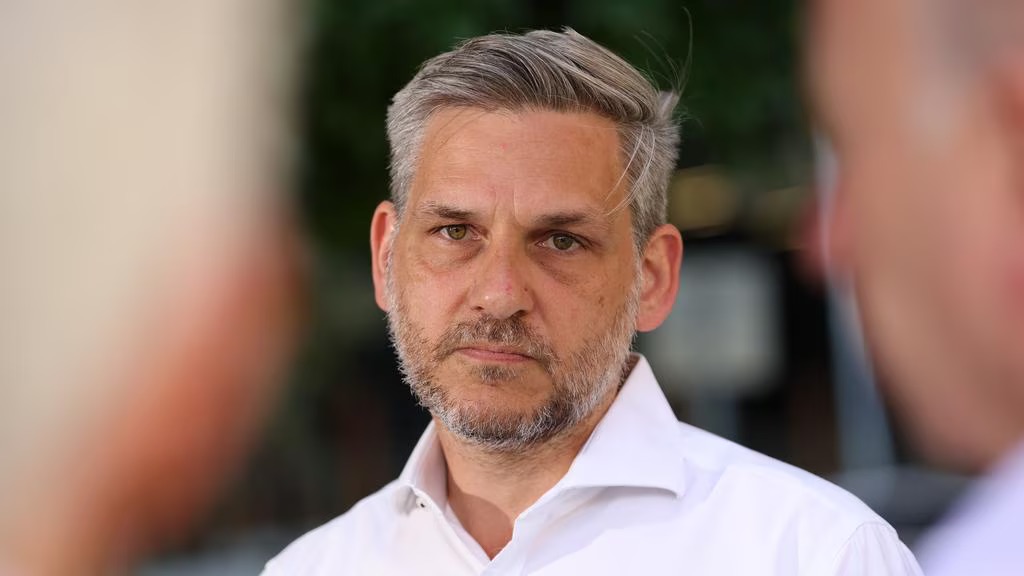
Greens MP Michael Berkman said the human rights of children in Queensland — especially First Nations children — appear subject to the "political whims of the government".
"Both major parties have suspended the Human Rights Act for laws that lock more children as young as 10 in prisons and watch houses, for longer periods," he told National Indigenous Times.
"Over the last few years, both Labor and LNP governments have completely trampled human rights in Queensland, including voting together for 'adult crime, adult time' laws in the last year."
Mr McDougall says the political use of children — particularly Aboriginal and Torres Strait Islander children — as scapegoats is deeply entrenched.
"They're the most powerless people in our nation, Aboriginal and Torres Strait Islander children, and they're so easy for politicians to pick on," he says.
"Regrettably, what we've seen in Queensland and the Northern Territory is governments prepared to make law and order centrepieces of their election strategies — and do so very successfully — and that's come at the expense of children's human rights."
Closing the Gap and a lack of accountability
The Closing the Gap agreement, endorsed by all states and territories in 2020, has been effectively sidelined in Queensland. Ms Frecklington's August comments merely reaffirmed what many already know: the agreement lacks enforcement and political will.
"It's not an enforceable agreement," Mr McDougall said, noting it was former Labor Premier Annastacia Palaszczuk who signed it.
"She was equally as disinclined to implement the agreement in a way that would in any way influence any of the critical policy decisions — such as legalising the detention of children in watch houses indefinitely."
Asked what more needs to be done nationally to protect the country's most vulnerable, he argues meaningful reform requires stronger legal safeguards.
"We do need a national Human Rights Act, unquestionably," he said. "We really need a responsive human rights protection regime in Australia.
"Australia definitely needs to shore up its protections of human rights, and really, at the international level, we're seeing it play out now. Australia was originally a very willing participant and, in fact, a leader of many of the early treaties, and sadly, we seem to have lost that leadership. But now, more than ever, we need to double down on human rights in Australia and become strong vocal advocates at an international level."
Queensland's record shows political expediency continues to outweigh moral and legal responsibility. Until governments — of all stripes — treat human rights as non-negotiable, the cycle of punishment and neglect seems unlikely to end, with the most vulnerable children in the state continuing to pay the price.
For Maggie Munn, the response to the human rights violations across the state is clear.
"Our communities have the solutions," Munn notes. "Instead of perpetually violating human rights and funnelling First Nations children into prisons – the Crisafulli Government must invest in self-determined solutions."



