


With Indigenous children still vastly overrepresented in child protection and youth justice systems, advocates are calling on the federal government to legislate the National Indigenous Children's Commissioner to give the role "teeth" and drive lasting reform.
The comments come amidst growing concern about the erosion of human rights for Indigenous children and young people across the country.
On Wednesday, SNAICC – National Voice for our Children urged the commissioner to be given legislative powers amid rising national rates of Indigenous children in out-of-home care (OOHC) and incarceration. The organisation is also calling for an independent, legislated commissioner in every jurisdiction.
SNAICC chief executive Catherine Liddle said the position needs "teeth," calling on the government to give it "the power to compel evidence, investigate systemic failures, and make binding recommendations; as it was always intended to have".
"That's how we see real and long-lasting change," Ms Liddle said in a statement.
"For far too long, Aboriginal and Torres Strait Islander children have paid the price for inaction, overrepresented in child protection and youth justice systems and underrepresented in decisions about their own futures."
The creation of the National Commissioner role was a major step forward in addressing these challenges and was initially welcomed by advocates, including SNAICC. But Ms Liddle said communities are demanding greater accountability.
"We know what works; it is time to drive that structural change," she told reporters on Wednesday in Magandjin.
"It is time for the Prime Minister to step up and be bold and brave in his promise that he made to us, and that is for a fully legislated, a fully empowered, a fully funded Commissioner able to genuinely shine a light on the gaps we know are keeping our children in the dark."
Ngemba woman Lil Gordon served as interim Commissioner for the first eight months of 2025, before former Yoorrook Commissioner Sue-Anne Hunter was appointed to the full-time role in September.
Speaking at SNAICC'25 on Wednesday, the Wurundjeri and Ngu rai Illum Wurrung woman said the legislation "will be our test".
"Will it deliver true independence, investigative powers, adequate resources, the ability to shine light in dark places?" Commissioner Hunter asked. "Let's be clear, we'll accept nothing less."
She added that her role is to "build genuine partnership while maintaining independence; to speak truth to power, even if it's uncomfortable".
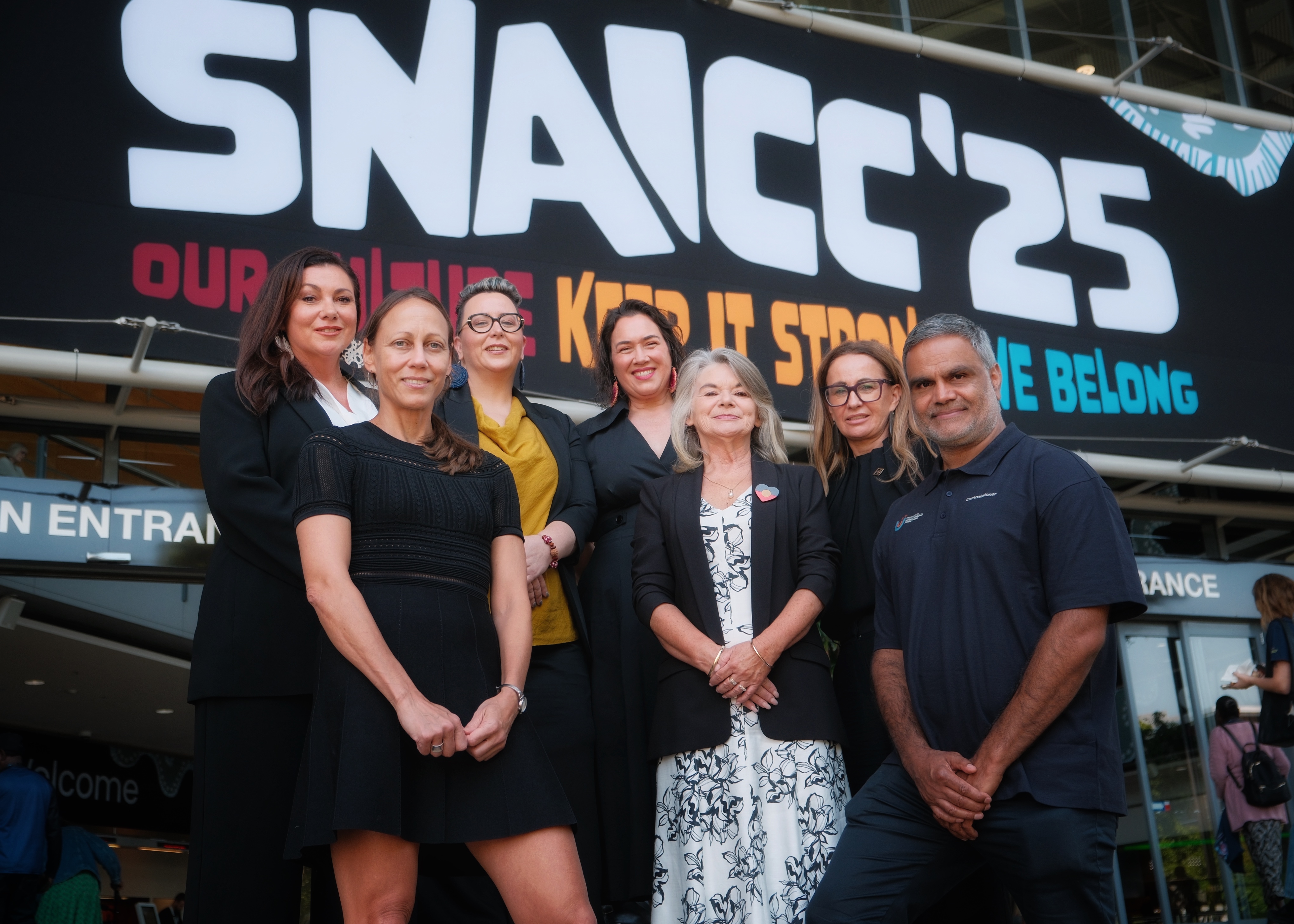
States under scrutiny
Criticism has been mounting over how states and territories are treating First Nations children, with some governments flagrantly disregarding commitments under the Closing the Gap agreement.
In Queensland, the state's Human Rights Act has been suspended multiple times to allow children as young as ten to be sentenced to life in prison and be held in adult watch houses. In the Northern Territory, the government has reduced the age of criminal responsibility to ten — against expert advice — and has previously flagged plans to modify the Aboriginal and Torres Strait Islander Child Placement Principle (ATSICPP).
The Queensland government has acknowledged their new "adult crime, adult time" laws "directly discriminate" against children, as they limit their "protection from cruel, inhuman or degrading treatment". Youth justice minister, Laura Gerber, admitted this year that the laws are not consistent with international human rights standards and "Aboriginal and Torres Strait Islander children will be impacted more" by them.
Queensland's Aboriginal and Torres Strait Islander Children's Commissioner, Natalie Lewis, told the SNAICC'25 conference that protecting children's rights is not "just things that are nice to do" but is an obligation under "international law".
Speaking alongside other commissioners, she criticised Queensland's "over-reliance" on punitive responses under the LNP government.
"Those punitive responses is not just about the incarceration of children," she said.
"It has actually been about greater care and control of Aboriginal and Torres Strait Islander children in the child protection system. The intersection between the two is clear in any data that you look at, and what we need to understand is that, above all, the state has a massive duty of care for children whose lives they intervene in; who they have determined are fit to be removed from their family."
New data from the Australian Institute of Health and Welfare (AIHW) shows that less than half (47 per cent) of First Nations children in OOHC in 2023–24 were placed with relatives, and only 35 per cent of those leaving care were reunited with their families. The Productivity Commission also found that First Nations children are incarcerated at more than 26 times the rate of non-Indigenous children.
Ms Liddle said a legislated commissioner would provide the authority to act "independently, fearlessly, and with the authority of the law behind her."
"Someone who is truly empowered to drive the structural change urgently needed," she said.
In Queensland and other states, children's commissioners lack legislative independence and the power to compel government action, even when human rights breaches are identified.
Commissioner Lewis said the Queensland government's "stalling around legislating" the independence of her office underscores the importance of united advocacy.
"We have made a commitment to mandate minimum standards for the commissioners in every jurisdiction," she said. "Those jurisdictions with an aversion to accountability seem to be dragging the chain, and that's unfortunate, because it harms our children."



