



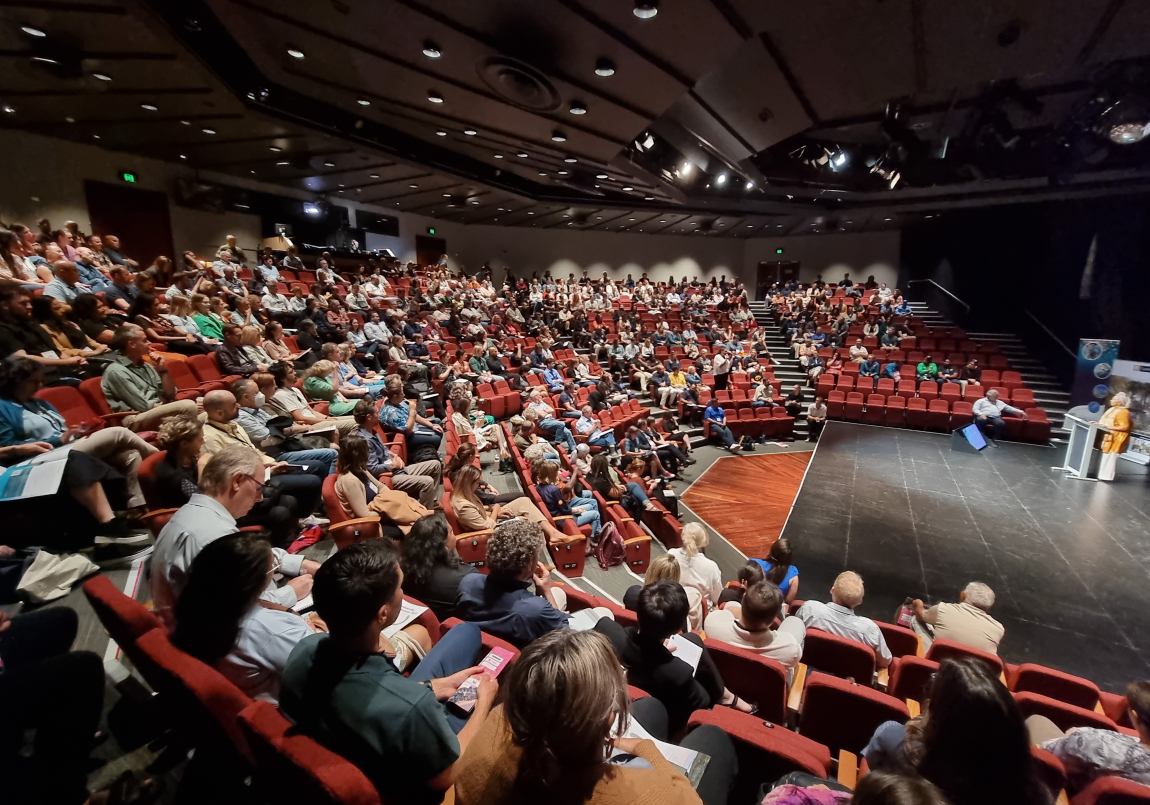
Professor Anne Poelina brought the Martuwarra spirit to the Biodiversity Conference 2023 - Listening to Country, which commenced on Tuesday 10 October and concludes Thursday.
Professor Poelina told the audience of hundreds the river is at the heart of the community; It has created their law, law of the land, their identity, their language, their songs, their stories and who they are as human beings.
"This conversation today, listening to Martuwarra, what the Elders say is we listen with our eyes and we see with our ears," she said.
"We as Indigenous people, particularly in this country, we are the first scientists, we managed the first water industries in the world, we looked after and we cared for everything."
Professor Poelina said they've been very hard in the Kimberley to protect Martuwarra - Fitzroy River.
"What we are learning is that not only is country changing, but the living water systems that hold this memory is also changing," she said.
The 733 kilometre Martuwarra river is the largest registered Aboriginal cultural heritage site in Western Australia. It's also gained a national heritage listing in 2011.
She urged the audience to listen to country and to build a relationship with it, even in the cities.
"It doesn't matter if it's concrete, it's still country."
"So when I look across, not just this country, but when I look across the world, what I see is biodiversity loss, species loss," said Professor Poelina.
One of the projects Professor Poelina has been working on is the Bioscience Project.
"So with the Bioscience work, this is the work we've been doing in the Kimberley for the last two years and one of the projects and this place, this Martuwarra Fitzroy River, it is very, very much under threat," she said.
"We've got big conversations in this state and one of the things I write about is 'lawful awful laws'. And we know that the laws for the environment are no longer fit for purpose.
"We know that recently the Aboriginal cultural heritage bill was very questionable," said Professor Poelina.
Professor Poelina recalled back in the old days people coming from northwest, southeast, sitting on country dancing, having ceremonies, debating, challenging each other and coming up with questions and solutions.
"We need to bring in this Indigenous science, this wisdom that we have had from the beginning of time… what we're saying is that we need to keep the dialogue process happening."
Listening to the Elders is important, said Professor Poelina. She spoke about the Boab tree in the Kimberley region and how when she and scientists turned up in May and June there were no fruit on the trees.
"We said, oh, I wonder what's happening here. And the Elder said 'we didn't get the knock 'em down rain'. Climate change is real," she said.
"We didn't have that rain. So the whole system is out of whack, it's chaos and this, as the old people have told me, is what the humans have done.
"We are changing our cultural landscapes. We are changing our biodiversity. And if we want to get to the 2030 targets for biodiversity, we really need a total reset and we need to do business a different way.
"These living water systems are alive, they hold memory and they're watching us and they're changing," she said.
"In my lifetime, I have seen living water systems drying up and that's what's coming out of this research."
In closing, Professor Poelina reminded the crowd of environmental experts and advocates that humans must listen to the land and learn.



