




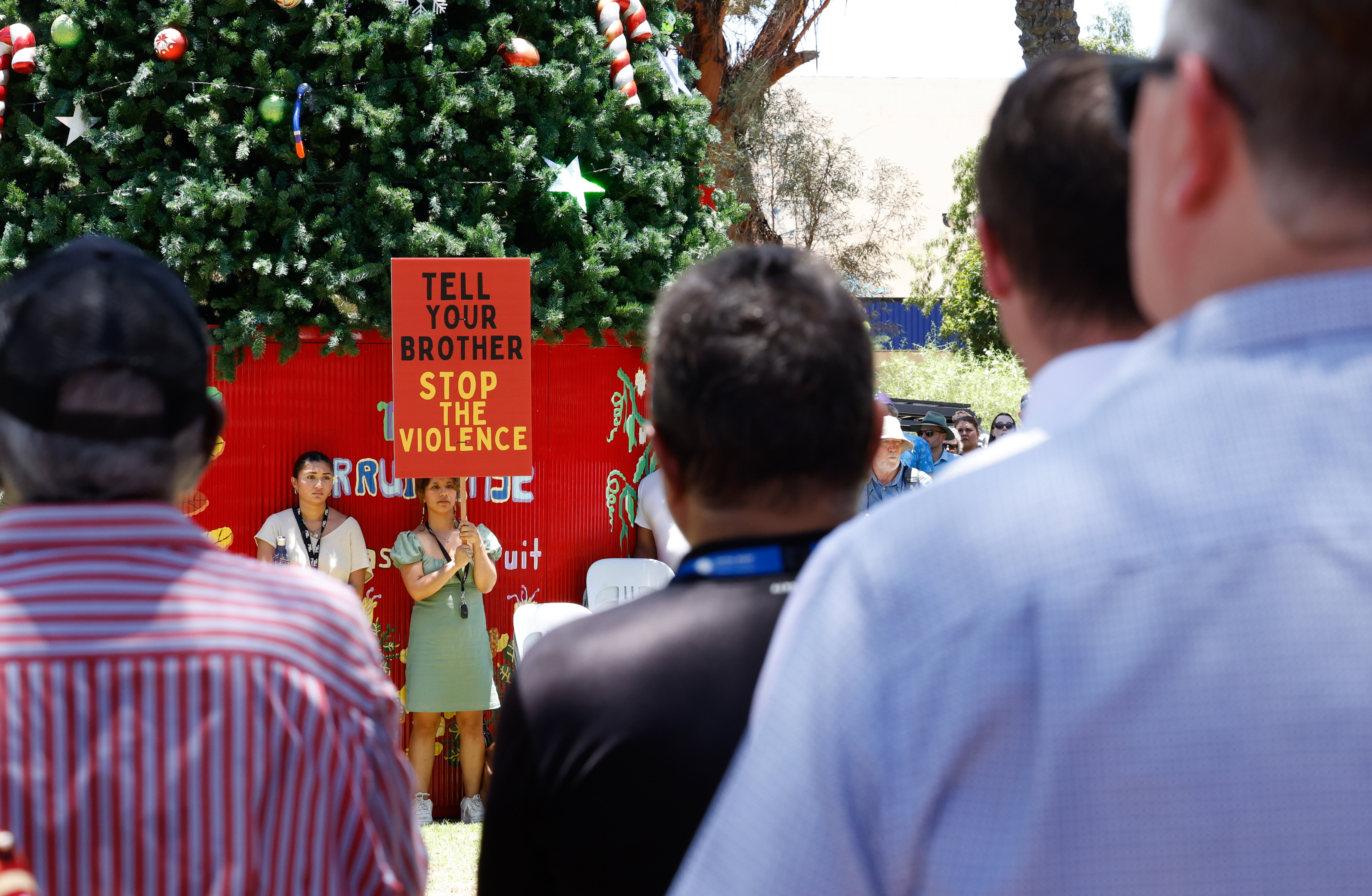
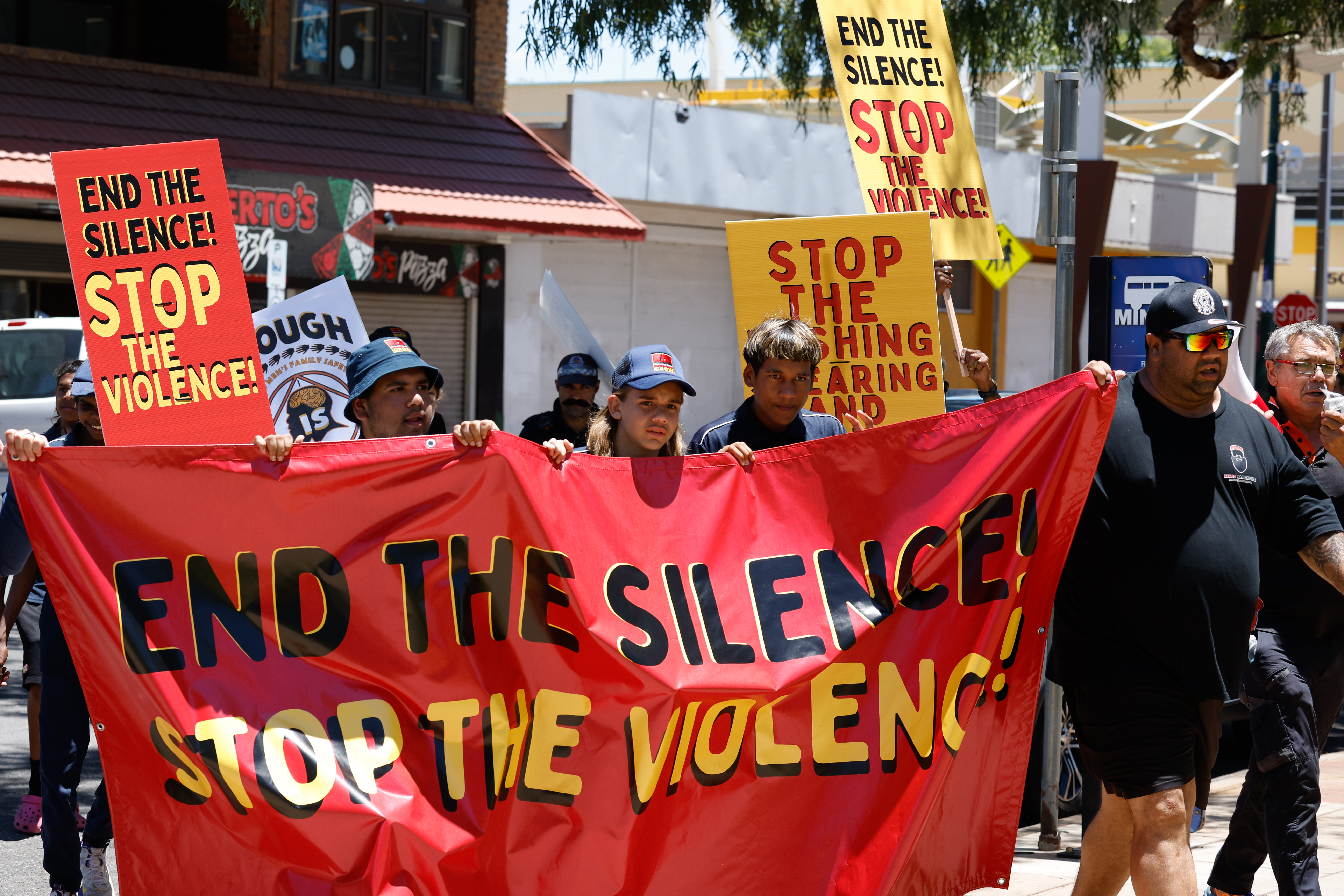
Hundreds of men have marched through the streets of Mparntwe/Alice Springs on Tuesday, calling for the end of domestic and family violence.
Signs reading "stop the swearing, bashing and killing," and "we are nothing without the women in our lives" were carried through the streets as people chanted "End the Silence! Stop the Violence!".
Organised by Congress Ingkintja Male Health Service, the march came in the wake of NT Coroner Elisabeth Armitage delivering her findings into the killings of four Aboriginal women by their partners, labelling them part of a "plague" of domestic violence homicides contributing to a "national shame".
The deaths of Miss Yunupiŋu, Ngeygo Ragurrk, Kumarn Rubuntja and Kumanjayi Haywood received widespread coverage. Coroner Armitage made 35 recommendations to help reduce the "epidemic of violence".
Central Land Council (CLC) chair Warren Williams highlighted the role men play in preventing violence.
"We encourage men to take responsibility for their actions, support one another in choosing non-violent paths, and stand together with women in creating safe and respectful communities," Mr Williams said.
"We will continue to advocate for stronger protections for our women and children."
At least 86 women have been killed by domestic violence in the Territory since 2000—more than 90 per cent being Aboriginal and Torres Strait Islander women.
Since July, at least eight women have died in the Top End in alleged family violence-related incidents.
Domestic violence accounts for up to 80 per cent of police callouts.
At a meeting in Mparntwe/Alice Springs last week, the CLC's 11-member executive committee said they discussed Coroner Armitage's findings.
"These four women's stories are a heartbreaking reminder of the ongoing violence against our women, who face alarming rates of domestic and family violence," Mr Williams said.
"Together, we can honour the memories of the victims by ensuring their tragic deaths lead to lasting change."
In May, the Central Land Council called on both the NT and Federal governments to enact changes.
These included providing the Territory with needs-based funding for prevention and support programs; strengthening efforts to support Closing the Gap targets National that align with reducing incarceration and improving safety; and investing in culturally relevant and meaningful men's healing programs that support breaking the cycle of violence.



