


When Gamilaroi woman Deb Barwick established the first Aboriginal business chamber in Australia 20 years ago, First Nations companies' contribution to the economy was often under-recognised.
Ms Barwick said when she founded the Mandurah Hunter Indigenous Business Chamber in 2006, which became the NSW Indigenous Chamber of Commerce (NSWICC) three years later, Indigenous companies were far less visible in mainstream supply chains and public policy.
First Nations businesses today contribute more than $16 billion to the Australian economy, employ 116,795 people and pay $4.2 billion in wages.
"Those figures show a sector of real national importance, while also reminding us that many businesses—particularly small, regional and remote enterprises—remain undercounted," Ms Barwick told the Indigenous Business Review.
"Procurement policies have helped bring more visibility and opportunity, but the First Nations economy is much bigger than procurement. It includes the café, lawn-mowing business, trades business, consultancy, cultural enterprise and community organisation that gives people income, choice and the ability to stay connected to family, community and Country."
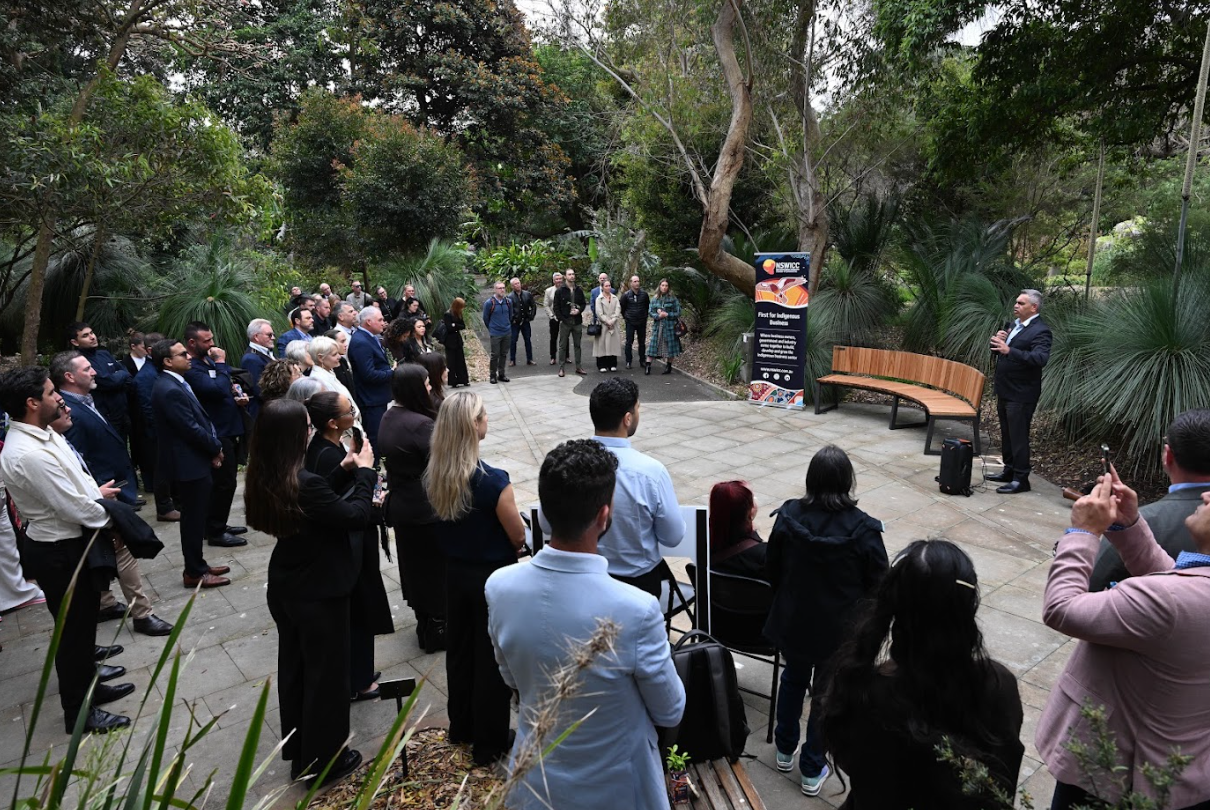
On 22 September, the NSWICC celebrated its 20th anniversary at the New South Wales Parliament, with Aboriginal Affairs and Treaty minister David Harris and industry and First Nations business leaders marking 20 years of leadership for Indigenous companies in NSW.
After the Parliament event, a commemorative bench at Cadi Jam Ora in the Royal Botanic Garden Sydney was unveiled as a lasting tribute to Indigenous business leadership.
Ms Barwick said the NSWICC's biggest achievement had been growing from a small regional chamber in the Hunter into an enduring, independent peak body for Indigenous business in NSW.
She said the chamber now represents Indigenous business through advocacy, business support, supplier development, procurement capability, partnerships and connection.
What is even more remarkable about the chamber's early success was that the Commonwealth Government's Indigenous Procurement Policy (IPP) and the NSW Aboriginal Procurement Policy (APP) were still years in the making.
"Those policies have created valuable opportunities, but our purpose has always been broader: to support people's aspirations for financial independence through the establishment and growth of their own businesses," Ms Barwick said.
"Our members are majority Aboriginal and Torres Strait Islander-owned and controlled businesses and organisations, and they are incredibly diverse: they include businesses competing for major contracts as well as local operators mowing lawns, running cafés and providing the everyday goods and services that keep communities moving. NSWICC's role is to stand alongside them: to open doors, build capability, strengthen connections and advocate when systems are not working."
Ms Barwick, who helped establish the First Australians Chamber of Commerce in 2015, said some of the challenges Indigenous businesses faced two decades ago remain prevalent today.
She said the biggest barrier was access to capital and stamping out the insidious practice of black cladding. Black cladding is when non-Indigenous companies boost their Indigenous shareholder base or claim to be First Nations businesses to win government contracts.
In July, the Commonwealth Government strengthened the IPP's eligibility requirements to stamp out black cladding, so Indigenous businesses seeking access to federal government contracts must now be 51 per cent or more First Nations owned and controlled.
The target for the Commonwealth and portfolios to buy from First Nations businesses has increased to 3.25 per cent. The target will continue to increase by 0.25 per cent each year until it reaches four per cent by 2030.
"Progress has been real but complex procurement processes, limited networks, long payment terms, inconsistent buyer capability and the persistent assumption that Indigenous businesses are less capable are still barriers," Ms Barwick said.
"We also need to confront practices that undermine genuine Indigenous enterprise, including black cladding. Businesses need fair access to opportunities, and buyers need the knowledge, accountability and confidence to build respectful, long-term commercial relationships."
Ms Barwick said that while First Nations businesses get greater recognition than when she first set up the Mandurah Hunter Indigenous Business Chamber years ago, recognition must translate into commercial opportunity.
She said we should not confuse visibility with equity.
"Recognition cannot be confined to businesses tendering for government work; it must extend to every Indigenous entrepreneur building a local business, employing people and contributing to their community," she said.
"But recognition must translate into sustained commercial opportunity: fair procurement, investment, access to capital, strong partnerships and room for businesses to lead and grow. "First Nations businesses deserve to be engaged as valued suppliers and economic leaders every day—not only during a campaign, a policy launch or a reconciliation week."



