


Born in Kabi Kabi Country on the Sunshine Coast and raised on a timber missionary boat on Thursday Island, Simon Thornalley has saltwater running through his veins.
The proud Kaurareg and Tjungundji man, with roots in North Queensland and the Torres Strait, knew he would one day combine his deep connection to sea country and boats.
In 2019, he set about restoring a 1908 heritage-listed sailing vessel, a Joshua Slocum Spray replica, a 58ft gaff-rigged Huon-pine ketch.
Captain Joshua Slocum sailed the original Spray of the Coral Coast yacht, becoming the first person to circumnavigate the globe between April 1895 and June 1898.
After a year of painstaking work restoring the vessel, which is believed to be the oldest surviving Spray replica in Australia, Mr Thornalley was ready to launch the yacht when COVID-19 hit.
He even came up with a name for the Sunshine Coast-based business which reflected his deep roots in his childhood home: Saltwater Eco Tours.
However, the venture was almost sunk before it began. As he was ineligible for government support because the company hadn't made any money before the pandemic, he had to come up with an innovative plan to stay afloat.
"So, during the year of COVID, I hadn't got the full finance to pay for the boat," Mr Thornalley told the Indigenous Business Review (a National Indigenous Times publication).
"So, what I'd done was I'd lease the boat from the previous owner for 12 months on the condition that by the end of those 12 months, I would have an established business.
"And then I'd have to pay out the remaining amount by the end of those 12 months or give the boat back if it didn't work. So, the risk was all on me, but it worked out."
Some six years later, Mr Thornalley runs a thriving tourism business that offers up unique First Nations cultural experiences up and down the Mooloolah River, the lifeblood of local Kabi Kabi communities.
The 37-year-old also consulted with the Traditional Owners of the region because he wanted to preserve his people's cultural stories and traditional knowledge while also creating space for Indigenous voices in tourism.
"Consulting with the Traditional Owners is the right way to do things in our culture, and I wouldn't feel comfortable doing it any other way," he said.
"We work with Aunty Bridgette Chilly, who's an elder from the area who comes on the cruise, and she's part of our menu planning and everything, as well as what foods we use, you know, to align with the local law.
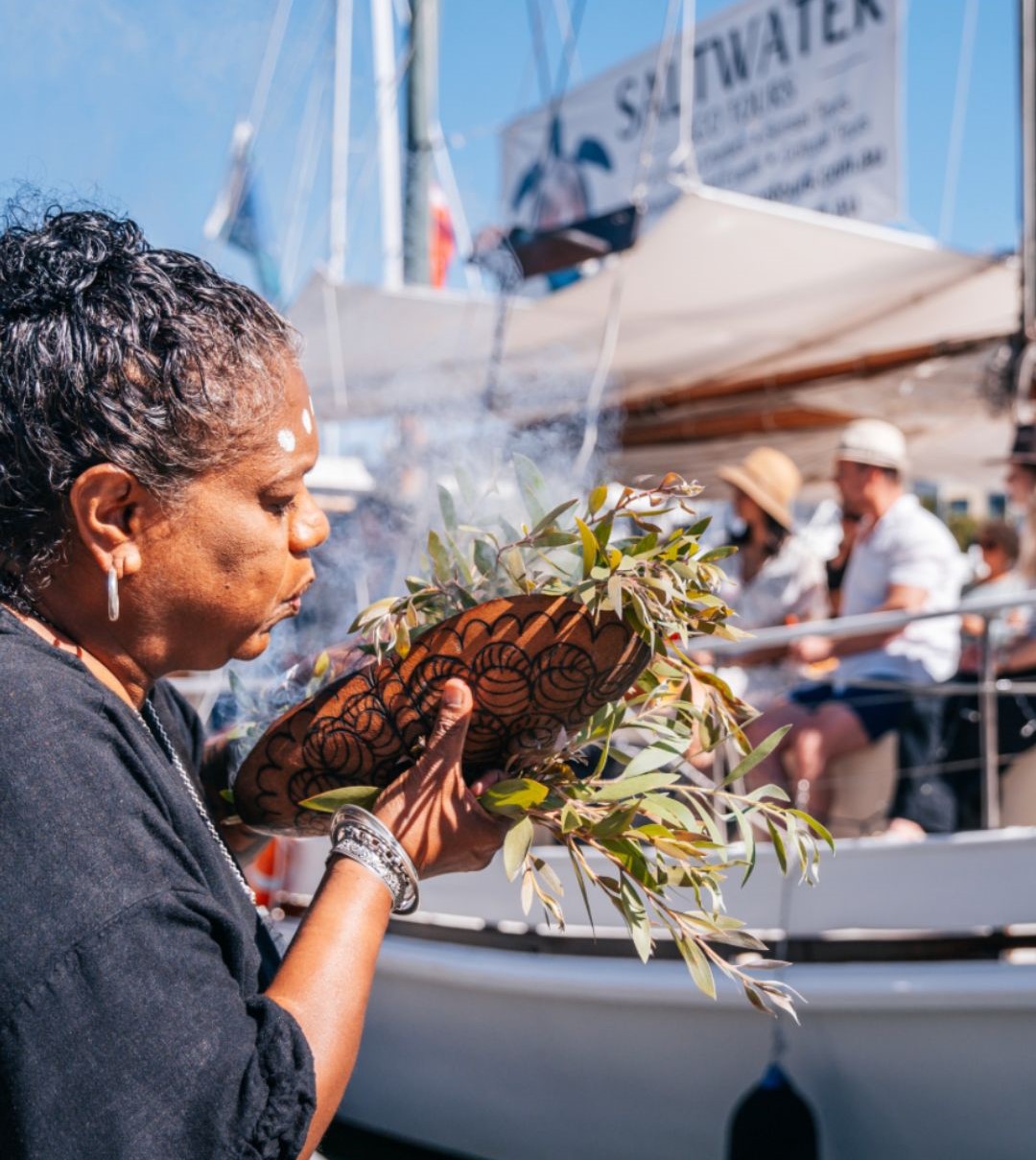
"We always have Aunty Bridgette's involvement in the Welcome to Country and smoking ceremonies to make sure we're aligning with local law but also extending that opportunity to the local Traditional Owners as well."
While Mr Thornalley runs several varied and interesting tours throughout the week, the most popular is the Bushtucker Cruise.
But no matter the tour, the father of two said he wants to provide a unique experience that fosters a connection to the Indigenous culture, the ocean, and the local environment.
"Our Bushtucker tour is our flagship tour, so we try to be as authentic as possible in every aspect, from making the five-course menu from scratch in-house to doing everything ourselves," he said.
"We share history about the area, history about my connection to the country and the foods that we're serving, so we tell a story with our menu.
"We have a seasonal menu that changes throughout the year, and a lot of plants that we're using that you would find by the river, you know, ground-covering succulents and fruits and berries and things that are local to the area."
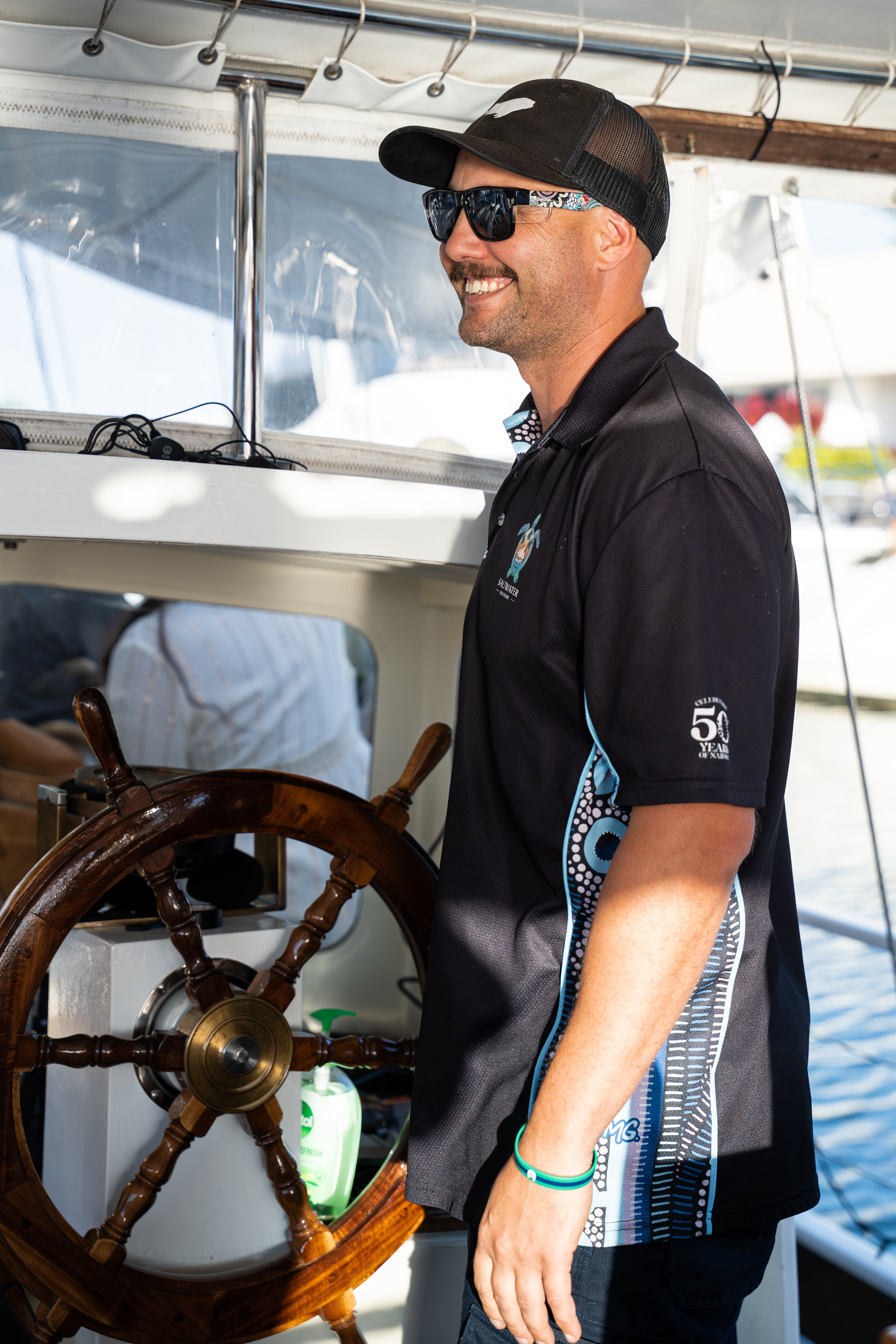
The Managing Director and Founder of Saltwater Eco Tours incorporates his passion and advocacy for sustainability, environmental stewardship and Indigenous culture in many of his tours and work.
As a proud descendant of the Kaurareg (Horn Island) and Tjungundji (Western Cape York) peoples, he has dedicated a lot of his life and work to protecting the diverse marine and coastal ecosystems of the Sunshine Coast.
But his activism and love of the environment isn't limited to his own Country.
In 2015, he volunteered with Sea Shepherd as part of their international crew in Japan to stop the hunting of the Taiji Dolphin. Working alongside activists from around the world, Simon helped document and raise awareness of these controversial practices, contributing to global efforts for marine conservation and animal rights.
He also sailed to Antarctica to work alongside scientists and wildlife observers in the pristine marine environment of the Southern Ocean, which further fuelled his dedication to ocean conservation.
"I watched a documentary years ago about the Taiji Dolphin and was just gobsmacked at what was happening over there," Mr Thornalley said.
"So, I contacted Sea Shepherd and just put my hand up to volunteer straight away because I have a lot of respect for Sea Shepherd.
"So, I volunteered and went over there and took part in that campaign with Sea Shepherd, which was predominantly filming, live streaming and documenting what happens to the dolphins in the cove there."
When not crusading for marine conservation and animal rights, Mr Thornalley likes to give back to his community via his business.
He tries to foster relationships with Indigenous makers, local producers, artists, and creatives to build a business rooted in community, sustainability, and cultural connection.
"It's about creating that safe space so we can all work together and, you know, whatever opportunities that arise for us are opportunities for all of our community," he said.
"There are a lot of things we do that are really putting that in the forefront; caring for country, which is again part of our law system, is at the forefront of our operations.
"And just making sure that everything that we do is authentic and true to ourselves and our values, you know, whether it's sharing stories or food and everything surrounding those things."
So, does he have any plans to extend the fleet?
"I've got another commercial boat for my partner and two kids to live on so we could have a little bit of adventure away from work," he said.
"But it will more than likely be part of the fleet because it is a commercially built boat.
"So, for some silly reason, I'm doing it all over again."



