


There is something badly missing from the increasingly heated debate about feral horses in Kosciuszko National Park.
Country.
Too often, the debate begins with the heritage of horses and ends with the welfare of horses, while the mountains, rivers, wetlands and native animals being damaged and pushed to extinction beneath their hooves are pushed to the margins.
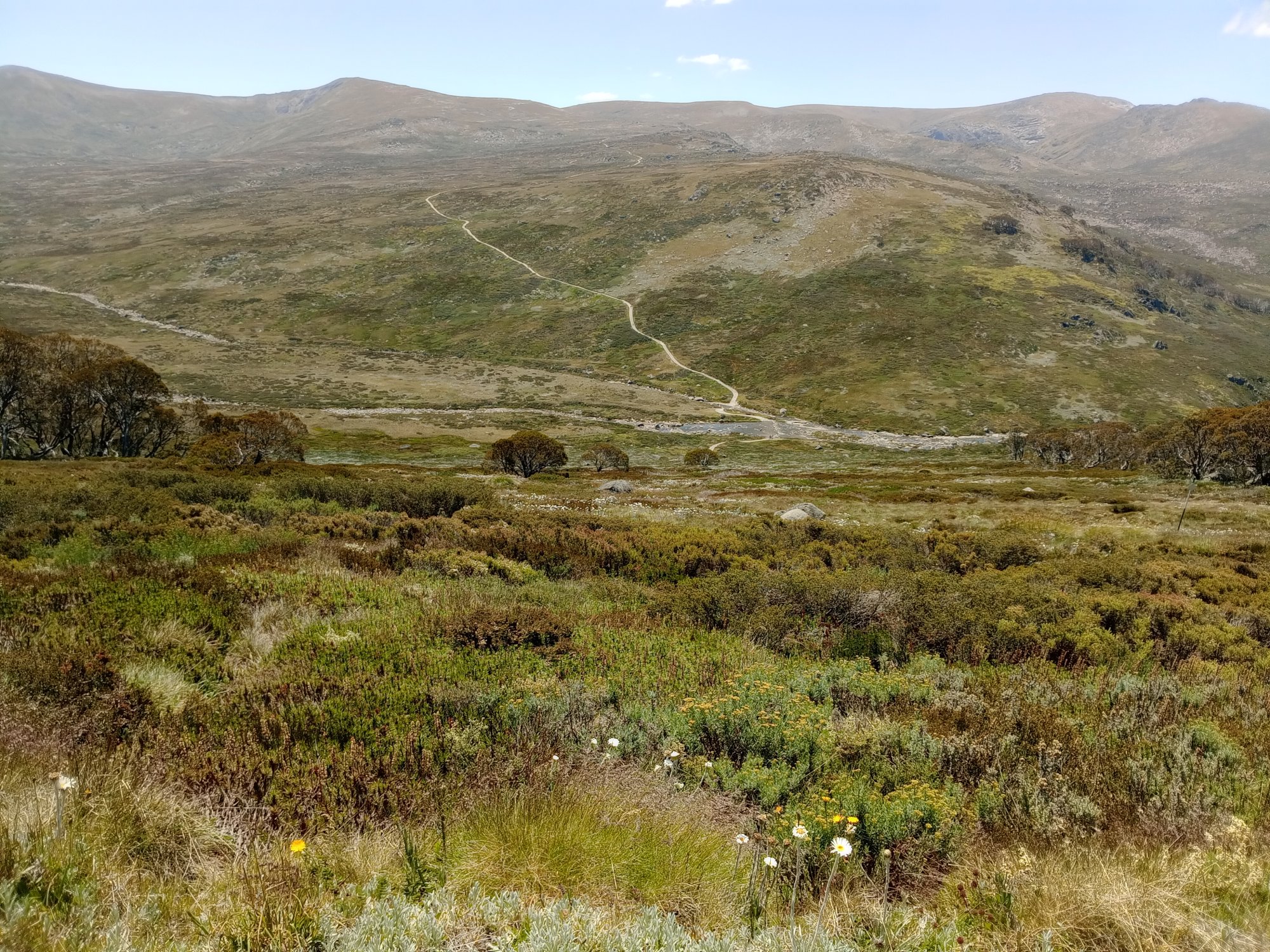
Long before horses arrived, these mountains, rivers and wetlands was respected Country. They remain living cultural landscapes and some of the most environmentally significant places in Australia.
As a Wiradjuri man who has spent years working on and caring for these landscapes as a Snowy River guide, I've seen firsthand what happens when horses are allowed to trample, trash and pollute fragile Country that was never built to withstand them.
Of course horses have cultural meaning to some people. But that cannot give them immunity from control when they are damaging a national park.
Nor should emotionally powerful claims about feral horse control be allowed to drown out decades of scientific evidence.
This matters far beyond Kosciuszko. Misinformation and disinformation about feral animal control is becoming a political risk to effective invasive species management across Australia. And it is not confined to anonymous accounts or fringe groups online. Misleading and unsubstantiated claims are being irresponsibly repeated and amplified by politicians, commentators and journalists, giving them legitimacy and reach. When those claims gain enough traction, governments can come under pressure to weaken, delay or abandon evidence-based control programs.
That threatens not only feral horse management, but aerial control of deer, pigs and other invasive animals needed to protect native wildlife and Country across Australia.
The question is not whether horses have cultural meaning for some.
It is whether that cultural meaning should outweigh the protection of the mountains, waterways, native animals and cultural landscapes that were here long before them.
The science is not uncertain
Claims that there have been few studies of the environmental damage caused by feral horses simply do not stack up.
Even a quick online search, and bibliographies created by the Kosciuszko Science Conference 2018 and the NSW Scientific Committee, show there have been over 20 peer-reviewed Australian field studies that confirm the role of feral horses in environmental damage. A similar online search will find no peer-reviewed Australian studies saying the opposite.
Feral horses graze and trample vegetation, compact and erode soils, damage waterways and reduce water quality. The habitat of threatened animals, including the corroboree frog, alpine tree frog, alpine she-oak skink, mountain pygmy-possum and broad-toothed rat is affected by horse damage.
The NSW Scientific Committee has listed feral horses as a key threatening process.
The federal Threatened Species Scientific Committee has described feral horses as an 'imminent threat' to efforts to prevent new extinctions and warns they may be the crucial factor that causes the final extinction of some alpine species.
There is simply no longer a credible scientific debate about whether they cause environmental damage.
And horses are not being singled out. Deer, pigs and other introduced hard-hoofed animals also cause enormous damage in Kosciuszko and should be controlled.
Indeed, hundreds of thousands of feral animals, including pigs and deer are routinely controlled using aerial shooting across NSW.
The fact that other threats exist does not make horse damage disappear.
Snowy 2.0 is not an argument for allowing horse damage
Another argument being used against horse control is that Snowy 2.0 is also damaging the park.
But this is a false choice.
If Snowy 2.0 causes unacceptable environmental damage, that damage should be prevented, mitigated or repaired.
It does not follow that another source of environmental damage should therefore be allowed to continue.
We would not argue that because weeds damage Kosciuszko, pigs should be allowed to damage it too. Nor would we argue that controlling pigs somehow excuses the impacts of Snowy 2.0.
National parks should be protected from all avoidable threats.
Feral horse control in Kosciuszko did not begin with Snowy 2.0. Horses have been managed in the park for years, and the current management plan requires the NSW National Parks and Wildlife Service to reduce the population to 3,000 horses across designated retention areas.
The environmental impacts of Snowy 2.0 should be scrutinised, but the damage caused by feral horses deserves exactly the same scrutiny.
What does the evidence actually say about animal welfare?
Perhaps the most serious claims being made against aerial shooting concern animal welfare.
Readers are told of 'extreme and inhumane measures'. Those are confronting claims.
They should therefore be tested against evidence, not anecdotes.
In July this year, an independent veterinarian observed 180 feral horses pursued during aerial control operations in southern Kosciuszko National Park.
Of the 154 horses shot, every animal was killed. No non-fatally wounded horse was observed.
The median time between the first shot and insensibility was eight seconds.
Twenty horses were inspected on the ground shortly after shooting. All were confirmed dead and none returned to sensibility.
The independent veterinarian concluded there was a 'notable absence of adverse animal welfare events' and that the standard operating procedure was fit for purpose.
This was not a one-off assessment.
It was the third independent veterinary assessment of aerial shooting in Kosciuszko since the method resumed in 2023, and its findings were consistent with the previous assessments.
That evidence matters.
Critics also cite the fact that shooters may fire multiple rounds at an animal as evidence of cruelty.
But the number of shots is not, by itself, a measure of whether an animal suffered.
The purpose of mandatory follow-up shots is precisely the opposite: shooters continue firing to ensure an animal rapidly becomes and remains insensible rather than risking leaving a wounded animal alive.
The July assessment provides an objective measure of the outcome: a median of eight seconds from the first shot to insensibility, with no non-fatally wounded horses observed.
It is also important to acknowledge what the alternatives actually are.
Trapping and rehoming have been used in Kosciuszko for well over a decade, but have consistently failed to reduce the horse population at the scale required.
Fertility control can be useful for small, geographically isolated and accessible populations where the objective is to maintain numbers. It cannot rapidly reduce a large population of free-ranging horses across vast and rugged alpine terrain.
No lethal control program is pleasant to contemplate.
But humane management cannot be judged against an imaginary alternative where thousands of horses remain in the park indefinitely and neither horses nor native animals ever suffer.
The real question is which available methods can reduce horse numbers effectively while achieving the best possible animal welfare outcomes.
Independent veterinary evidence should carry more weight in answering that question than confronting anecdotes circulated online.
This is not a fringe environmental position
The decision to resume aerial control has been supported by organisations and bodies including RSPCA NSW, the Australian Veterinary Association, the Australian Academy of Science, the Brungle Tumut Local Aboriginal Land Council and the NSW Aboriginal Cultural Heritage Advisory Committee.
Politically, reducing horse numbers has also attracted support across party lines.
And in 2025, the NSW Parliament repealed the Wild Horse Heritage Act with support from Labor, Liberal, Greens and independent MPs.
This is not neatly a left versus right fight, nor a battle between people who love animals and people who do not.
It is a difficult environmental management problem that governments have an obligation to address.
Country came first
When we talk about heritage in Kosciuszko, the horse cannot be the beginning and end of the story.
Country came first.
The rivers have stories. The mountains have stories. Native animals have stories. The bogs and wetlands themselves are part of a living landscape with cultural meaning stretching back thousands of generations.
We can recognise the place horses have come to occupy in the history and identity of some groups without accepting that they should remain in a national park regardless of the damage they cause.
Kosciuszko was protected because it is extraordinary.
Its alpine wetlands, streams, plants, animals and cultural landscapes cannot simply move somewhere else when they are damaged. Some exist nowhere else.
The question before us is not whether people love horses.
The question is whether that love gives us the right to allow thousands of feral horses to continue damaging Country that belongs to generations before us and generations still to come.
For us, the answer is no.
Caring for Country sometimes requires difficult choices.
This is one of them.
Hon Associate Professor, Fenner School of Environment and Society Richard Swain is a Wiradjuri man, Snowy River guide and Indigenous Ambassador with the Invasive Species Council.



