


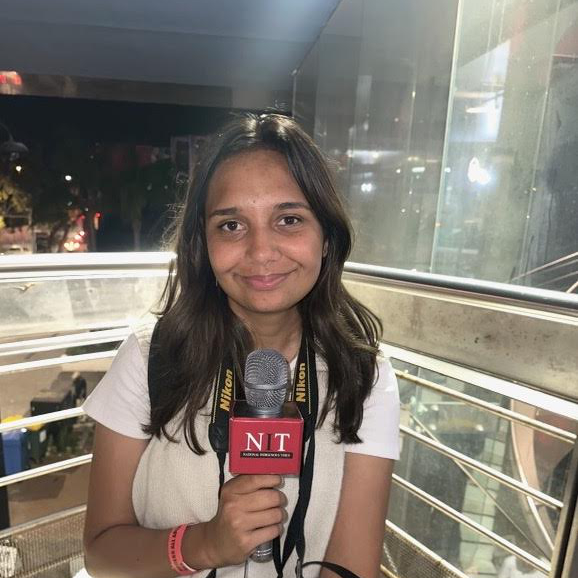

An internship with NASA has been a transformative experience for Indigenous Palawa man Joel Steele.
Dr Steele joined the US space agency for 14 weeks in 2020 as part of a pilot program for the new National Indigenous Space Academy (NISA).
Now he is a research fellow at Monash University working on a range of projects outside his subject area of space biology.
"It changed my perspective on where my career could go, on the things that I could do," Dr Steele said.
He also said operating the flight simulator used to train astronauts and pilots was a highlight, as being at NASA made the most routine work thrilling and exciting for the Tasmanian native.
"You can be doing something you would otherwise find boring, but then you remember: 'Oh my God, this is going to go into space!'
"It makes the most mundane science amazing."
Monash University launched NISA in March as a faculty of information technology in partnership with NASA and the Australian Space Agency.
Christopher Lawrence, head of the program and Monash University Associate Dean, gave an insight to what is to be expected from the program.
Its goal was to give participants the opportunity to expand their career pathways and lead to increased participation in science by First Nations people.
"We share a vision with the Australian Space Agency to foster career development for First Nations people in the space sector," said Professor Lawrence, who is a Wadjuk/Ballardong Noongar man.
"With the ultimate goal to see the first-ever Indigenous Australian astronaut."
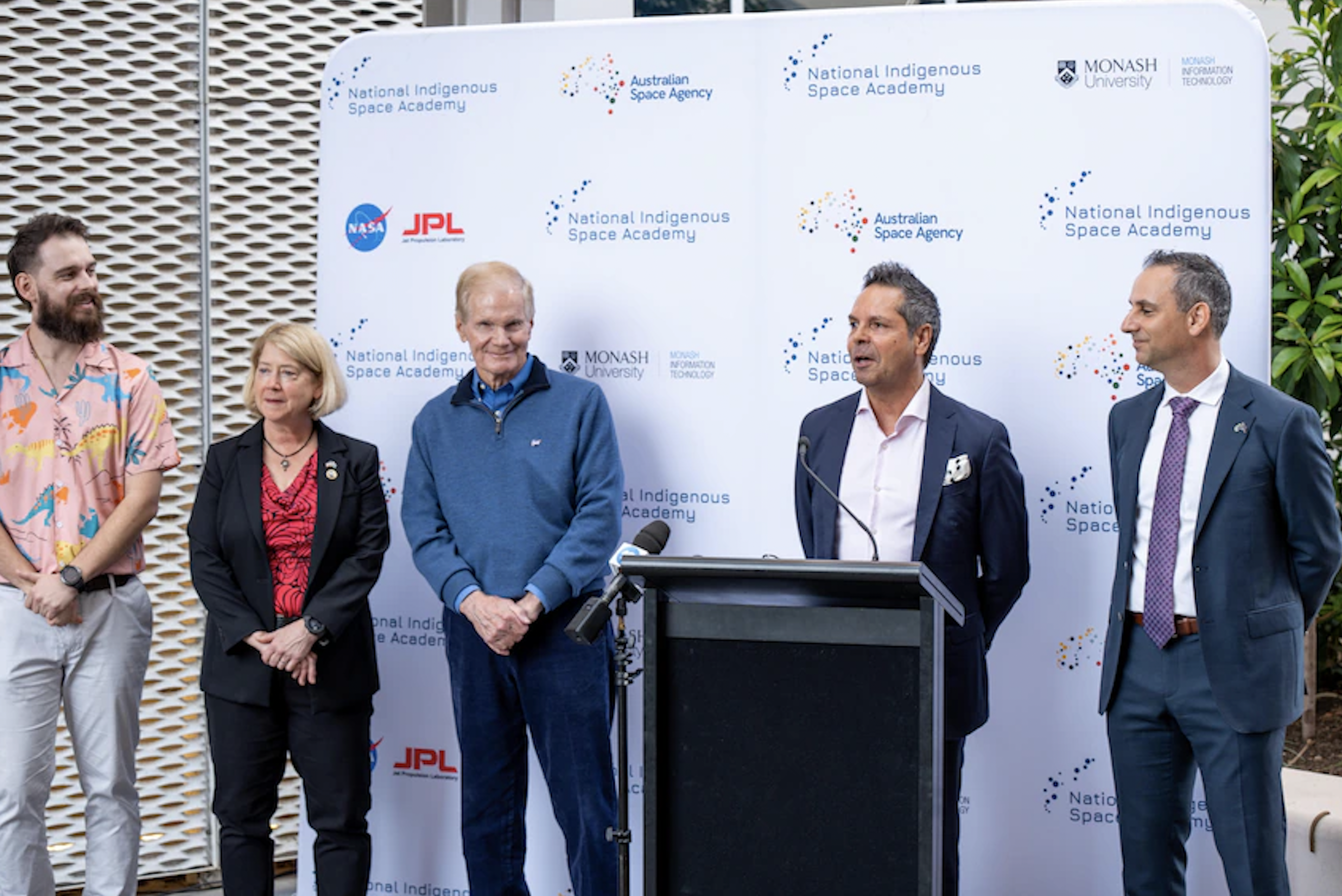
Monash has already rounded up the next cohort in the 10-week NISA internship program, with Five more Indigenous STEM (Science, Technology, Engineering and Maths) students gearing up.
All five will get the chance to work at NASA's Jet Propulsion Laboratory (JPL) in California as part of the next cohort in the 10-week NISA internship program.
Before heading for the US, the students will spend time at Monash doing an internship preparation program or "space boot camp".
Where the students will learn about key topics related to space exploration — such as aerodynamics, astrophysics, and computer sciences and undergo current and former NASA space exploration missions.
However, their field of study back at home will play a major part in what their day-to-day work at NASA will look like.
Whether it be data analysis, lab sample testing or programming for robotic arms, students will be treated just like NASA employees.
"The students we sent last, in 2019, worked on the Mars 2020 rover and the RoboSimian, so these students get to participate in these real missions," Professor Lawrence said.
Dr Steele is taking an optimistic approach with the NISA program and hopes it would not only expand the participants' horizons individually, but also lead them to increasing investment in science programs for Indigenous students.
He said increased funding and investment in programs such as NISA were "important next steps for Aboriginal students" that have a great potential to "drag people up".
There were clear benefits in having more-diverse voices in places where scientists were making important decisions, he added.
"It's a disservice to not have those opinions included when they are available," Dr Steele said.
"We may have different perspectives, but those perspectives are just as important."
Hopefully it won't be too long until we see an accomplished Indigenous astronaut heading off into space.



