




A federal parliamentary inquiry has recommended the government abolish a scheme which quarantines 50 per cent of a person's income, after hearing evidence that compulsory income management is discriminatory.
The Parliamentary Joint Committee on Human Rights' Inquiry into compulsory income management found a large amount of evidence had shown the compulsory SmartCard only increased hardship, was discriminatory towards First Nations people, and made it harder for women to flee violent and abusive relationships.
Furthermore, the system exacerbated family tensions; added pressures to share limited cash funds; and caused stigma and mental health concerns.
"Overwhelmingly the committee was told that the premise of compulsory income management is discriminatory and is based on historical notions that Aboriginal and Torres Strait Islander people cannot manage their own lives and finances," the report stated.
Last year, Labor introduced the SmartCard to replace the former BasicsCard, which quarantines 50 per cent of income to prevent users from spending it on pornography, alcohol, or gambling.
The BasicsCard, which eventually quarantined 80 per cent of a person's income, was introduced to First Nations communities by the Howard government in the wake of the NT Intervention and then dramatically expanded to a wider cohort of jobseekers - not just Aboriginal people - in 2010 by the then Labor government.
The inquiry, chaired by Labor MP Josh Burns, heard from advocates, community leaders in regions where the card is operational, and academics.
Compulsory income management has long been mired in accusations of racism, especially its initial introduction in remote Indigenous communities.
The Australian Human Rights Commission (AHRC) has previously expressed their belief that the legislation that administered compulsory income management "place unjustified limitations on participants' rights to a private life and social security," and may also breach the Racial Discrimination Act as "Aboriginal and Torres Strait Islander peoples are generally over-represented in the areas where the cashless cards have been in operation".
Borroloola women told the AHRC's Wiyi Yani U Thangani (Women's Voices) report that they believed it was "Different rules for white people."
"They think Aboriginal people are the only people who watch porn and drink alcohol," they said.
"You live in the suburbs, you don't have a Basics Card, but if you live in a Blackfulla camp, you have a Basics Card, a card where you can't even draw money out. Is that racist? Discrimination? Impacting on our human rights."
The parliamentary report recommended income management become voluntary and called for the government to amend the Social Security (Administration) Act 1999 to "establish more pathways out of compulsory income management". This included the government explaining in "accessible and culturally appropriate" ways to welfare recipients the option to apply to be exempt from compulsory income management.
It also recommended the government fund social services and free and low-cost legal services to "support the administration of exemptions, and the transition to voluntary income management".
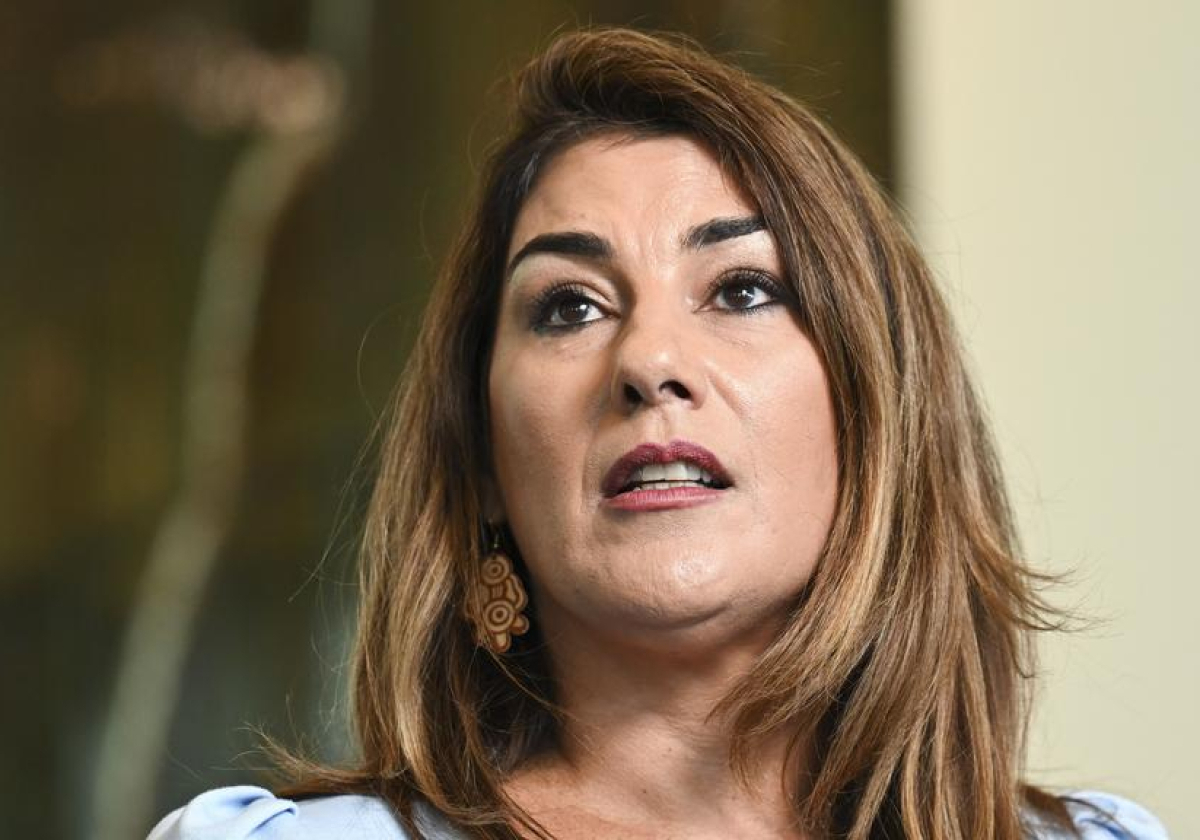
In her additional comments, independent Senator Lidia Thorpe said she welcomed the "overwhelming evidence presented to the committee confirming, once again as many previous inquiries have, that compulsory income management is ultimately discriminatory and incompatible with human rights", labelling the policy a form of "apartheid".
"The continuation of income management in various forms, suggests the continuation of the same fundamentally racist assumptions that justified the original protection regime in the 20th century— that First Peoples are inferior to non-Indigenous peoples and cannot be trusted to enjoy the same rights and privileges as the general community," the Gunnai, Gunditjmara and Djab Wurrung senator said.
Guardian Australia reported Social Services Minister Amanda Rishworth said the Labor government was committed to making the scheme voluntary for those who wanted it, and argued consultations were already under way.
"We aren't rushing it because we want to engage respectfully with First Nations communities, many of which are in remote parts of the NT," she said.
"Any decisions about the future of income management will be based on genuine consultation with First Nations peoples, affected communities and state and territory governments."
In a dissenting opinion, Coalition members and Senator Gerard Rennick said they considered the Commonwealth Government's "previous policy of compulsory income management was targeted to meet a legitimate objective, that it had a rational connection to the objective, and that it was proportionate to the objective".
They argued it was "consistent" with Australia's human rights commitments and "positively impacted some of our most vulnerable citizens".



