



Merck technology has helped create soap made using ingredients from Country.
Travelling to the Northern Territory, pharmaceutical company Merk has teamed up with DeadlyScience to pilot the first DeadlyLabs kit.
The project is led by Indigenous Elders in the Robinson River Region who are sharing their knowledge, ideas, and care of the community.
The feedback from local learners and teachers in rural NT have been positive as they participated in road-testing a new science kit in May.
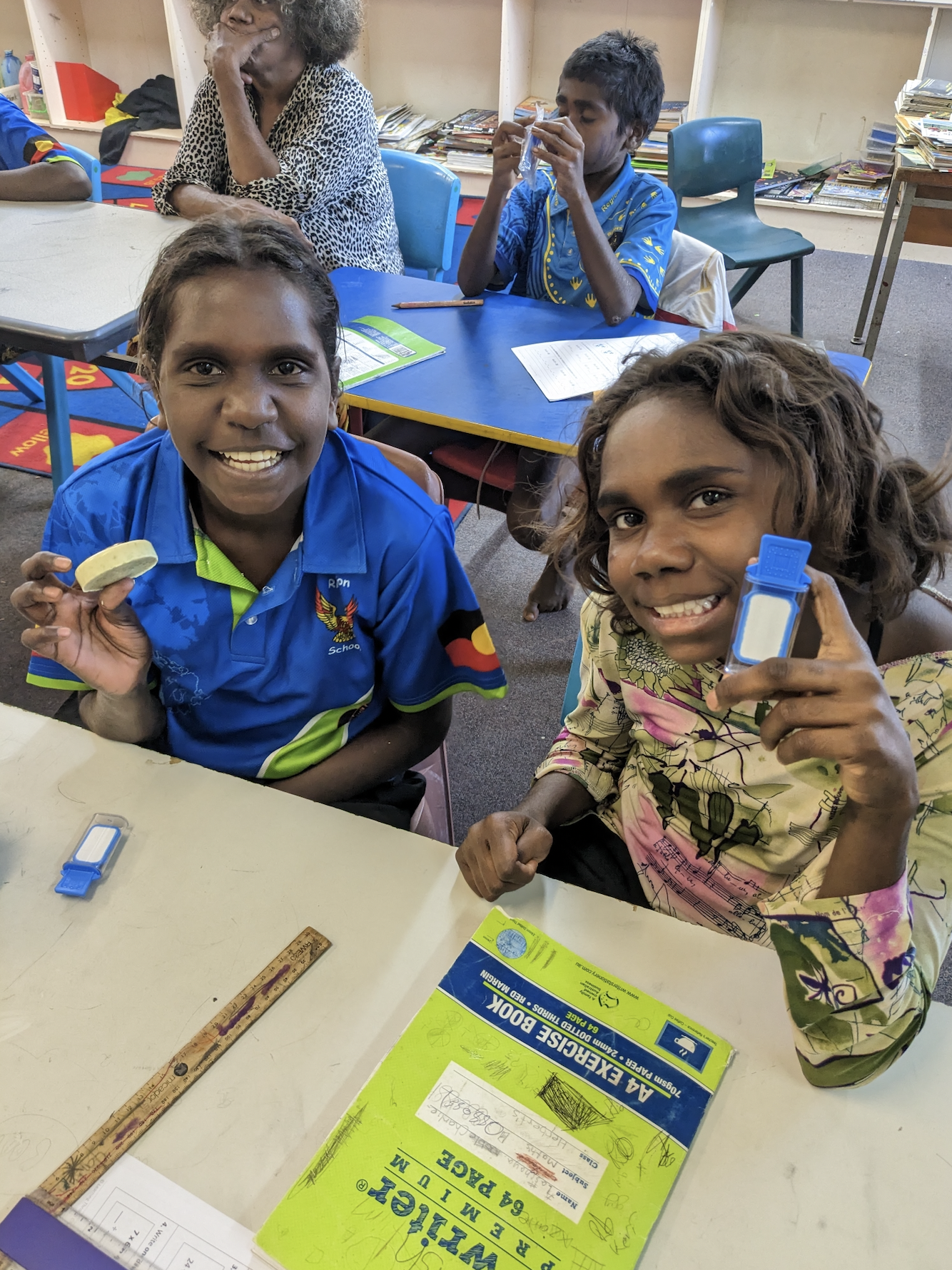
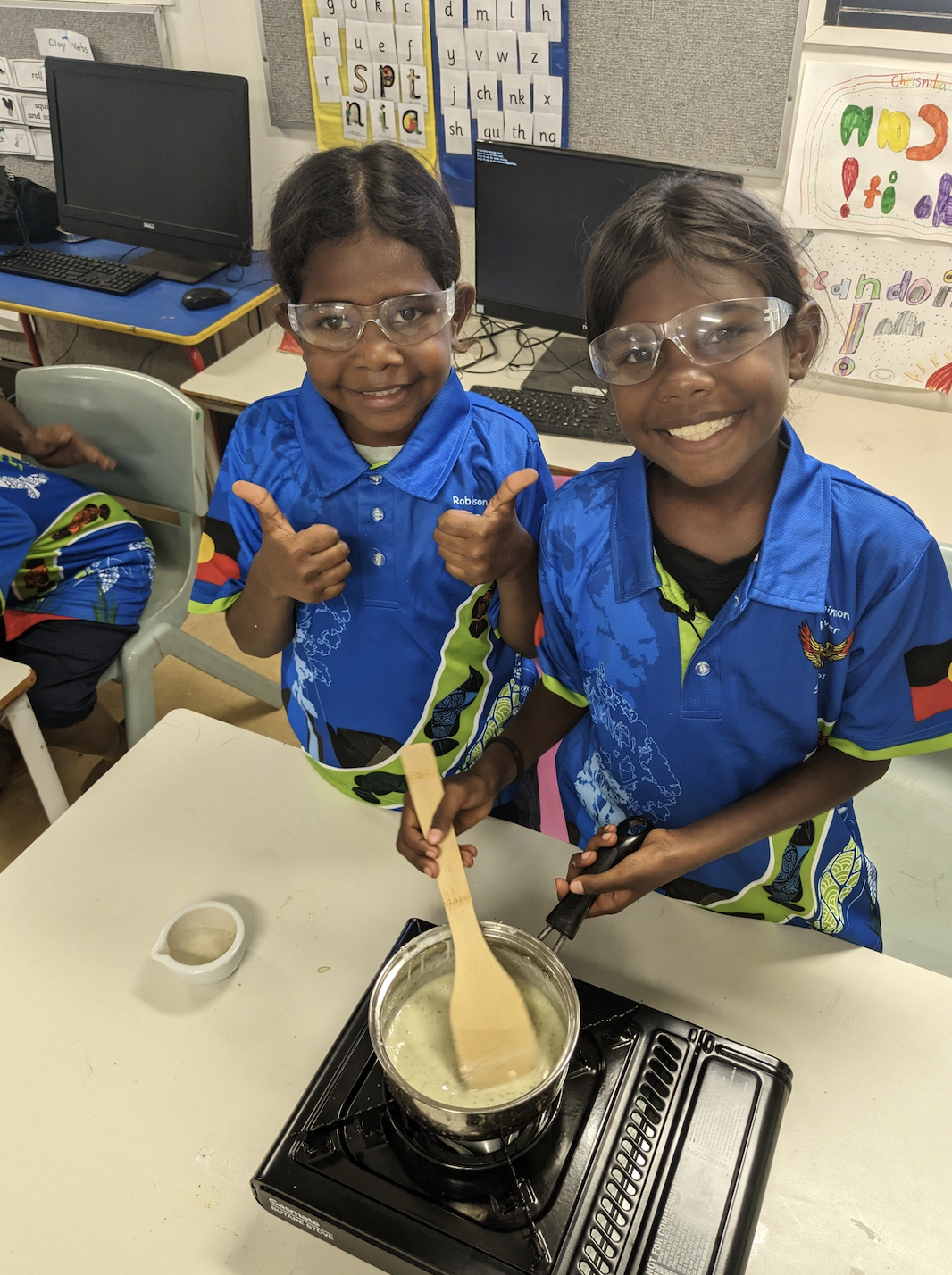
Students got to explore the chemistry of soap-making and hygiene with activities and experiments based in Indigenous science.
"It was an amazing experience for staff, students, and community. Everyone is still talking about it," said Chris Errington from Robinson River School.
DeadlyLabs is a new project from DeadlyScience that is supported by the leading science and technology company Merck.
The program is designed to merge cultural knowledge and learning on Country with hands-on experiments in the classroom.
About 50 students across three classes from Robinson River School combined traditional knowledge with classroom-safe science to make soap and test its ability to extradite bacteria from participants' hands.
They were joined by aunties, Elders, rangers, and other community members in an engaging and fun experience that saw students and community members teaching each other.
To their delight, a film crew captured the moments of the lessons so that Robinson River students can demonstrate soap-making and testing experiments to schools like theirs around Australia.
Garawa and Gunindiri Elders led the development of the pilot DeadlyLabs kit to pass down their knowledge of the value of cleanliness.
University of Sydney chemist and science communicator Associate Professor Alice Motion provided the classroom chemistry expertise. It's the first in a series of kits, with future packages exploring physics, biology, and more.
DeadlyScience founder and proud Kamilaroi man Adjunct Associate Professor Corey Tutt said the feedback from the Robinson River community was warm and encouraging.
"They're so proud to be leading this pilot program, knowing that DeadlyLabs will become a kit that other communities can use, incorporating their own traditional knowledge," Mr Tutt said.
Learning on Country and in the classroom
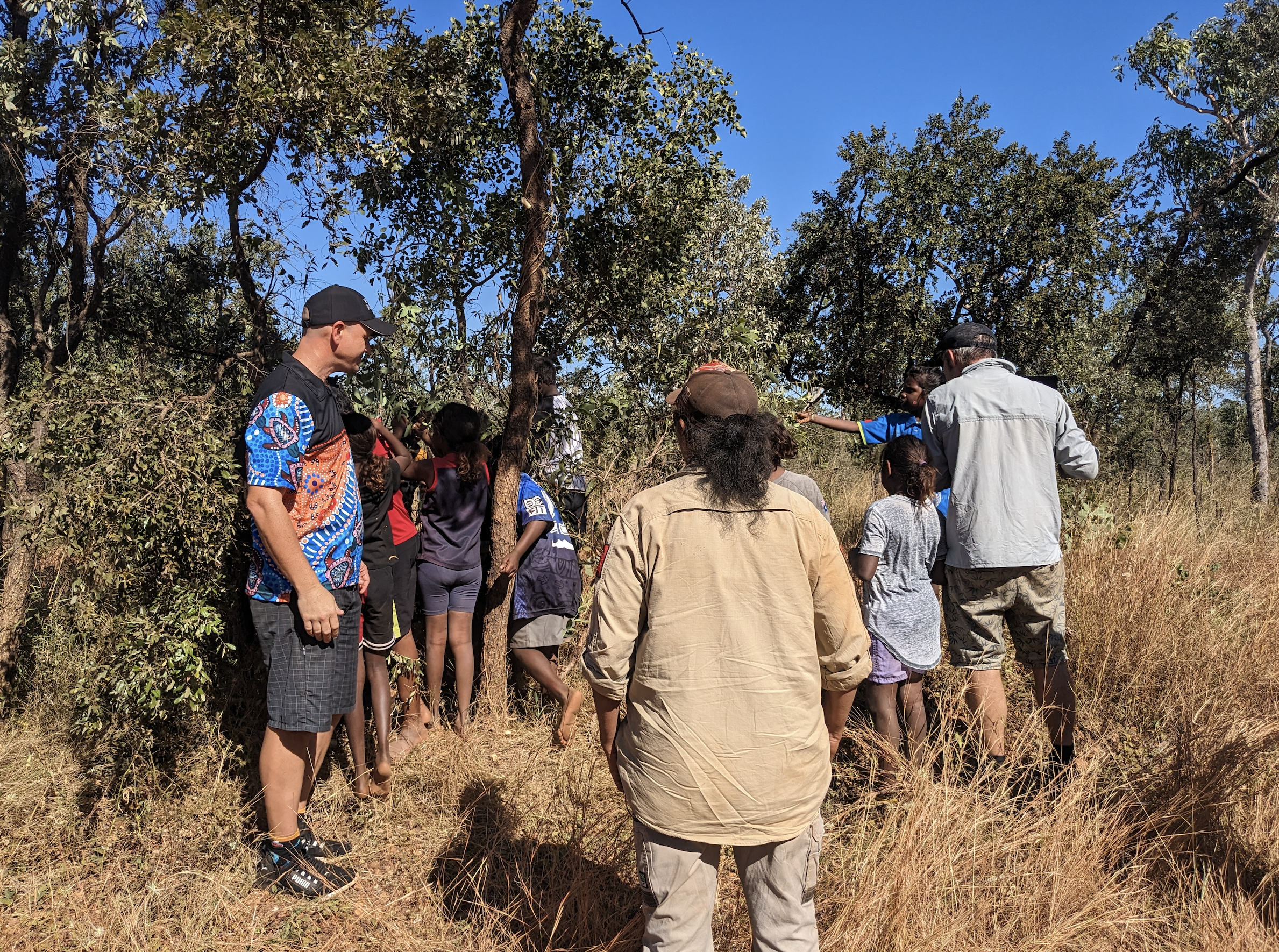
Students collected the leaves of Dumbuyumbu, the Garrwa language word for Australian sandalwood (Santalum lanceolatum), using it as a key ingredient for soap-making.
Dumbuyumbu leaves were sought from 3 different locations on Country, with Elders sharing their knowledge of finding and identifying the leaves, smelling and examining them, taking the leaves sustainably, and looking after the environment they grow in.
Back in the classroom, students made other soaps with beeswax, a soap base, and their collected leaves, the students then put their soap to the test, using Coli-Count™ kits provided by Merck.
They then checked the levels of remaining bacteria after handwashing using their soap, comparing it to bacteria on unwashed hands, water rinsed hands, and hands washed with conventional soap.
"At Merck, we're so delighted with the success of the DeadlyLabs pilot science experiment," said Rebecca Lee, Managing Director Life Science and Country Speaker, Merck ANZ.
"We've heard that the learners want to know when we're coming back and what they can do next. This is particularly meaningful to us as we celebrate the launch of our Merck ANZ Reflect Reconciliation Action Plan."
Beyond Robinson River.
The DeadlyScience team are refining the kit's lesson plans and worksheets, drawing on feedback from Robinson River School, and producing videos that demonstrate the experiments and explain the science.
They will then develop systems to produce, store and distribute kits to other remote communities who can apply the kit with their own traditional knowledge and the local equivalent of Dumbuyumbu.
"The teachers told us that remote students want to get away from pencils and paper and get on Country," Mr Tutt said.
"DeadlyLabs provides that hook, which is a huge attraction to remote school students."
This first kit gives students insights into the chemistry of everyday life, as well as experience with lab safety, weighing and measuring materials, and gathering and recording data, all of which aligns with Australian curriculum requirements.
"The development of the kit, which Merck has sponsored, is just the beginning," said Ms Lee.
"We want to see more of corporate Australia, government organisations, the education sector, and people from all walks of life get behind DeadlyLabs and the broader work of DeadlyScience."
In the future, individuals and organisations will be able to sponsor sending kits to additional communities.



