


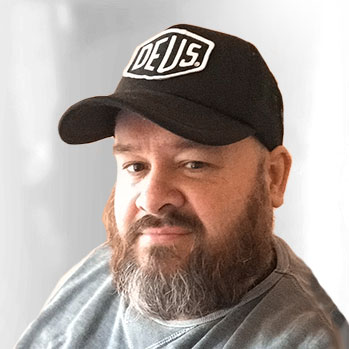

When Amanda Reid looks down from atop a Cortina mountain, she is under no illusions of what lies below.
It is not just several metres of snow piled onto a serious downward slope.
For the Wemba-Wemba and Guringai para-snowboarder, it's the beginning of an unheard legacy.
The 29-year-old is the first Aboriginal competitor to be selected for a Winter Paralympics.
She follows in the footsteps of Indigenous figure skater Harley Windsor of Gamilaraay, Weilwyn, Ngarrable and even Swedish descent, who went to PyeongChang at the 2018 Winter Olympics.
But for Reid, amid a precedent of firsts, it's not just about creating history for people to remember in the future, but about belief in her own people.
"Being the first Indigenous athlete selected is an honour that carries deep meaning and pride," Reid told National Indigenous Times.
"I feel incredibly proud and grateful to represent my community and Country at the 2026 Winter Paralympics in Milano-Cortina.
"I hope my journey inspires other Indigenous people to believe they can achieve this too."
As if Reid needs to inspire her people anymore.
Reid has done her fair share of inspiring her people at the Summer Paralympics.
Been born with cerebral palsy and an intellectual disability, Reid will run in the banked slalom SB-LL2 and snowboard cross SB-LL2 competitions.
"Switching between Winter and Summer Paralympics is a way for me to show that Indigenous people are strong, adaptable, and capable of achieving anything we set our minds to," she said.
It all started out in the pool, competing in the S14 100-metre breaststroke at London 2012.
But that wasn't enough when four years later she legally changed her surname from Fowler to Reid and transferred onto the track and into cycling.
She captured a silver in the 500m time trial C1-3 at Rio 2016 and finally a gold at the post-COVID19 Tokyo 2020 Games.
It was little more than 18 months ago at Paris 2024 when Reid went back-to-back for another gold medal on the velodrome in the same cycling time trial.
The versatile competitor, who grew up NSW's Blue Mountains, swears the switch to Paralympics was not out of boredom, as she plans to return to the bike by LA 2028.
"It didn't really come down to needing a challenge," Reid said.
"I genuinely love both of my sports (cycling and snowboarding).
"I feel incredibly grateful that I get the opportunity to compete in both the Winter and Summer Paralympics.
"I'm also very thankful that I'm able to travel with my bike while I'm competing in snowboarding, which allows me to continue doing what I love year-round."
Cycling remains the passion, however snowboarding is growing on Reid.
Reid's conversion to the snowboard was hidden for most of the past eight years before first competed in 2023 once she felt good enough to make an Australian Winter Paralympics team.
Reid credits her Summer Paralympics base for making the transition a lot easier.
"This definitely didn't happen quickly," she said.
"I've been putting in the work since 2018 when I first learned how to snowboard.
"I've spent years building fitness, strength, and race experience through cycling and swimming, and I brought that same commitment and focus into snowboarding.
"With the right support around me and great coaches guiding my development, it's been about embracing a learning curve, putting in consistent work, and trusting that the skills I've developed over time would carry across."
Reid is one four snowboarders and one of only the 12 Australian Winter Paralympians competing across four events — including para-alpine skiing, para-biathlon and para-cross country — in the slopes of northern Italy.
She's first out on the on the cornice on Friday night for the third-ever snowboarding event at a Paralympics after the sport was first introduced to the Winter Olympics in 1998.
The born-again rookie has more than just nerves to contend with at the top of the mountain.
"Making this Winter Paralympics was a huge goal in itself 12 months ago after hip surgery," she said.
"I honestly didn't think this would be possible.
"So just being here feels like a massive achievement.
"I'm very thankful to everyone who have helped get me back to this point, especially my support network back in Adelaide - without them, this wouldn't have been possible.
"I'm proud of the work it took to return, but ultimately, I'm here to compete and I would just love to win a medal."



