

A South Australian university is encouraging pre-service teachers to consider a career in Aboriginal education while tackling the state's remote teacher shortage.
UniSA is facilitating its student teachers to complete remote teaching placements in the Anangu Lands, which spans the Anangu Pitjantjatjara Yankunytjatjara (APY) and Yalata Lands.
The placement program offers cultural immersion, a chance to connect with community, opportunities to embrace new ways of learning and potentially spark an interest in teaching in remote Indigenous communities.
The program has resulted in teacher retention in the remote areas, with four of last year's eight UniSA placement students returning to the APY Lands to continue teaching while completing their degrees.
UniSA's Associate Director: Regional Engagement, Dr Sam Osborne, an expert with more than 30 years' experience in Aboriginal education, says encouraging students to explore remote teaching placements is vital to building the remote workforce.
"When there's a teacher shortage in Australia, we know there's a desperate teacher shortage in rural and remote Australia," Dr Osborne said.
"These areas can seem daunting – they're unfamiliar, far from family and friends, and may lack creature comforts – but they also offer incredibly rewarding experiences in close-knit and supportive communities."
Dr Osborne said UniSA's placement program provides third-year education students with a unique opportunity to spend six weeks living and teaching in Anangu communities, alongside the world's oldest continuing culture.
"They live, learn and teach between the classroom, and on Country. Whether it's working with Elders to link native plants with science, teaching kindy kids colours in Pitjantjatjara and Yankunytjatjara, or making maths fun by tallying bird species observed on Country," Dr Osborne said.
"Importantly, students are supported by the community as they learn their craft in a cultural and language context that few Australians ever encounter."
The timing of UniSA's remote teacher placement program is significant considering the state's Aboriginal Education Strategy, Impact Report, which indicates teaching support in the APY Lands has helped deliver the highest average preschool attendance in five years.
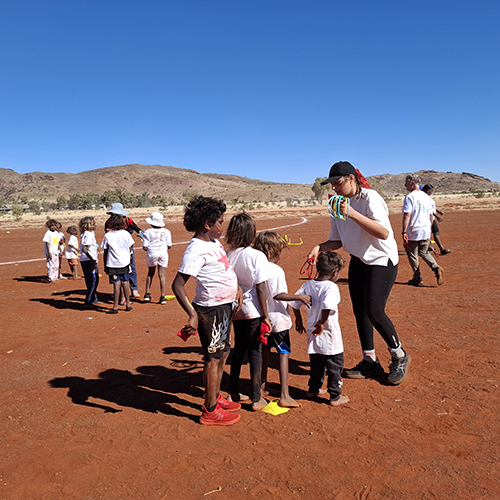
Sophia recently returned from a six-week placement in Pipalyatjara Anangu School, says her stay was transformative.
The Anangu schools' partnership includes 10 schools spanning the far north and west of South Australia, including The APY Lands, Maralinga Tjarutja, and Yalata with around 200 local and non-local educators working in these schools.
"Teaching at an Anangu school was so unique, and it very strongly connected to culture," Sophia said.
"We often took learning outdoors – using hopscotch or other made-up games to teach language and numbers – which the kids loved because they're such outdoor people."
The third-year UniSA education student said learning from people in the Anangu community was an amazing opportunity.
"On family days, we'd sit with an Elder to hear stories of their history, their travels, or more practical things like how to mix bush medicines or make spears," she said.
"The local people are beautiful – gentle, kind and insightful, and they have a quiet confidence that really stayed with me.
"This placement was unlike anything I've ever done. I felt welcomed in the community and I can't wait to return – hopefully next year."
The remote teacher placement program includes a three-day language and culture orientation facilitated by Iwiri Aboriginal corporation, a mid-placement visit to the UniSA site at Ernabella, and a post-placement debrief at Uluru.
"This program provides high-quality support for preservice teachers who want to challenge themselves personally and professionally in a new context," Dr Osborne said.
"They are developing far more than classroom skills – they're building cultural understanding, lasting connections, and for many, a sense of purpose that could shape their careers."
In partnership with the SA Department for Education, UniSA is also running a two-week field trip for students interested in teaching in remote areas.