




The Northern Territory Government has seemingly rejected a Commonwealth offer to split the cost of acquiring Darwin's largest homeless shelter, even as hundreds of vulnerable women and children face homelessness, in the latest open conflict between the NT and Federal governments.
The housing future of hundreds of Territorians was thrown into limbo in July after the Country Liberal Party (CLP) Government gave Yilli Rreung Housing Aboriginal Corporation 90 days to vacate its short-stay accommodation premises after a failure to agree on a price for the property.
Whilst the YiSSA Short-Stay Accommodation sits on Crown land, the accommodation blocks are owned by Ausco and leased to the Northern Territory Government under a five-year agreement worth between $2.5 million and $3 million per year.
It was previously reported the NT Government offered Ausco $3 million to purchase the property. However, Ausco reportedly valued the entire 300-room facility at between $8 million and $12 million, having previously spent $25 million developing the 7.5-hectare site in 2012.
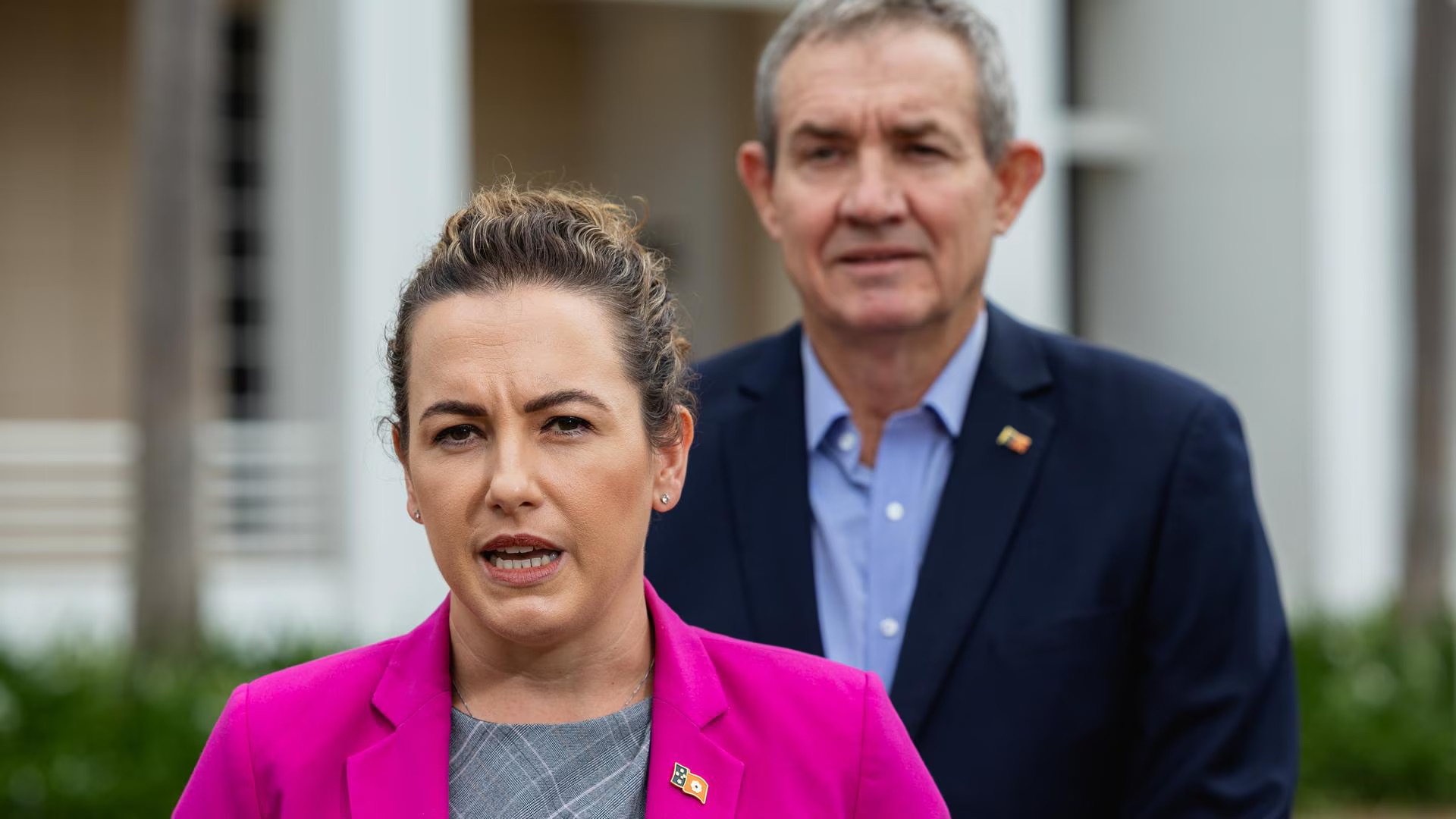
Speaking on Darwin's Mix 104.9 on Monday morning, NT Chief Minister Lia Finocchiaro shut down any chance of the site being purchased at the reported rate — which she declined to reveal — calling it a "waste of taxpayers' hard-earned money".
"I'm not aware of the exact details, but it's far more than what we think should be paid," she said, "and we just can't waste people's money irresponsibly like that, and even if the Feds want to, it doesn't mean we'll sign on to that."
Ms Finocchiaro claimed the federal government's priorities in supporting the facility were "topsy turvy", before stating Minister Robyn Cahill would announce a transition plan for the three hundred plus residents of YiSSA in the coming days.
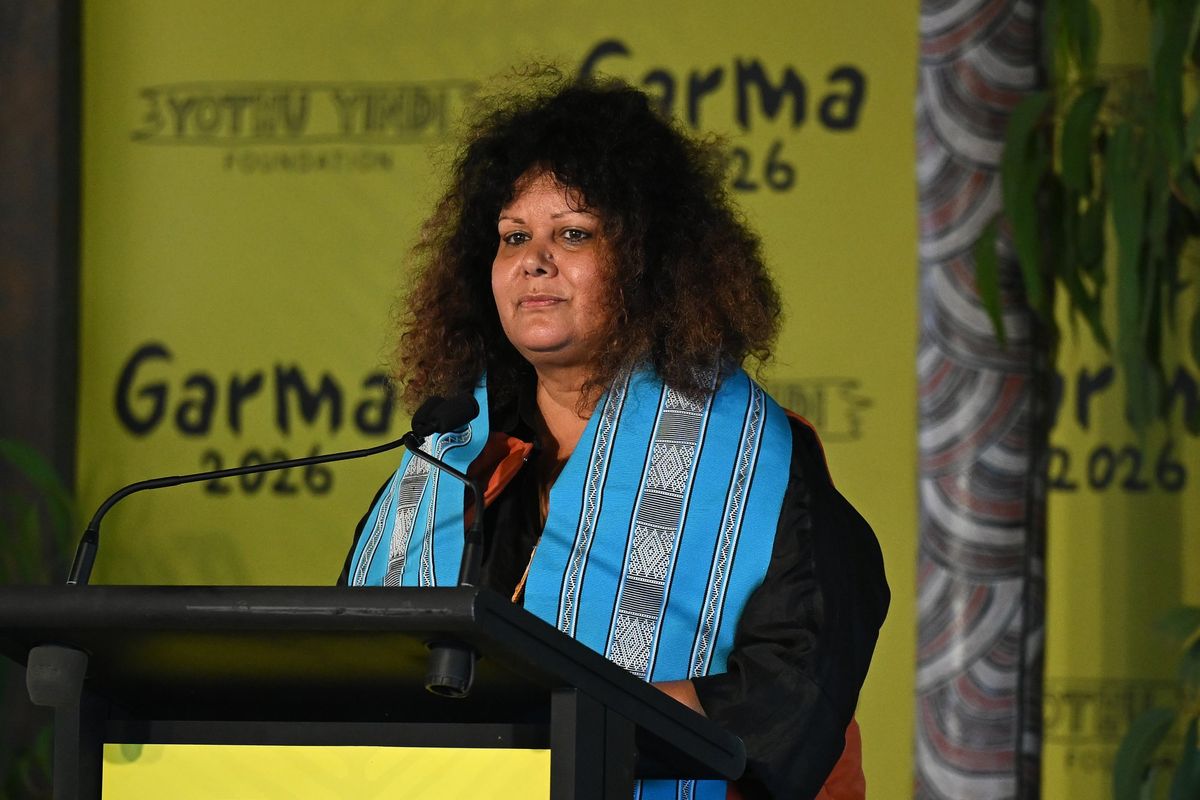
In response, federal Minister for Indigenous Australians Malarndirri McCarthy said Ausco were only seeking $6.5 million for the demountables on the site, of which the Commonwealth would pay $3.5 million and the NT Government $3 million — in line with the latter's previously reported valuation of the site.
The proposal had been sent to the NT Government several weeks ago but has not been responded to, Senator McCarthy previously said, nor had she or the Commonwealth seen details of Ms Cahill's transition plan.
Speaking on ABC Radio on Monday evening, Senator McCarthy said she got the sense Ms Finnochiaro had not been adequately briefed on the cost of the facility.
"If she was aware, she'd realise that this is a really good opportunity for the Northern Territory government, but also more importantly for the families and residents and staff at YiSSA," she said.
"If the Northern Territory government has other plans going forward, we clearly want to see that, but for now, I believe this is an extraordinarily good offer."
The Northern Territory has the highest rate of homelessness in the country, at almost 12 times the national average. Aboriginal and Torres Strait Islander people comprise 87 per cent of the Territory's homeless population.
In a statement last month, then Aboriginal Housing NT chief executive Leeanne Caton said many vulnerable people in the Territory relied on YiSSA to provide a "safe place to stay while accessing medical care, escaping violence, connecting with services or taking steps towards stable housing".
"For many families from remote communities, Aboriginal community-controlled organisations must be genuine partners in planning the next steps for families," she said.
Under the direction of the Department of Children and Families, people staying in the 28-day accommodation program will be required to leave by August 25, while all remaining residents are expected to vacate the site by October 11.
Senator McCarthy said that with only a few weeks until the deadline, "I really do encourage the chief minister to reconsider and reflect on her comments".
"I have written to her this afternoon, urging her to reconsider because this is an important offer and it does matter," she said.
"It is not wasted taxpayers' money on families who are escaping domestic and family violence, on people on renal dialysis. There is no transition plan right now; those families can tell you that."



