



The Indigenous Voice to Parliament referendum Bill successfully cleared a significant hurdle on Wednesday.
There are 151 Members of Parliament in the federal House of Representatives, parliament's "lower house", but with the speaker not voting, the seat of Fadden currently vacant, one 'pair' in effect and Kennedy MP Bob Katter abstaining, the final vote tally stood at 121 in favor and 25 against.
All 15 Nationals MPs voted against the bill, as did 10 Liberals, while Opposition Leader Peter Dutton and former Prime Minister Scott Morrison were among those in favor of the bill.
Liberal MPs who voted against the bill were Buchholz (Qld), Goodenough (WA), Hawke (NSW), Hamilton (Qld), Howarth (Qld), Pasin (SA), Pike (Qld), Wallace (Qld), Wilson (WA), and Young (Qld).
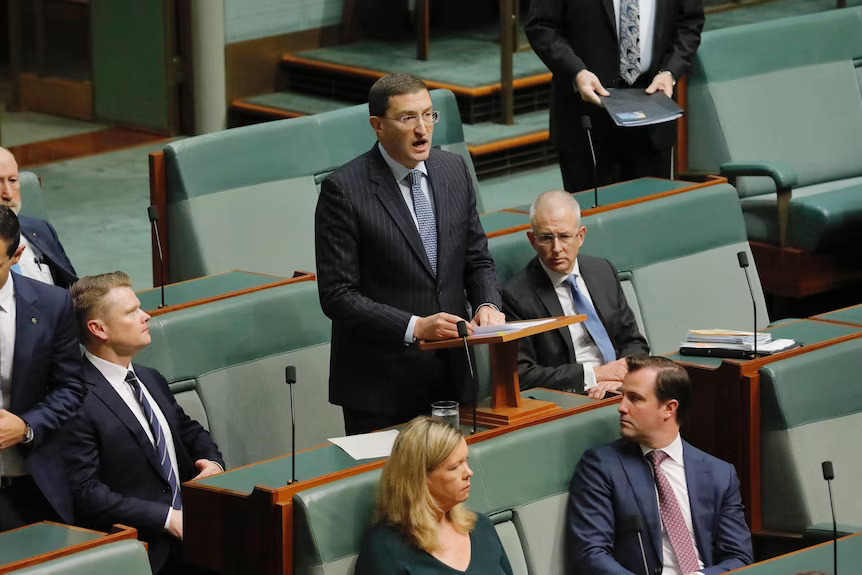
Former shadow minister for Indigenous Australians, Julian Lesser, proposed amendments ahead of the final vote to, in his view, improve the referendum's chance of success.
The former Liberal frontbencher advocated removing references to the Voice advising the "executive government" in the proposal for the Australian public.
"These amendments are not about parliamentary colleagues, they're about securing the support of the Australian people — a majority of Australians, and a majority of Australians in a majority of states," he said.
"A successful referendum requires getting as many Australians as possible to vote 'yes'."
"Winning a referendum is hard, and I want the Voice to win – the alternative is too dreadful to contemplate."
Attorney-General Mark Dreyfus, who gave praise to Leeser's support of the Voice, said they changes were "neither necessary nor desirable".
"It is important that the Voice's function of making representations to the executive government is guaranteed in the Constitution. Without that guarantee, a future parliament might entirely remove the ability for the Voice to make representations to the executive.
"It will soon be up to all Australians to make a choice," Mr Dreyfus said.
"It will be up to the Australian people to take the opportunity offered by the Uluru Statement from the Heart in 2017, an opportunity for our nation to do better, to come together, and walk towards a better future."
The success of the bill in the House of Representatives marks a significant milestone, but there remain important steps to be taken before the Indigenous voice referendum can become a reality.
The bill must now proceed to the Senate, where it is expected to be considered in June. If the Senate also approves the bill, the referendum could take place between the months of October and December.



