




First Peoples are still being excluded from decision-making on Country as Labor rushes to push through environmental law reforms, Senator Lidia Thorpe says.
Her comments come a day after the Northern Territory's four Land Councils criticised the Albanese government for failing to consult Indigenous people on the reforms, arguing there's "no excuse" not to involve them in shaping "laws that are existential for our survival".
In a statement, Senator Thorpe said the new laws would fail Country unless they included legally enforceable protections for First Peoples' rights and cultural heritage, along with a genuine climate trigger.
She said reporting emissions is not the same as stopping climate destruction, arguing, "Environmental laws that ignore climate impacts and First Peoples' rights isn't protection".
"These laws will decide what happens to Country for generations. But right now, Labor is promising faster approvals for corporations, while First Peoples are still being locked out of decision-making," she said.
The Victorian Senator called for the reforms to include a National Standard for First Nations Engagement and Participation - guaranteeing adherence to the principle of Free, Prior and Informed Consent.
"If this government is serious about protecting Country, then it must guarantee Free, Prior and Informed Consent for First Peoples. Anything less is just another colonial rubber stamp for destruction," Senator Thorpe argued.
"Reporting a project's emissions is meaningless if the government then approves the project anyway. We need real limits on fossil fuel projects to stop the destruction of Country."

Labor introduced its nearly 1,500-page bill to the House of Representatives on Thursday, with Environment Minister Murray Watt saying the laws must be passed "now or never".
"We can't let this go around in circles for five more years because every time we wait and every time we get delayed, we see the environment suffer and we see really important housing, renewables, and other projects get held up in red tape," he told the ABC.
If passed, it will introduce a national Environmental Protection Agency, requiring projects to report their carbon emissions.
Thursday marks five years since former Australian Competition and Consumer Commission (ACCC) chair Graeme Samuel handed down his landmark review of the existing EPBC Act to then-environment minister Sussan Ley, Senator Watt noted.
He told the ABC this week he's becoming "frustrated and ... frankly a little angry" at delays from the Opposition and the Greens, saying the reforms would govern environmental approvals for housing, energy, and other major projects.
The Coalition plans to refer the bill to a Senate inquiry for closer examination, with Shadow Environment Minister Angie Bell saying she doesn't understand "what the rush is about".
"Australians deserve to have an inquiry that looks into every part of this bill, every single dot across 1,500 pages, and that will take a significant amount of time," she said.
Senator Thorpe said successive governments from both sides of politics have created environmental laws that "enable the desecration of Country," urging Labor to work with the crossbench to strengthen protections rather than rely on the Coalition, "who will guarantee weaker protections".
"I am calling on Minister Watt to respect First Peoples, honour our right to Free, Prior and Informed Consent, expand the climate and water triggers, and close the loopholes that allow corporations to destroy land, water and sacred sites," she said.
"First Peoples have protected this land since time immemorial. When we care for Country, Country cares for us. That's what this colony still needs to learn."
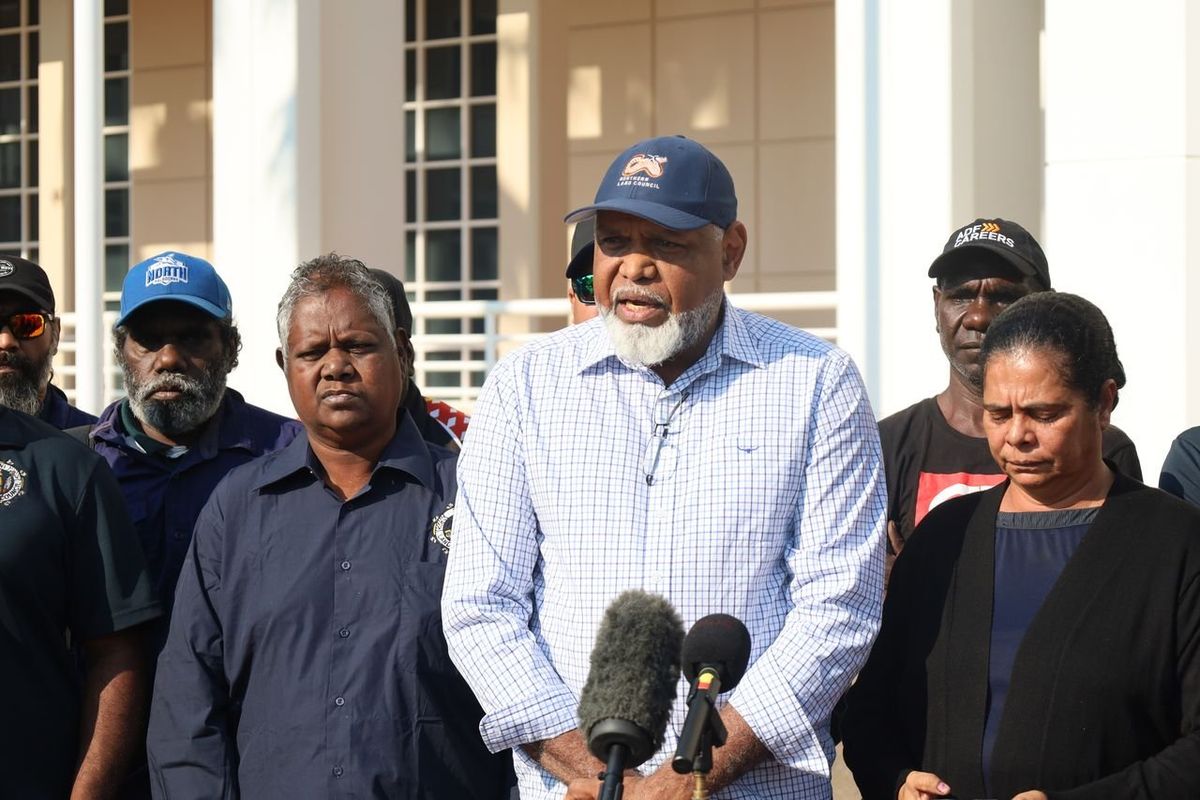
On Wednesday, the Northern, Central, Tiwi and Anindilyakwa Land Councils called for all projects with significant impacts on ground or surface water to undergo environmental assessment, and for major greenhouse gas-emitting projects to be evaluated for climate risk. It is a measure Senator Watt has previously confirmed will not be included in the reforms.
"So far, the debate on federal environment laws has been run as a closed shop between the large environment groups and industry," Central Land Council acting CEO Dr Josie Douglas said on Wednesday.
"This has to stop. Our representative bodies must be heard now and engaged directly in the design of critical national environmental standards."
The Land Councils also urged the Minister to consult with them on developing national environmental standards and to ensure Aboriginal cultural values are embedded in regional planning and project assessments - a process that would require land councils to consult with Traditional Owners at every stage.
"We call upon Minister Watt to ensure that land councils are part of the conversation going forward, and we welcome his indication that he is willing to consider amendments," Northern Land Council chair Matthew Ryan said.



