



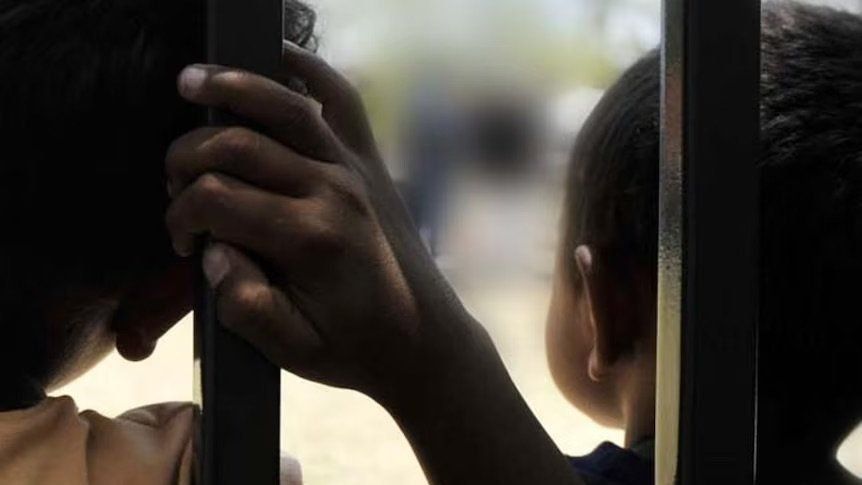
Children's commissioners from across Australia have used a federal parliamentary inquiry to warn racism against Aboriginal and Torres Strait Islander children is widespread, deeply harmful and contributing to poorer health, education and life outcomes.
Submissions to the inquiry into racism, hate and violence directed at Aboriginal and Torres Strait Islander people argue racism should be recognised as both a child rights issue and a public health concern, citing evidence from consultations with First Nations children and national reporting.
Western Australia's Commissioner for Children and Young People, Jacqueline McGowan-Jones, argued racism continued to contribute to disproportionately poor outcomes for Aboriginal children.
"Aboriginal children continue to die at higher rates than non-Aboriginal children and young people, with family and domestic violence, institutional neglect and racism contributing significantly to these outcomes," she said.
"Extreme acts of violence linked to racism remain evident. In Western Australia, the killing of a Noongar schoolboy in 2022 and the death of a 14-year-old Aboriginal boy in Kalgoorlie in 2016 are widely cited examples that highlight the lethal consequences of entrenched racism."
Harm documented across the country
Northern Territory Children's Commissioner Shahleena Musk said consultations conducted by her office found racism was a routine part of many First Nations children's lives.
"Racist language, racial stereotypes and targeted instances of racism were the primary types of racism experienced by children and young people," she submitted.
"Children and young people consistently described racism as causing sadness, anger, shame, fear, exclusion and disengagement...Aboriginal and Torres Strait Islander children in particular described racism as damaging their sense of belonging, identity and future aspirations."
According to the latest Call It Out Annual Report, more than a quarter of reported incidents of racism targeting Indigenous Australians involved children and young people.
Reported experiences included racist and derogatory language, neglectful or dismissive treatment by public services, and incidents of physical assault.
"Being at that school made me feel so [much] shame," one respondent said. "It's so crazy that I felt and still feel so unwanted in my own country!"
Another participant shared: "[Racism] made me feel upset, I didn't know why people hated me and my culture so much. I was frustrated."
.jpg)
Inquiry examines systemic racism
The Senate inquiry was established to examine continuing racism, hate and violence directed at Aboriginal and Torres Strait Islander people following a series of high-profile incidents, including the alleged terror attack in Boorloo on January 26, the alleged attacks on Camp Sovereignty by neo-Nazis last year, and the booing of Elders delivering a Welcome to Country on Anzac Day.
Chaired by Mutthi Mutthi and Wamba Wamba woman Senator Jana Stewart, the inquiry has received hundreds of submissions from government agencies, academics, legal groups and Indigenous organisations.
In her submission, Commissioner Musk — a Larrakia woman and former crown prosecutor — said First Nations children's experiences of racism and discrimination were reflected in the way they were routinely perceived and treated.
"Being followed in shops, stereotyped as criminal, mocked for their physical appearance, family, food or culture, having their Aboriginality or identity denied or challenged and being spoken about as dangerous," she said.
"They have reported feeling as though these racialised attitudes, words and conduct are accepted and/or condoned: being left unprotected while adults watch and do nothing."
.jpg)
Commissioner McGowan-Jones also warned social media had amplified racist abuse, echoing submissions that argued hostility intensified during and after the 2023 Voice referendum.
"Aboriginal children and young people are especially vulnerable to the cumulative impacts of online abuse, which can exacerbate trauma, anxiety and disengagement from education and community life," she submitted.
"There were reported increases in mental health supports sought by Indigenous peoples around this time where data spiked through the national helpline 13YARN."
Research shows 68 per cent of First Nations children have experienced hurtful or nasty treatment online, compared with a national average of 45 per cent. First Nations children are also almost three times more likely to experience online hate speech, while around three in ten have received offensive comments because of their personal characteristics, compared with one in ten children overall.
Calls for structural reform
Despite the volume of evidence presented to the inquiry, racism remains politically contested, with culture war arguments often dominating public debate.
Some conservative politicians and media commentators have questioned the prevalence of racism experienced by Indigenous Australians, compared it to racism directed at other groups, or argued incidents are isolated rather than systemic.
Community organisations and oversight bodies, however, continue to document everyday racism, including harassment, discriminatory policies, over-policing and public dog whistles.
Barb Causon, a Wiradjuri woman and the ACT's acting Commissioner for Aboriginal and Torres Strait Islander Children and Young People, said most of the 90 Aboriginal children who participated in a 2024 youth forum reported experiencing racism.
"Local young people report facing increased racism at times when there are significant Aboriginal events or news stories e.g. NAIDOC week, Sorry Day, Reconciliation week etc," she said.
"We are aware that having a strong cultural identity and connection is a strong protective factor in the lives of our children and young people. Empowering these young people to take an active role in shaping their own futures is critical. Their insights emphasise the need for stronger support systems that prioritise."
Many of the submissions conclude with calls for the inquiry to treat racism affecting First Nations children as more than isolated acts of discrimination.
Queensland's outgoing Aboriginal and Torres Strait Islander Children's Commissioner, Natalie Lewis, submitted discrimination is assessed not only by intent but by its effects.
She argued many of the contemporary forms of racism are "embedded within ordinary system operation and may be reproduced through policies and practices that appear racially neutral".
"Harm therefore arises where systems consistently produce disproportionate adverse outcomes for Aboriginal and Torres Strait Islander peoples and fail to take adequate corrective action," the Gamilaraay woman submitted.
"Establishing nationally consistent monitoring, reporting and accountability mechanisms across child protection, youth justice, education, policing and detention systems would strengthen governments' capacity to identify institutional racism, monitor whether reforms are improving outcomes over time and ensure greater accountability for reducing racial disparities in practice."
Lifeline (13 11 14)
13YARN (13 92 76)
Yarning Safe'N'Strong (1800 959 563)
Beyond Blue (1300 22 46 36)



