



Warnindilyakwa families on Groote Eylandt have experienced the impact of Machado-Joseph disease across generations, with many caring for relatives long before the inherited neurological condition had a name.
For years, people noticed gradual changes in their loved ones, from stumbling and loss of balance to difficulty speaking, walking and swallowing, but there was little understanding of what was happening and few services able to respond.
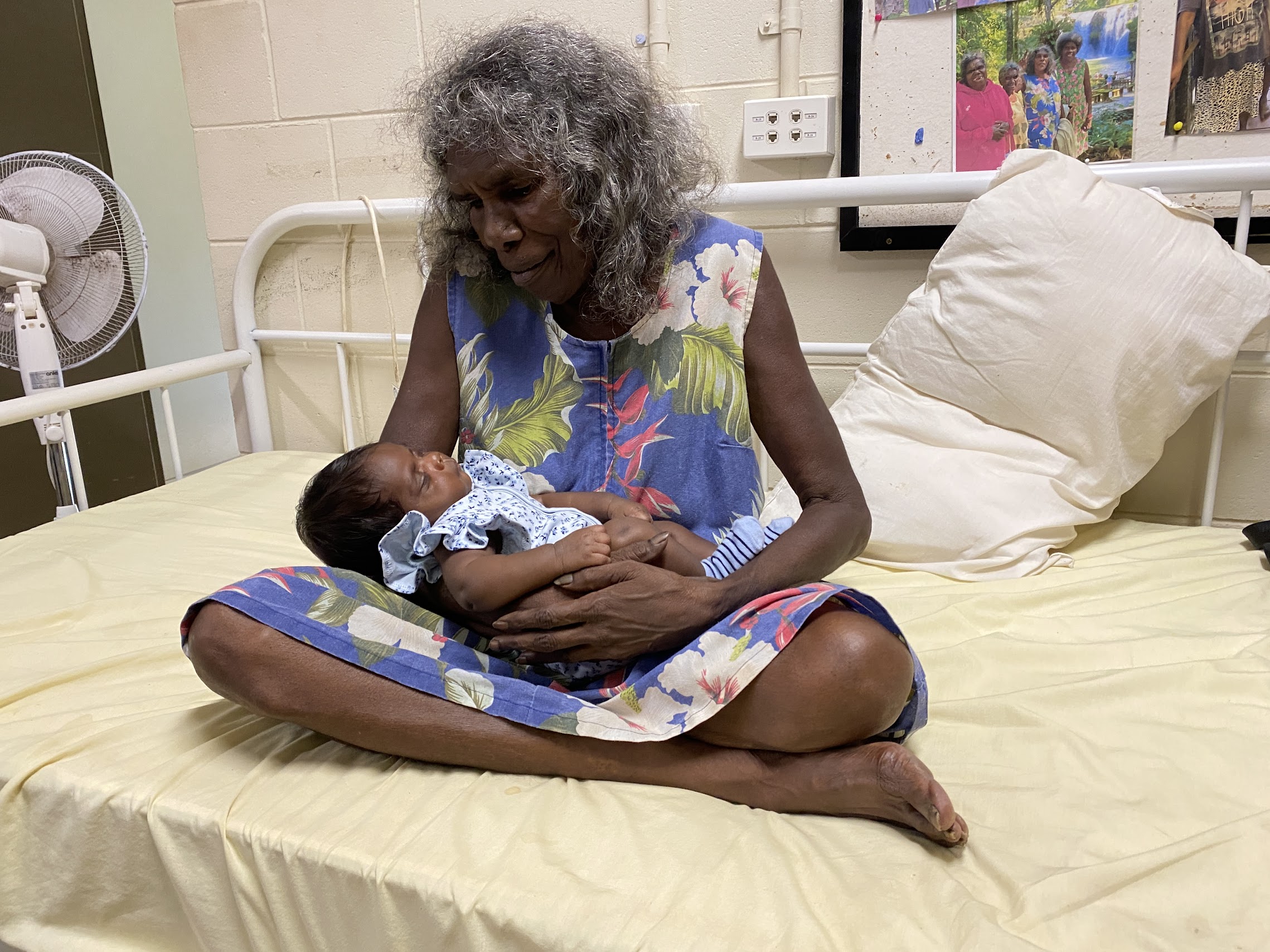
Warnindilyakwa woman Gayangwa Lalara, 80, has lived with the disease in her family for as long as she can remember.
"This is my community. Names are important to Aboriginal people," she said. "We have names for everything, because it is important to identify and understand.
"We didn't know what it was... We didn't know how to care for our sick people."
Machado-Joseph disease is an inherited neurological condition that affects movement, speech and swallowing, and can pass through families across generations.
For Ms Lalara, the impact has been direct and lasting.
Her father developed the disease when he was older, while all six of her brothers and sisters from one of her two mothers were affected by their forties.
She buried two sisters and two brothers, cared for two of her sisters' children for more than 15 years, and is now seeing younger relatives become sick.
"My niece was 21 when she passed away," she said.
"Now I see younger ones in my family getting sick."
For a long time, families carried much of the burden themselves, with limited services, little understanding, and few supports for people with complex needs in remote communities.
Some people were sent away from home when their care needs became too great, while others remained without the support they required.
Ms Lalara said the lack of help also shaped how families understood the disease.
"No one was interested in helping my people," she said.
"Their needs were so great. We felt shame. And we blamed ourselves."
The naming of Machado-Joseph disease did not stop its impact, but it helped families understand what they were facing and begin pushing for better care.
"Knowing the name, it helped us understand a little better," Ms Lalara said.
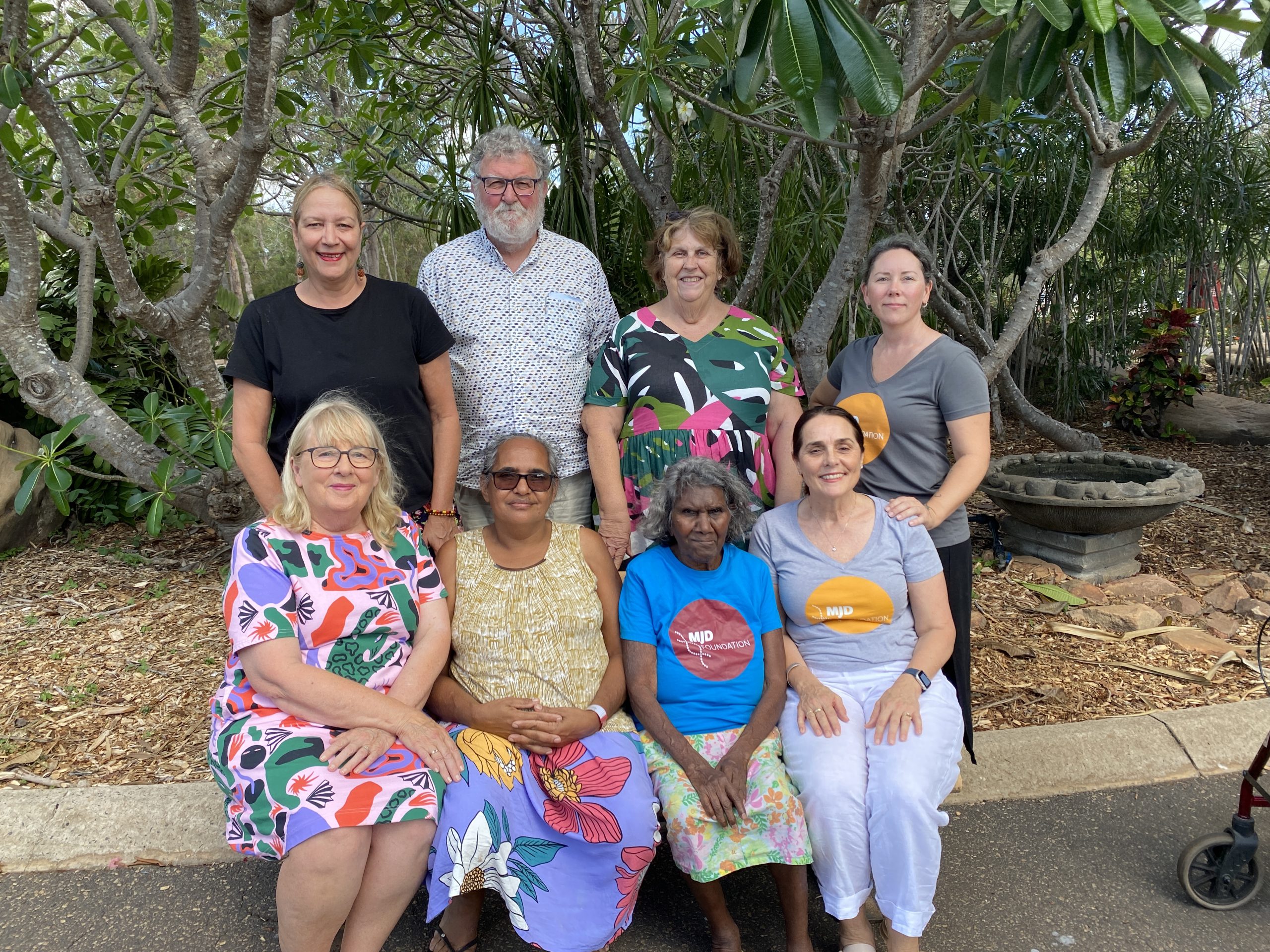
The Machado-Joseph disease Foundation (MJDF) was established in 2008 after families called for a different approach.
Director of Research, Education and Clinical Services, Libby Massey, who has worked with families in remote communities for decades, said the existing system was not set up around the needs of people living with the disease.
"There was a real gap between what families were dealing with and what the system was set up to provide," Ms Massey said.
"We had to engage them and ask them."
That work helped shape the foundation's "Our Way" model, which is built around long-term, family-centred and culturally informed support.
MJD Foundation chief executive Jacquie Hatt said the model recognises the disease affects people across a lifetime and across generations.
"It's about walking alongside people for the long term," Ms Hatt said.
"Understanding what matters across a lifetime."
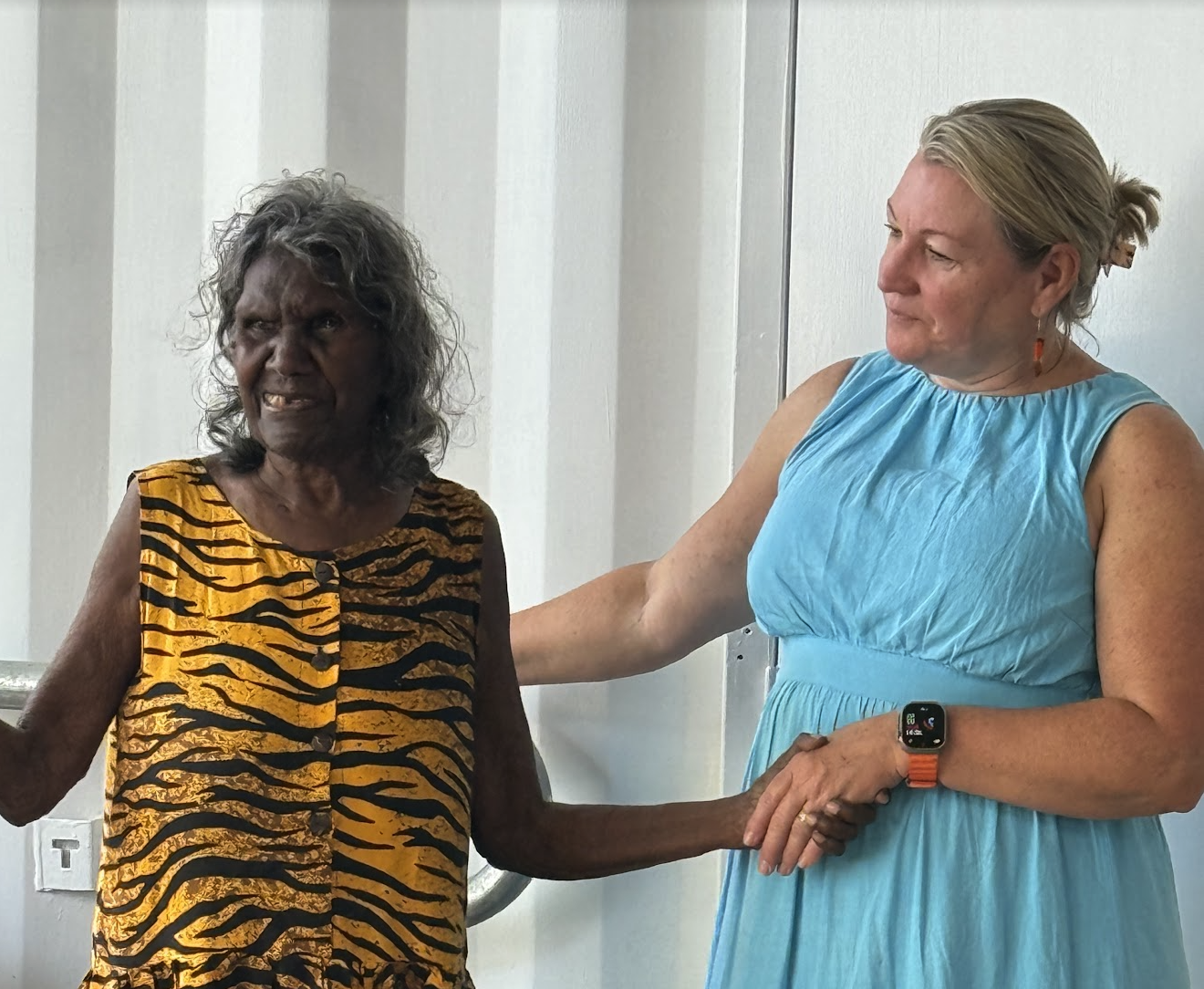
The model brings together clinical care and cultural knowledge, with Aboriginal community workers, many from affected families, working alongside health professionals.
Support is delivered in homes, communities and on Country, and includes therapy, equipment, transport, housing support and social and emotional wellbeing.
For Ms Lalara, the changes have been practical and personal.
"We have wheelchairs now," she said.
"We have ramps in our homes. I don't feel shame anymore. We don't blame ourselves anymore."
MJD Foundation chair and former federal minister, Jenny Macklin, first encountered the issue during visits to Groote Eylandt while in government.
"What stood out was the scale of the impact on families and the lack of services that truly matched what was needed," Ms Macklin said.
She said the foundation's approach offered lessons beyond Machado-Joseph disease.
"This is a model that has grown from the experience of families themselves," she said.
"It reflects the reality that this is a lifelong, multigenerational condition. It shows what is possible when services are shaped around people's lives, not the other way around."
Across northern Australia, hundreds of people are now known to be at risk, and more families are being diagnosed.
There is still no cure, and the need for support is growing as more people live longer with the disease.
Part of the foundation's work in north-east Arnhem Land has been supported by funding linked to mining operations on Groote Eylandt, but that support is due to end as the mine moves toward closure.
Ms Lalara said the priority is ensuring the next generation is not left without support.
"I don't want my grandchildren to go through this without support," she said.
"We are proud in our care. And we are proud of the MJD Foundation."
The MJD Foundation's work can be supported through donations via its website.
Original reporting by Tom Hearn.



