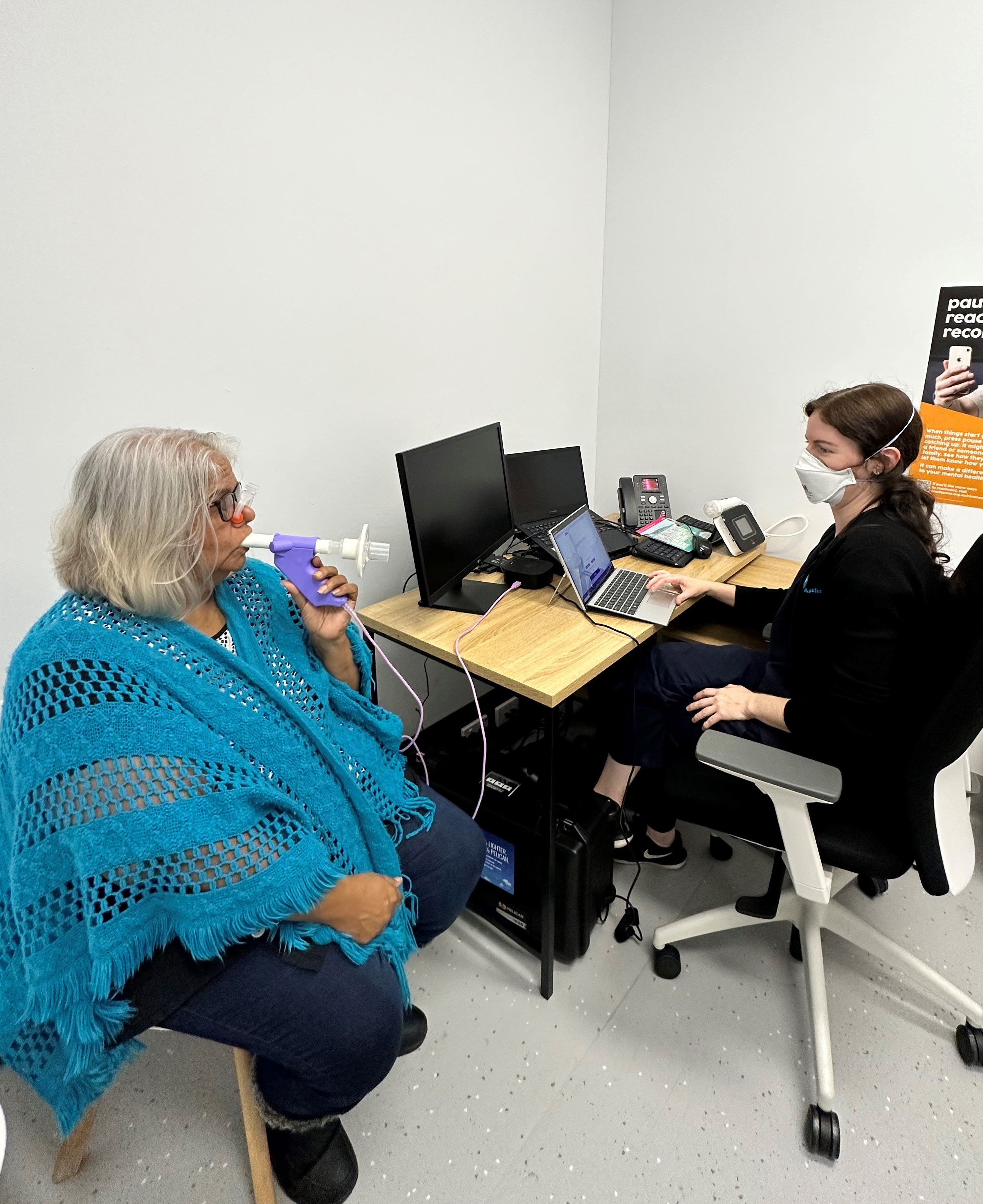

Culturally safe, community-driven healthcare is helping to close the respiratory health gap for First Nations peoples in Western Australia, but more support is needed to reach those still facing barriers to vital care.
Aboriginal and Torres Strait Islander people experience significantly higher rates of chronic respiratory conditions than non-Indigenous Australians. According to the Australian Institute of Health and Welfare, they are 2.2 times more likely to report having chronic obstructive pulmonary disease (COPD) and 1.6 times more likely to report asthma.
In 2021–22, over 5,400 asthma related emergency department visits were recorded among First Nations people, highlighting a disproportionate burden of respiratory illness. In response, Respiratory Care WA works in close partnership with Aboriginal Medical Services and other local organisations—including Derbarl Yerrigan Health Service, Arche Health, Moorditj Koort Aboriginal Corporation and 360 Health and Community—to deliver culturally safe lung health services.
Together, they support more than 1,100 Aboriginal and Torres Strait Islander people across WA each year.
"Being in a space that is familiar and acknowledges Country and culture is vital," said Melanie Preen, Community and Outreach Programs Coordinator at Respiratory Care WA.
"It builds trust, encourages open conversations, and empowers people to engage in meaningful learning about their lung health."
Yarning circles hosted in 2024 and 2025 have created safe spaces for sharing personal stories.
One Elder said: "For the first time, I felt comfortable talking about my asthma and learned how to manage it better so that I can be there for my family and help the grandkid with their asthma too."
Despite growing efforts, challenges remain. Staff at Derbarl Yerrigan Health Service (DYHS) report that barriers such as limited transport and low health literacy often prevent younger adults from accessing early diagnosis and care.
DYHS Specialist and Allied Health Coordinator at DYHS, Rosedie Milne, said while the Service offers transport for elderly patients, "there's little support for younger people aged 20–40".
To help address this, DYHS has partnered with Respiratory Care WA to deliver integrated respiratory assessments—combining specialist consultations and lung function testing in a single visit. However, due to limited resources, only eight of these dual-service appointments are available each month.
"Our clients see the same visiting specialist at each appointment, which helps build trust in a culturally safe setting. Over time, that consistency encourages Aboriginal and Torres Strait Islander clients to speak up about health concerns—and those concerns are addressed in a way that respects cultural values," Ms Milne said.
Arche Health also works with Respiratory Care WA to deliver clinics in culturally safe settings.
Aboriginal Health Manager at Arche Health, Trish Bushby, said "breaking down complex information and reviewing medications in ways that make sense to our clients has made a big difference".
To truly close the gap, community-led respiratory care must be backed by sustainable funding and stronger support from government and health networks. The success of these models shows what's possible when care is delivered with respect, partnership, and purpose.
"To build on what's working, we need sustainable, long-term investment in culturally safe respiratory programs that are designed and led by community," said Respiratory Care WA's Executive Manager of Strategic Programs Rael Rivers.
"Government and health networks have a crucial role to play in embedding these models into mainstream care — through flexible funding, better integration of outreach services, and support for Aboriginal-led health leadership at every level."