



The 2025 Indigenous Languages Symposium, held on Tuesday, focused on the revitalisation and adaptation of Aboriginal and Torres Strait Islander languages in the digital age.
The event, hosted by the Queensland State Library's Indigenous Language Project, brought together language experts, academics, and community leaders to discuss how language preservation intersects with modern innovation.
Two keynote speakers, Michael Running Wolf and Tanya Denning-Orman, provided key insights into the role of technology and media in language revival.
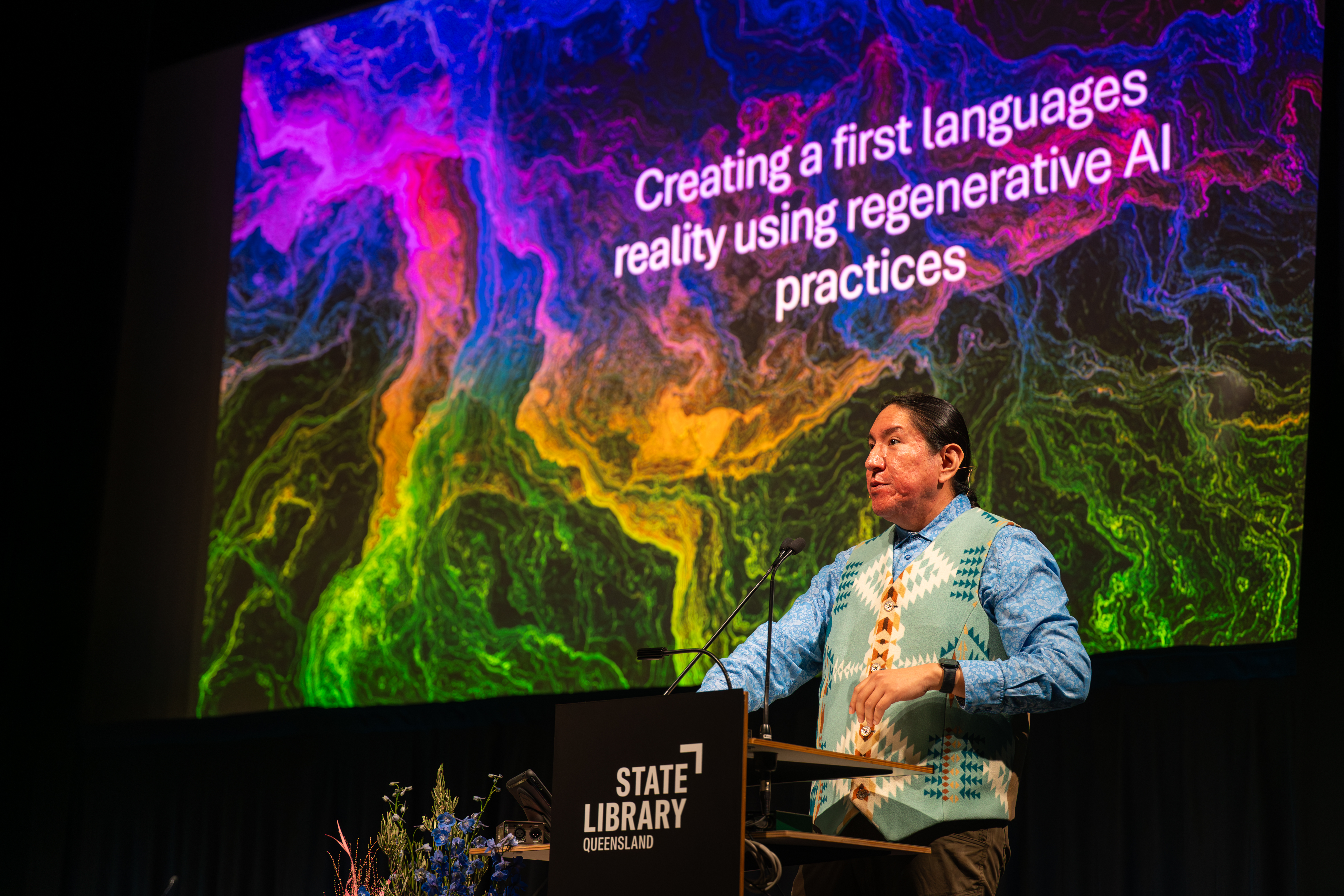
Mr Running Wolf, from the Northern Cheyenne and Lakota nations, opened the event with his keynote on 'Creating a First Languages Reality Using Regenerative AI Practices.'
An AI ethicist with a background in computer science, Mr Running Wolf discussed how Indigenous communities can embrace technology while navigating the risks associated with AI.
He highlighted his work with Lakota AI Code Camp, where he teaches Indigenous youth AI and software engineering in culturally relevant contexts.
"We need to empower our youth to take control of technology," he said, stressing the importance of building technological sovereignty in Indigenous communities.
He explained that many communities lack infrastructure, such as reliable internet, making it difficult to access technological tools.
"The technology we use needs to respect our ways of knowing and our cultural values," he said.
"We need to empower our youth to take control of technology."
Mr Running Wolf also discussed the pioneering work of Māori communities in creating the first AI language model for an Indigenous language, which inspired his own research.
He noted that even with limited data, Māori successfully created a language model, showing that Indigenous communities can achieve technological advances in language preservation.
A proud Birri and Guugu Yimidhirr woman from Central and North Queensland, Ms Denning-Orman, followed with her keynote 'Our Lingo, Our Way: The Rise of First Nations Languages Through Australian Media.'
Ms Denning-Orman, SBS's First Nations Director, discussed how media can play a significant role in language revitalisation.
She shared her experience growing up in central Queensland, where she rarely saw Indigenous faces or heard Indigenous languages on television.
"I knew that media was powerful, and I wanted to change the way we were represented she explained.
She reflected on the long history of First Nations communities fighting for control over their own media.
"Our cultures and languages go hand in hand," she said, pointing out how Indigenous-run media like NITV has been instrumental in preserving languages.
Ms Denning-Orman highlighted the success of bilingual content like the series 'True Colors', which aired in both Aranda and English, and how it resonated with both Indigenous and non-Indigenous audiences.
"Seeing and hearing our languages on TV connects us to our culture and our communities," she said.
She also emphasised that NITV's growth has allowed Indigenous voices to become more prominent in the Australian media landscape.
"We've built a platform where our languages and stories can be shared on our own terms," she said.
Both Michael and Tanya's presentations reinforced the importance of community-driven efforts in language revitalisation.
While technology and media are valuable tools, they stressed that the key to language preservation lies in empowering communities to take control of their languages.
"Technology is a tool," Mr Running Wolf said.
"The real work is in the community and the belief in our languages."
Ms Denning-Orman echoed this sentiment.
"We're not just preserving our languages - we're making them thrive in the modern world."
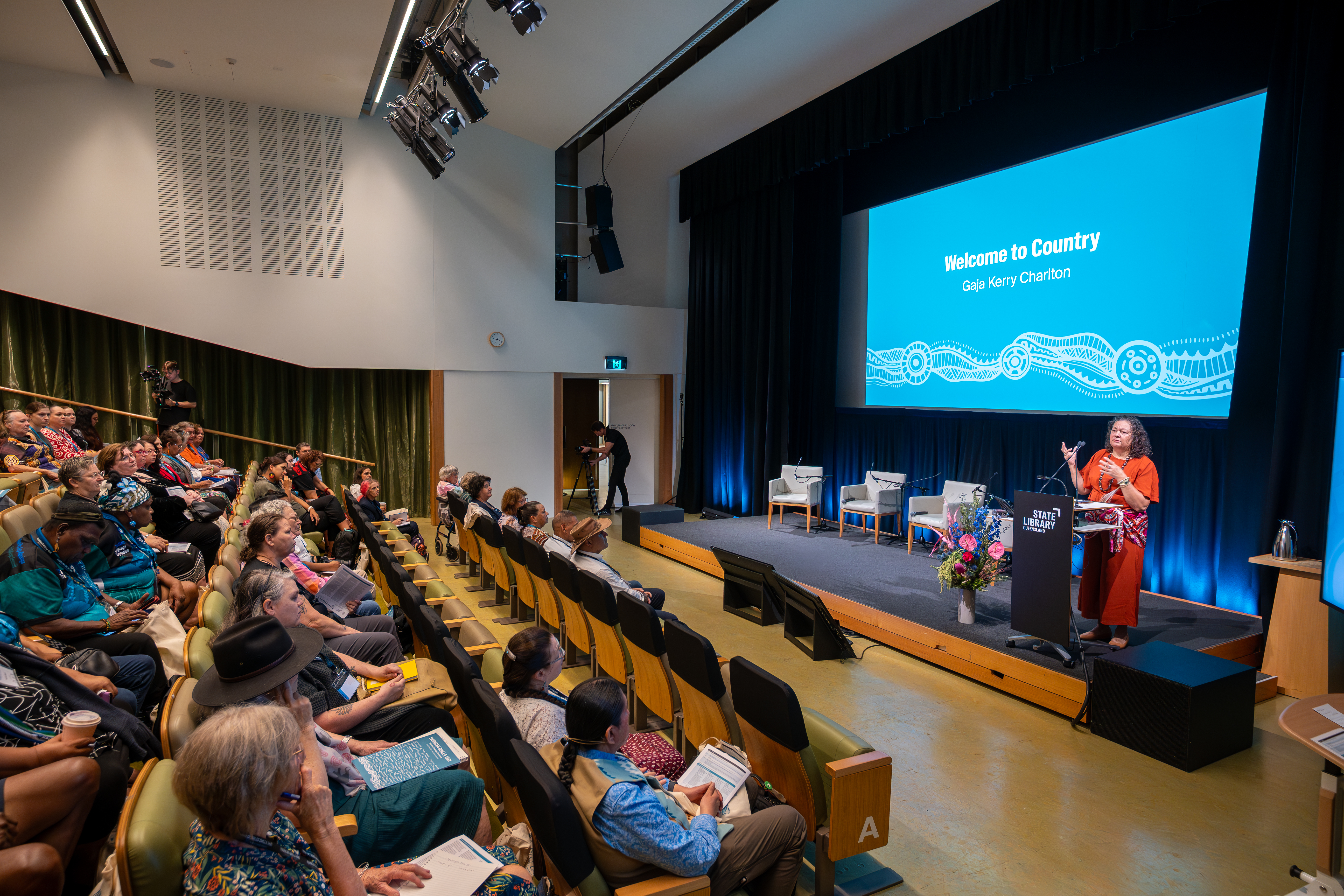
Additional sessions at the symposium included a panel on digital archives and language databases, featuring speakers from AIATSIS and regional language centres.
Participants shared strategies for safeguarding language recordings, transcriptions and teaching materials.
Another session explored school-based immersion programs, with educators from Cape York detailing classroom models that embed local languages in early childhood education.
A practical workshop on digital storytelling also allowed attendees to experiment with multimedia tools to produce language content for community use.
The symposium underscored the ongoing efforts to integrate technology and media with cultural practices to ensure the survival of Aboriginal and Torres Strait Islander languages for future generations.



