


Seventy-three to one.
Last month's Federal Court judgment on the McArthur River mine awarded the Gudanji, Yanyuwa and Yanyuwa-Marra peoples $54 million for cultural loss and $743,408 for economic loss. Most commentary focused on the cultural loss — the largest ever awarded in Australia. I want to talk about the economic figure. Because that 73 to 1 ratio isn't an accident. It's a structural problem. And I think there's a better way.
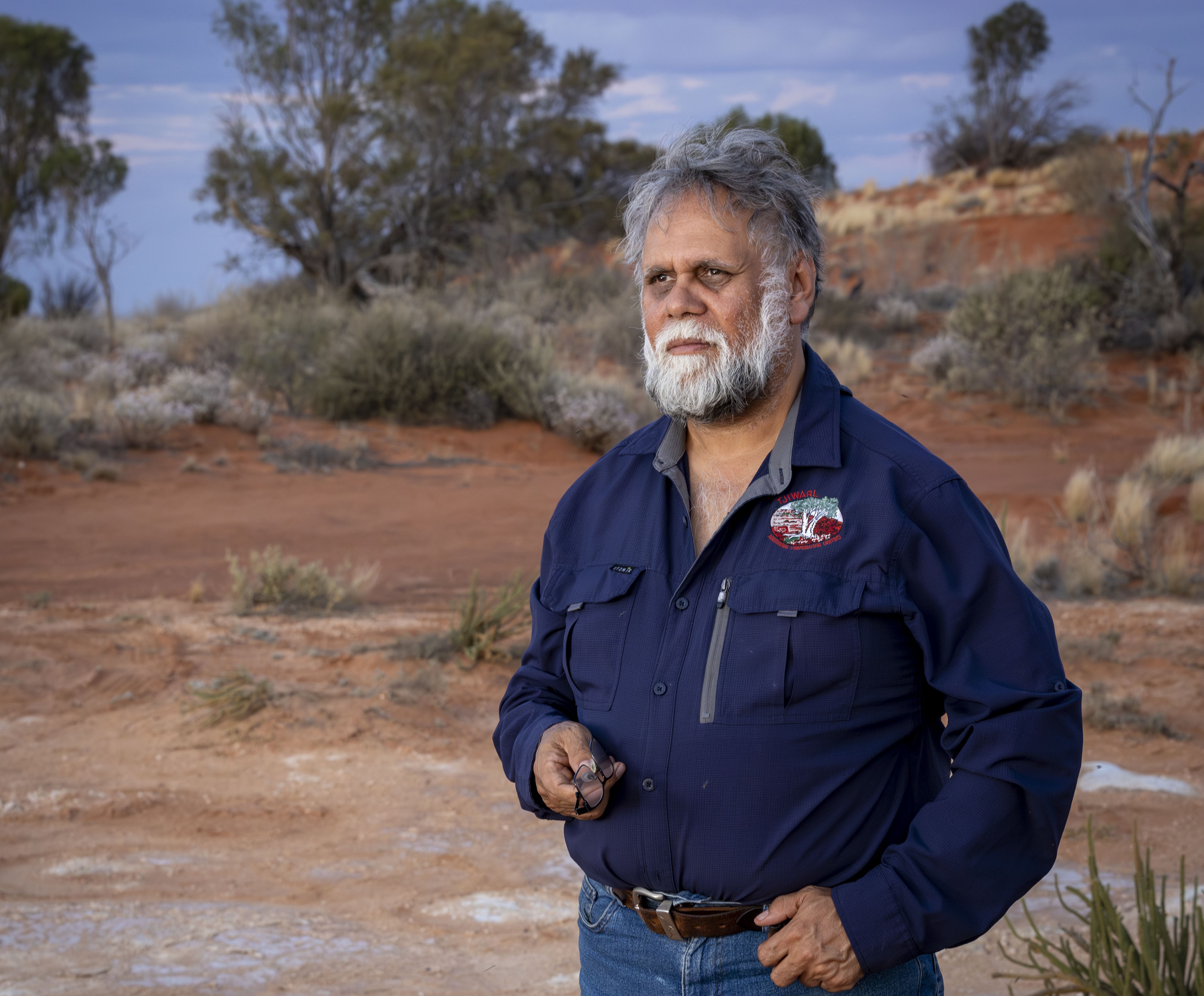
I am a Ngalia man. I actively hold and enjoy native title under three determinations — Tjiwarl in the Goldfields, Manta Rirrtinya over 23,000 square kilometres of Western Desert country, and Payarri in the Northern Goldfields, recognised just three months ago with me as lead applicant in the latter two. I was also the lead negotiator on the Tjiwarl Palyakuwa — the comprehensive settlement agreement that resolved three native title compensation claims in the Goldfields in 2023, delivering $25.5 million in monetary compensation alongside land handbacks, a conservation estate, water rights, and economic development funding. I know this system from the inside.
The problem: Country as stock, not flow
The current methodology — the freehold proxy, settled by the High Court in the 2019 Timber Creek case — asks one question: what would this land sell for? Apply 50% of that value for non-exclusive native title. Done.
This treats Country as a stock. A one-off capital asset. Sell it once, value the loss once, pay once.
But Country isn't a stock. Country is a flow. It produces. Season after season, generation after generation, it generates food, water, medicine, fibre, ecological knowledge, and the economic foundation of Aboriginal life. These aren't metaphors. They are measurable outputs — ecosystem services that environmental economists now routinely value and that researchers like Normyle and Vardon have spent years calculating for Indigenous-managed country across Australia.
The simplest way I can explain the difference: a stock is like a term deposit — a fixed sum sitting in the bank. A flow is like a salary — income earned continuously over time. If someone takes your term deposit, you've lost a lump sum. If someone stops you from working for thirty years, you've lost thirty years of income. The freehold proxy compensates as if we lost a term deposit. What we actually lost is the salary.
A different formula
I've been developing a framework for thinking about First Nations wealth that puts flow at the centre. Instead of asking what land is worth as a capital asset, it asks what Country produces over time, for the people who hold rights in it.
The formula is:
Total Loss = Σ (V × H × P × E) × T
In plain terms: the productive value of Country per hectare each year (V), multiplied by the area affected (H), adjusted for how much of the community's economic life depends on that Country (P), adjusted for the ecological richness of that Country (E), and summed across all the years since the rights were impaired or extinguished (T).
Each variable can be grounded in real evidence. V draws on ecosystem accounting research — for tropical riverine country like McArthur River, the productive value runs to around $120 per hectare per year. P draws on Jon Altman's hybrid economy research and John Taylor's demographic work on remote Aboriginal communities — populations grow substantially over dispossession periods, meaning the number of people excluded compounds the loss year on year. E adjusts for the specific ecological character of the affected Country — every country has its own productive profile. T is simply the years the impairment or loss has run.
There is also a fundamental problem with the freehold proxy that this formula sidesteps entirely. The proxy asks what the land would sell for on the open market. But native title cannot be sold. It is inalienable by law — it can never be transferred, never traded, never put to market. There are no comparable sales. There is no market. The entire methodology is built on a hypothetical transaction that is legally impossible. It is a fiction layered on a fiction. If there is no market for the stock, the only honest way to value it is by what it produces — which is exactly what the flow-based approach does.
And we don't even need to estimate what Country produces in the abstract. The courts have already told us. Both my Manta Rirrtinya and Payarri determinations include the right to access, take and use the resources of Country for any purpose. Those words were confirmed by the High Court in Akiba v Commonwealth to include economic activity, commercial use, productive flow. The same right was recognised for the Gudanji and Yanyuwa peoples — whose McArthur River compensation this article is about — in the Borroloola case years before Davey was decided. The right is named. It is determined. It is on the court record. The methodology then values its loss by reference to a property market that cannot legally exist for that right. The law has determined a flow right and compensated it as a non-existent stock. That is the core incoherence.
What the numbers look like
Run those variables for McArthur River. The claim area was 130 square kilometres — approximately 13,000 hectares. V at $120, P at 0.35 (a conservative estimate of the proportion of community economic life tied to Country access), E at 1.2 for exceptional coastal ecology, T at 30 years.
The result is around $20 million — compared to $743,408 awarded under the freehold proxy. Not 73 to 1. Closer to 3 to 1 relative to cultural loss.
That figure also sits within the range produced by independent peer-reviewed research. A 2024 study published in The Extractive Industries and Society — applying the same ecosystem accounting methods but measuring the full environmental liabilities of the mine — estimated total market environmental costs at AUD 1.1 billion per year. The researchers were not making a native title argument. They were simply applying standard valuation methodology to what the mine destroys. The result puts the $743,408 in stark relief.
That convergence matters. In Timber Creek, the ratio between cultural and economic loss was approximately 4 to 1 — $1.3 million cultural, $320,250 economic. Under the flow-based formula applied to McArthur River, the ratio drops from 73 to 1 back toward that same range. This is not a coincidence. It suggests that when economic loss is measured properly — as the productive flow that Country generates over the dispossession period — it sits in a broadly stable relationship to cultural loss. Country that is deeply significant culturally tends also to be highly productive economically. The two things are not separate.
The 73 to 1 ratio is not evidence that cultural loss was over-assessed at McArthur River. It is evidence that economic loss was catastrophically under-assessed using a tool that cannot see what Country produces. The freehold proxy is the anomaly. The 4 to 1 ratio may be closer to where the numbers actually sit when both sides of the ledger are measured with commensurate methods.
And in the Tjiwarl settlement, the $25.5 million monetary component — plus land, conservation estate, water rights, and economic development funding — reflects something much closer to a flow-based understanding of what was lost, even though it was negotiated rather than litigated. The total value of the Palyakuwa package, including non-monetary components, substantially exceeds what a freehold proxy calculation would have produced for the same country. That's why we negotiated rather than litigated. We knew the court methodology would undervalue the loss.
Why the mining lease context matters
There's a further dimension that makes the McArthur River figure even harder to defend. Unlike Timber Creek — where the extinguishing acts permanently destroyed the rights — the McArthur River compensation was for impairment under the non-extinguishment principle. The High Court has confirmed, in cases I was involved in, that mining leases coexist with native title. The rights survive. The impairment is ongoing.
Pay once for a continuing loss. That's not compensation. That's a discount.
And there's a further legal point worth making. The common law already has a name for the right to enter land and take its produce — a profit à prendre. It's a registered interest in the WA land titles system. Courts compensate the loss of a profit à prendre by reference to what it produced each year, not by reference to the freehold value of the land. Flow-based compensation. The Timber Creek court itself described native title rights as "usufructuary in nature" — the same concept. The court correctly identified what the right is. The methodology then valued it as something else entirely.
To be clear: native title is not a profit à prendre. It is sui generis — its own kind, deriving from traditional laws and customs, not from any common law grant. The High Court has been emphatic about this. The point is not that the two rights are legally identical. The point is that two rights with the same economic substance — both entitle the holder to take the produce of land, neither entitles the holder to own the land — receive completely different compensation treatment. The profit holder recovers what the right produced. The native title holder recovers a fraction of freehold. That disparity is not explained by any difference in what the rights actually are. It is explained by who holds them.
And the claim wasn't only about the mine. It included the Bing Bong Port facility on the Gulf of Carpentaria — sea country. Port construction dredged a four-kilometre channel through seagrass beds. Seagrass is the primary food source for dugong, which the Gudanji and Yanyuwa peoples have eaten for generations. The Gulf hosts one of Australia's most significant dugong populations and its most important prawn and barramundi fishery. None of this sea country loss — the seagrass, the dugong, the barramundi, the prawns — appears in the $743,408 figure. The freehold proxy doesn't just undervalue productive land. It has no framework for valuing sea country at all. There is no freehold comparator for water.
What wealth means on Country
My framework for First Nations wealth puts this in a broader frame. Western economics measures wealth as accumulated assets — stocks. Our understanding of wealth on Country is different: it is the ongoing capacity to sustain life, community, and culture from Country's productive flows.
The Ngapartji principle — reciprocity, give and receive, the circulation of resources through kin and community — is not a cultural curiosity. It is an economic operating system organised around flow, not stock. It produces resilience over time, not capital accumulation.
When that flow is interrupted — when rights are extinguished or impaired — the loss is not a stock depleted. It is a flow interrupted, year after year, across generations. The freehold proxy can't see this. The formula above can.
Terra nullius was the legal fiction that we were not here — that Australia was uninhabited at the time of British sovereignty, that Aboriginal peoples had no law, no society, no rights worth recognising. In 1992, Brennan J condemned it as a fiction "by which the rights and interests of Indigenous inhabitants were treated as non-existent." The freehold proxy is its quieter successor — what we might call fructus nullius: the fiction that what Country produces is equally invisible.
Fructus is the Roman law term for the fruits and produce of land — its recurring economic yield. Roman lawyers understood that land produces fructus continuously: food, fibre, water, timber, fish. They also had a term for land viewed purely as a capital asset — res, the thing itself, valued by ownership and exchange. The freehold proxy treats Country as res: a capital asset to be priced by reference to a hypothetical sale. It cannot see the fructus — the ongoing productive output that Country generates for the people who hold rights in it. It treats that output as belonging to no one. As if it doesn't exist.
But native title is not and cannot be res. It is inalienable — it can never be sold or transferred. It has no capital asset character at all. What native title actually describes, in its economic substance, is fructus: the right to access, take and use the ongoing yield of Country. The law has determined a fructus right and compensated it as if it were res. That is the core incoherence.
Roman law gave us terra nullius through the doctrine of occupatio — the idea that unclaimed land could be acquired by discovery. That same Roman tradition distinguished carefully between res and fructus, between the asset and its yield. The courts borrowed the first concept to justify dispossession. They never followed through to the second — the concept that would have required them to value what Country produces.
Terra nullius said we were not here. Fructus nullius says that even though we are here, what our Country produces for us has no economic reality the law needs to measure. The first fiction erased our presence. The second erases our economy.
We proved in Tjiwarl that a different approach is possible. The Palyakuwa was built on the idea that Country's ongoing productive capacity has value, that rights are worth what they generate over time, and that proper compensation reflects the flow, not just the stock.
We overturned terra nullius in 1992. It is time to knock fructus nullius on the head before it hardens into permanent injustice.
That's the conversation I'm inviting the sector to have.
Kado Muir is a Ngalia man from Leonora, Western Australia. He holds native title in Tjiwarl (Narrier v State of Western Australia [2016] FCA 1519, determined 27 April 2017), Manta Rirrtinya [2018] FCA 1388 and Payarri [2025] FCA 1456, and was lead applicant in the latter two determinations.
He was lead negotiator of the Tjiwarl Palyakuwa Comprehensive Settlement, resolving the Tjiwarl compensation proceedings (Tjiwarl Aboriginal Corporation RNTBC and State of Western Australia [2021] FCA 438, WAD141/2020, WAD142/2020 and WAD269/2020), and is currently Chair of the National Native Title Council.



