




When Amos Taylor was named the First Nations Senior Law Student of the Year 2025 by Ngalaya Indigenous Corporation, it felt like a collective moment of pride. A proud Kija and Jaru man from the East Kimberley, Amos, known by his ancestral name Djuralardi Daylight, has spent years walking between worlds, guided by his Ancestors and grounded in purpose.
Studying law at UNSW, Mr Taylor is reimagining how Indigenous knowledge can shape the future of air and space law. His research explores sky Country, the living space that connects land, water, air and stars, and how First Nations law and lore can inform international frameworks of governance.
"For me, it's about ensuring appropriately informed Indigenous perspectives are part of the ongoing space race conversations," he said.
"If you don't have a seat at the table, you're likely on the menu."
Amos's words carry truth and clarity, a reminder that if Indigenous voices are not included in decisions shaping our planet and beyond, humanity risks repeating old mistakes under a different sky.
He believes the global legal community could benefit from a shift in mindset.
"Different First Nations perspectives could shape international law through conversations about respect, responsibility and custodianship of sky Country, rather than the systems of exploitation that have led us into a climate crisis."
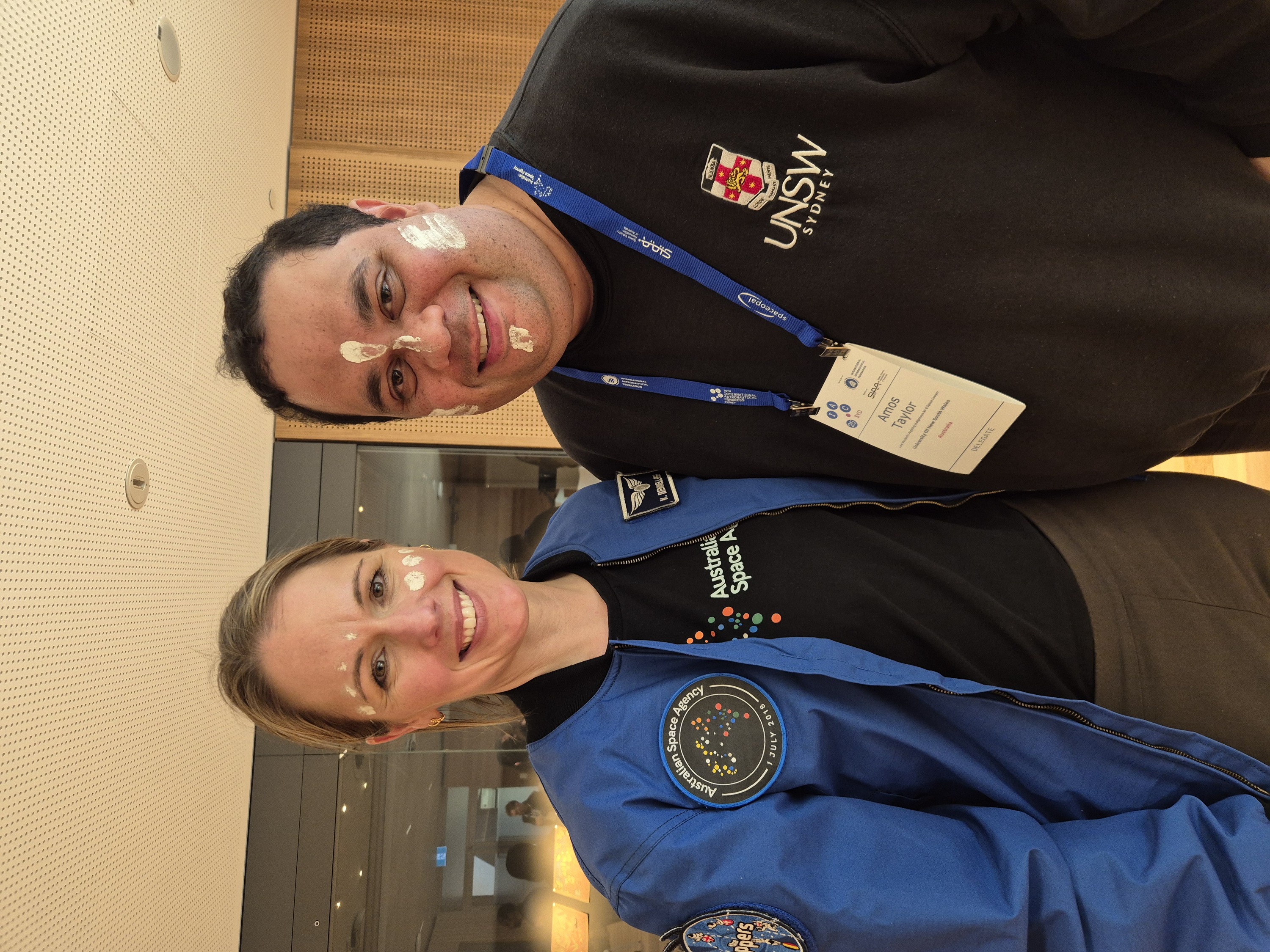
When Mr Taylor explains sky Country, his warmth and humour bring complex ideas to life.
"Australians inherited a British obsession with land and property. Everyone's talking about home ownership, the housing crisis, and which suburb is better, while at night watching renovation shows. I love The Block," he said.
"But Country is living. Land, water and sky are one. Sky Country mirrors our lands; as above, so below. Protecting Indigenous rights in land and water must also include the sky, everything just above the treetops."
Mr Taylor draws parallels between historical concepts of land and water ownership to make his point.
"Many people know about terra nullius, the idea that Australian land belonged to no one when the British arrived, which was overturned in 1992 by the High Court in Mabo. We now understand aqua nullius, the belief that water belonged to no one, is equally flawed. My legal mission is to extend Indigenous rights and protections into sky Country by challenging aer nullius - the assumption that the sky belongs to no one."
This intellectual courage has been nurtured through mentorship. Mr Taylor often credits Worimi man Professor Deen Sanders OAM for helping him refine his thinking.
"Where my Ancestors have diverted my attention is to the entire airspace that exists between the air we breathe and the Kármán line, about 100 kilometers above Earth. This sky Country, currently dominated by aviation and defence, raises creative legal questions about where Indigenous non-economic rights and cultural interests lie and how harm can be limited."
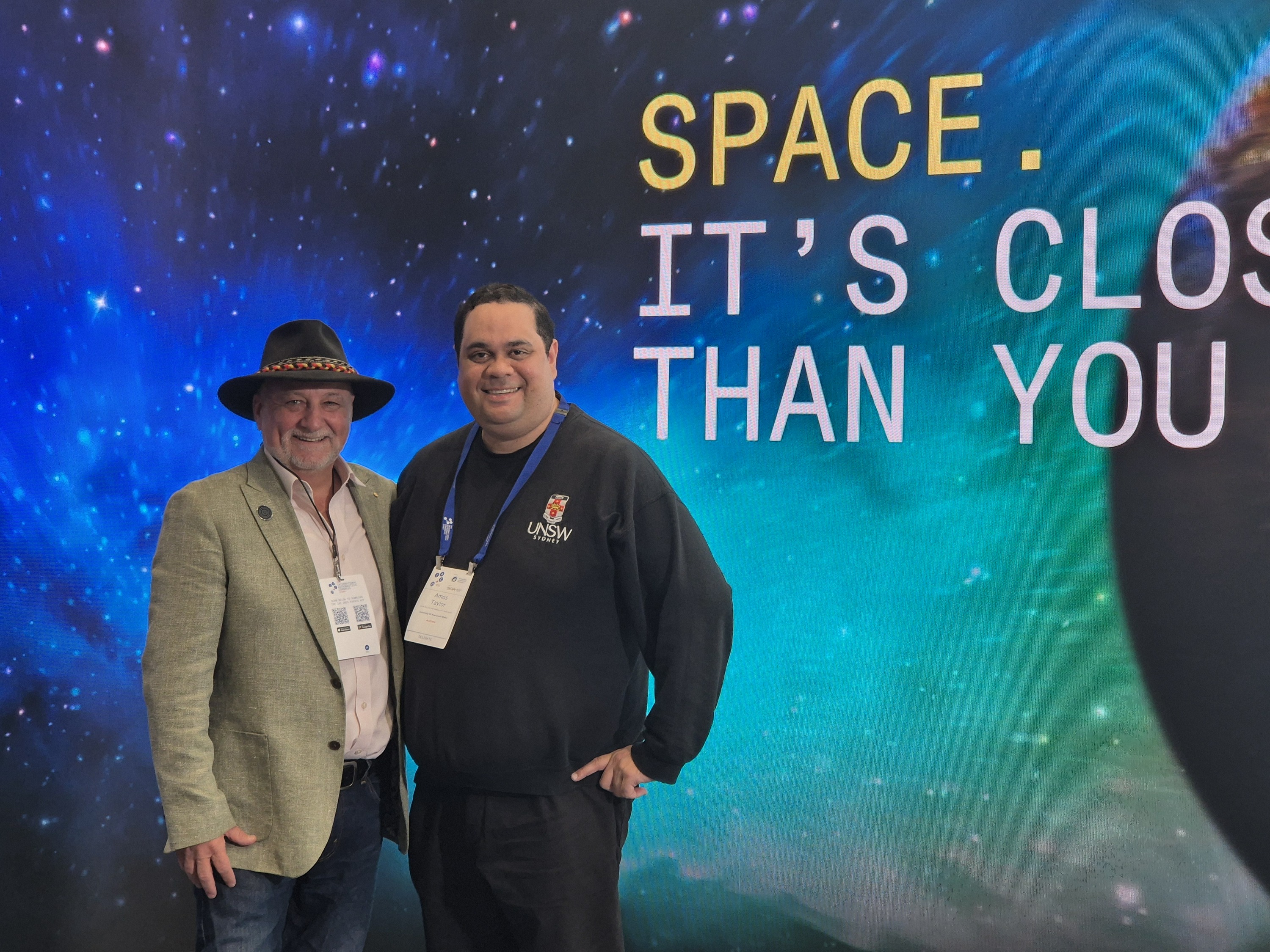
Mr Taylor's ability to blend legal reasoning with cultural insight makes his voice unique.
"Land law in law school hardly touches upon our legal rights in airspace," he said. "So lawyers rarely think about this part of the law. It's often assumed that peaceful use of your land is the end of the argument. But the true battle for the sky has yet to begin. With new technologies changing how we use airspace, the importance of protecting Indigenous rights in sky Country will only grow."
For Amos, law is not just about regulation but about responsibility. His approach calls for a worldview where science, spirituality and policy work together. By bringing Indigenous law into these global conversations, he is helping to build a framework that recognises the interconnectedness of all things.
"Mob are still doing incredibly important work to reclaim our lands and waters," he said.
"But I hope our claim to the sky is not lost, and that we have the chance to fight for true free, prior and informed consent in decisions about air and space law. I do not have cultural authority to provide the answers, but as an Aboriginal law student, I can ask the questions and bring attention to the need for consultation and advocacy for the wind, the birds, the weather and the stars."
In both his study and his storytelling, Amos Taylor is reminding Australia and the world that the law does not end where the land meets the clouds. His vision challenges us to look upward and outward, to see the sky not as empty space but as part of a living system - one that has always been connected to Country, culture and community.



