



Day two of the 2026 Overcoming Indigenous Family Violence Forum closed in Meanjin after a program focused on young people, self-determination, trauma-informed practice, child safety and community-led reform.
The Queensland Indigenous Family Violence Legal Service (QIFVLS) forum continued at the InterContinental Brisbane on Thursday under the theme "Our Way, Our Changemakers".
The second day followed Wednesday's opening program and centred on Hope for the Next Generation, with sessions spanning young women's leadership, government investment in self-determination, family violence, child protection, men's healing and the national plan to end family, domestic and sexual violence experienced by Aboriginal and Torres Strait Islander women and children.
The day opened with a chairperson's introduction from QIFVLS Acting Chief Executive Officer, Thelma Schwartz, before Talitha Project Tonga Youth Mentor and Ambassador, Ana Falemaka, led a session on fostering hope for young people.
The program also included a virtual government address from Assistant Minister for Social Services and Assistant Minister for the Prevention of Family Violence Ged Kearney, a presentation from Cygnet Centre for Peace Building and Transformation chief executive Christine Thomas, and yarning circles on community legal education, trauma-informed responses, coercive control and wellbeing.
Palawa woman, lawyer and Naarm Law Students co-founder, Maggie Blanden, delivered the youth keynote, 'Our Stories, Our Justice: A young voice for change.'
Ms Blanden said her address focused on young people's role in shaping safer futures.
"It talked about how young people are the voices for change in this country," she told National Indigenous Times.
"As young people, we know that and we know what to do.
"And that is self-determination and that's community care, collective action, all in one place. Love, care and responsibility."
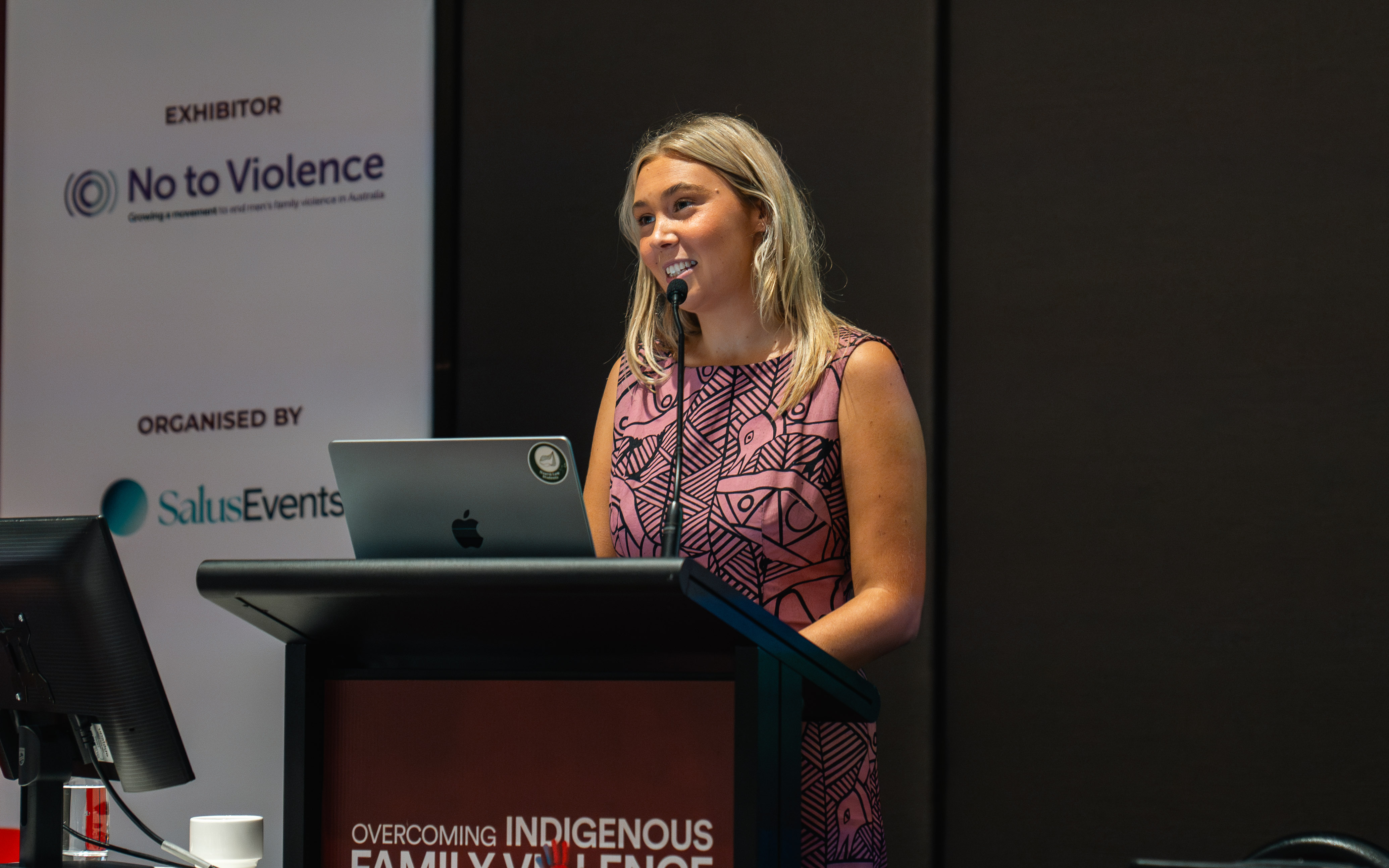
Ms Blanden said grassroots programs grounded in culture and community care remained central to self-determination.
She pointed to family programs delivered on Country and shaped by old people's knowledge as examples of local responses that support young people to grow up with language, culture and identity.
"I talked about the power of grassroots action and grassroots ways of being and knowing and care," Ms Blanden said.
"We have family programs that deliver programs on country in a way that is aligned with our old people's ways that they've passed down over generations.
"They're so lucky to grow up on country speaking language, surrounded by old people and their community knowing exactly who they are from a very young age."
Darug woman Marnie Davis, who was raised on Quandamooka Country and now lives on Kombumerri Country, facilitated the 'Yarning for Change' session on Indigenous trauma-informed responses to violence.
The session focused on supporting workers and community members to respond safely to disclosures of domestic, family and sexual violence.
"Yarning for Change is about enhancing Indigenous trauma-informed practices to sexual and sexual assault and domestic violence disclosures," Ms Davis said.
"It's about giving the supports and education around how to respond to domestic violence and sexual violence disclosures.
"Indigenous trauma-informed practice is really about walking alongside, honouring the voices of survivors and letting them lead."
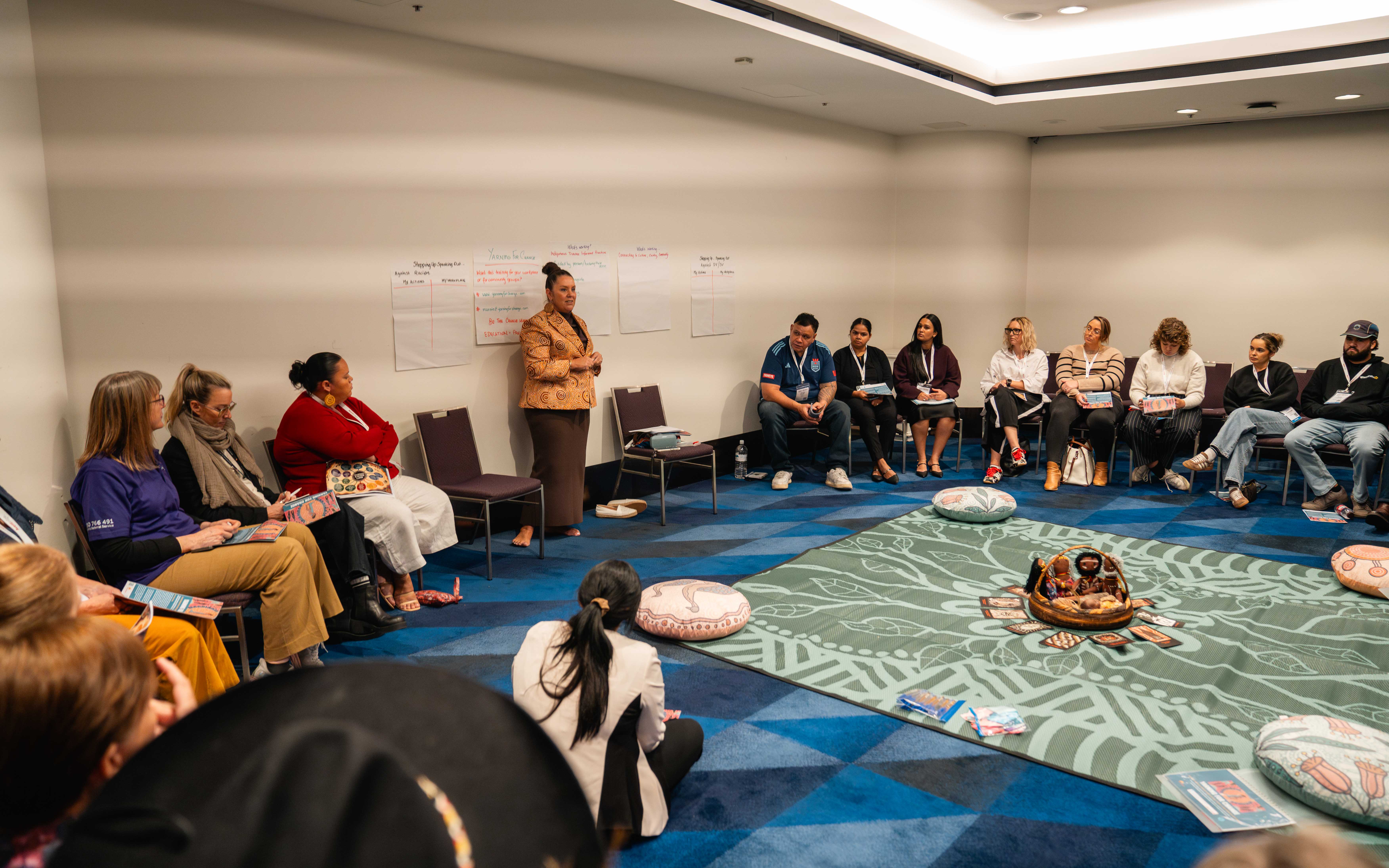
Ms Davis said services also needed to address the barriers that stop First Nations people from disclosing violence, including racism and gaps within the domestic and family violence sector.
"Always ensuring that it's survivor-led and listening to their voices," she said.
"Looking at what are the barriers to for First Nations people disclosing sexual violence and domestic violence and how we can step up against racism in our systems.
"It's really important that we address this and understand that education is prevention."
Waanyi and Kalkadoon Barrister Joshua Creamer later joined QIFVLS Acting Director of Legal Practice, Kulumba Kiyingi, for a session on the Child Safety Commission of Inquiry and systemic failures to keep Aboriginal and Torres Strait Islander children safe.
Mr Creamer said young Indigenous people were facing a difficult policy environment across youth justice, child protection and truth-telling.
"Growing up as a young Indigenous fella in community now, is a real challenge," he said.
"For the community at large - it's a big step back... a few years ago we see the Truth Telling canned in Queensland.
"I think we've had a tough time since the voice and we've now got to find our voice and come back and start advocating for what we want."
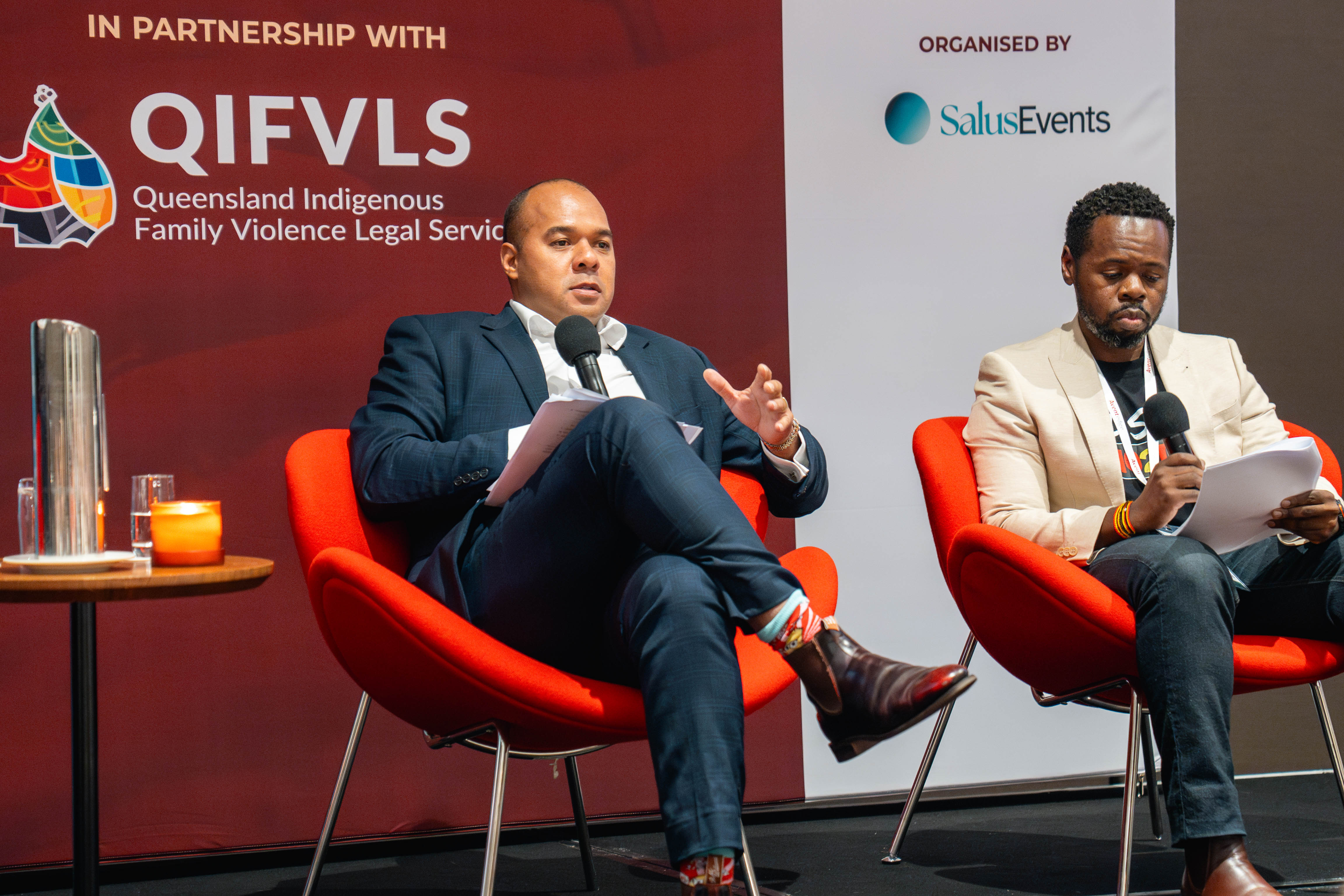
Mr Creamer said lasting change required governments and systems to address the social and economic drivers that continue to push Aboriginal and Torres Strait Islander people into state systems.
"We all know what the issues are," he said. "We know those socio and economic issues, we all know housing, education, employment, poverty, we know what happens.
"Unless we start tackling those issues, unless we start getting proper housing, getting access to education, getting people employed, we're not going to make those significant changes."
The afternoon program included sessions on strengthening pathways to safety and change for Aboriginal and Torres Strait Islander men and families, the healing and systems needs of men and boys, and national work to strengthen safety for women, children, families and communities.
The forum ended with a session from Domestic Family and Sexual Violence Commissioner, Micaela Cronin, on walking alongside Aboriginal and Torres Strait Islander communities.
If you or someone you know is experiencing domestic violence, support is available.
Call QIFVLS directly on (07) 4045 7500 or 1800RESPECT on 1800 737 732.
For a safe place to talk, speak to a 13YARN Crisis Supporter, 24 hours a day, 7 days a week on 13 92 76.



